
Short Answer
21 Facts About Jerboas (Desert Rodents)
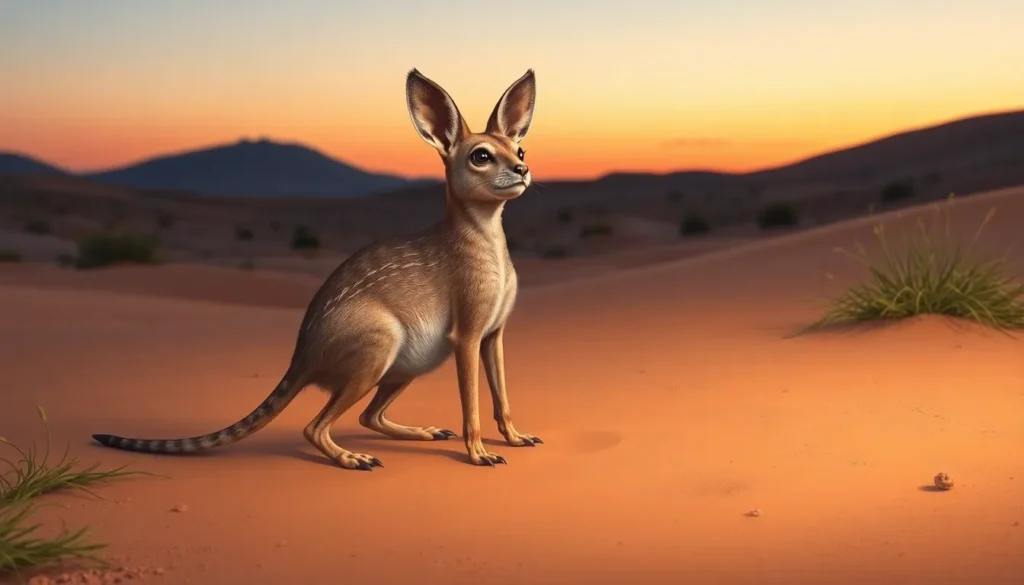
- Distinctive Locomotion: Jerboas have long hind legs and short forelegs, enabling them to move by hopping or jumping much like small kangaroos.
- Desert Adaptation: They are well-adapted to desert environments, with features that minimize water loss and help them survive extreme heat.
- Nocturnal Behavior: Jerboas are primarily nocturnal, avoiding daytime heat by emerging at night to forage and be active.
- Burrowing Lifestyle: They dig burrows to escape predators and harsh weather, often sharing intricate tunnel systems.
- Diverse Species: There are about 33 species of jerboas distributed mainly across North Africa and Asia.
- Diet: Jerboas are omnivorous but primarily feed on seeds, plants, and insects, adapting their diet to resource availability.
- Water Conservation: They obtain most of their water from food and have highly efficient kidneys that reduce water loss.
- Large Eyes and Ears: Their large eyes and ears enhance nocturnal vision and hearing to detect predators and prey.
- Tail Function: The jerboa’s long tail provides balance during hopping and can act as a prop when standing upright.
- Reproduction: Female jerboas often have multiple litters per year, each with one to three offspring.
- Predators: They face predation from owls, snakes, foxes, and other desert predators.
- Communication: Jerboas communicate through foot drumming and scent marking to establish territory or warn others.
- Thermoregulation: Their fur helps insulate against cold desert nights and reflects heat during the day.
- Evolutionary Relationships: Jerboas belong to the family Dipodidae and are related to jumping mice and birch mice.
- Conservation Status: Most jerboa species are not endangered, but habitat destruction poses localized threats.
- Unique Locomotion Mechanics: Their hopping mechanism is energy efficient, allowing rapid movement across sandy terrain.
- Behavioral Adaptations: Some species exhibit seasonal changes in activity patterns linked to environmental conditions.
- Role in Ecosystem: By feeding on seeds, jerboas contribute to seed dispersal and desert plant dynamics.
- Specialized Teeth: Their teeth are adapted for gnawing tough desert vegetation and insects.
- Fossil Record: Jerboas have a fossil history dating back millions of years, illustrating their long-term desert adaptation.
- Scientific Interest: Researchers study jerboas to understand desert survival strategies and biomechanics of hopping locomotion.
Habitat and Behavior
Jerboas inhabit arid and semi-arid regions, including deserts and steppes primarily in North Africa, the Middle East, and Central Asia. Their habitat typically features loose, sandy or rocky soils conducive to burrowing. Jerboas are nocturnal, emerging at night to forage for food, which includes seeds, plants, and insects. Their behavioral adaptations include digging extensive burrow systems for shelter and thermoregulation. The burrows protect them from extreme temperatures and predators during the day. Locomotion through hopping enables them to move swiftly across open desert landscapes while conserving energy. They communicate using foot drumming and scent marking in their territories. Jerboas also exhibit seasonal behavioral changes in response to environmental fluctuations.
Why This Animal Matters
Jerboas play an important ecological role in desert ecosystems. By consuming seeds and plants, they influence vegetation patterns and contribute to seed dispersal, which helps maintain plant diversity in harsh environments. Their burrowing activities aerate the soil and impact the microhabitat, benefiting other desert species. Additionally, jerboas serve as prey for a range of desert predators, making them a vital link in the food chain. Scientifically, jerboas provide valuable insights into desert adaptation mechanisms, locomotion biomechanics, and water conservation strategies in mammals. Conserving jerboa populations helps preserve the delicate balance of desert ecosystems and supports biodiversity.
Common Misconceptions
Misconception: Jerboas are rodents that can survive without water indefinitely.
Correction: While jerboas are highly adapted to conserve water and obtain moisture from their diet, they still require some water input, either from food or occasional drinking, to survive.
Misconception: Jerboas are closely related to kangaroos because they hop.
Correction: Although jerboas hop like kangaroos, they are rodents and not marsupials; their hopping evolved independently as an adaptation to desert life.
Misconception: All jerboas live exclusively in sandy deserts.
Correction: While many jerboa species inhabit sandy deserts, some live in semi-arid steppes or rocky desert regions, displaying a range of habitat preferences.
FAQ
What unique adaptations do jerboas have for desert life?
Jerboas have long hind legs for efficient hopping, large ears for heat dissipation and predator detection, nocturnal habits to avoid daytime heat, and specialized kidneys to conserve water.
How do jerboas survive with limited water in the desert?
Jerboas obtain water primarily from their food, such as seeds and insects, and have physiological adaptations like highly efficient kidneys that minimize water loss.
Are jerboas endangered animals?
Most jerboa species are not currently endangered, but some face threats due to habitat loss and environmental changes. Conservation efforts focus on habitat protection.




Leave a Reply