
Short Answer
21 Facts About Cichlid Mouthbrooding
- Mouthbrooding is a form of parental care. Cichlids carry eggs and young fry in their mouths to protect them from predators and environmental hazards.
- Both maternal and paternal mouthbrooding exist. While maternal mouthbrooding is more common, some species exhibit paternal or even biparental mouthbrooding.
- Mouthbrooding duration varies by species. The incubation period inside the mouth can last from one to several weeks depending on the species and environmental conditions.
- Cichlids refrain from eating during mouthbrooding. Parents often do not feed while holding the eggs or fry, dedicating energy solely to protection.
- Eggs are fertilized before mouthbrooding begins. Typically, cichlids fertilize eggs externally before collecting them in their mouths.
- Mouthbrooding increases offspring survival rates. By sheltering young during their most vulnerable stages, cichlids improve the chances of offspring reaching maturity.
- Some species use buccal cavity modifications. Adaptations in the mouth structure help accommodate varying numbers of eggs and fry.
- Brooding parents can exhibit aggressive behavior. To defend their mouthbrooding young, parents may become territorial and aggressive toward potential threats.
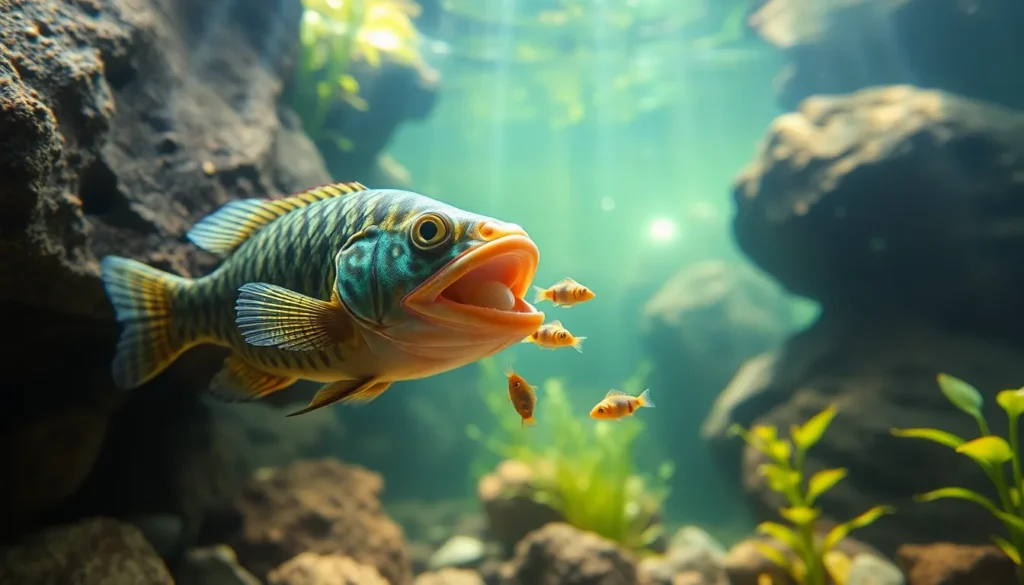
- Fry may return to the parent’s mouth for protection. Even after initial release, fry sometimes retreat into the parent’s mouth when danger is perceived.
- Environmental factors influence mouthbrooding success. Water quality, temperature, and predator presence can affect survival rates during brooding.
- Mouthbrooding is energy-intensive. The parent sacrifices feeding and increased mobility, highlighting a significant reproductive investment.
- Brooding behaviors vary geographically. African and South American cichlids demonstrate differing mouthbrooding strategies linked to ecological conditions.
- Some cichlids practice substrate spawning before mouthbrooding. Eggs are laid on surfaces before being collected into the mouth.
- Fry development occurs entirely inside the parent’s mouth initially. Early embryonic stages are safeguarded within the buccal cavity until fry are capable of independent swimming.
- Brooding parents can recognize their own offspring. This ability reduces the risk of accidentally ingesting or rejecting their young.
- Mouthbrooding can affect social interactions. Brooding adults may isolate themselves or change group dynamics temporarily.
- Some cichlid species have evolved reduced clutch sizes. This adaptation balances parental care demands with offspring survival.
- Brooding behaviors can influence mating systems. Species with mouthbrooding tendencies may show complex courtship and mate choice linked to parental investment.
- Research on mouthbrooding enhances understanding of parental care evolution. Studying cichlids provides insights into the diversity of reproductive strategies in fish.
- Mouthbrooding cichlids are popular in aquaculture and aquarium trade. Their unique reproductive behavior attracts scientific and hobbyist interest.
- Conservation of mouthbrooding species is important. Habitat loss and environmental changes threaten some cichlid populations reliant on mouthbrooding for reproductive success.
Habitat and Behavior
Cichlids are primarily freshwater fish found in diverse habitats across Africa, South America, and parts of Asia. Many inhabit lakes, rivers, and streams with varying environmental conditions. Mouthbrooding cichlids typically live in environments where predation pressure is high, making parental care crucial for offspring survival. Their behavior includes territoriality, intricate courtship rituals, and active protection of their young during the vulnerable egg and fry stages. The mouthbrooding parent often remains in sheltered areas or among rocks and vegetation to reduce exposure to predators. During brooding, adults exhibit reduced feeding and mobility, focusing on the protection and aeration of their progeny inside the buccal cavity.
Why This Animal Matters
Cichlid mouthbrooding represents a significant evolutionary adaptation in fish reproductive strategies. It enhances offspring survival through parental protection, illustrating complex parental investment beyond egg laying. Ecologically, these species contribute to aquatic biodiversity and serve as bioindicators of freshwater ecosystem health. Culturally, many cichlids are valued in the aquarium hobby for their unique behaviors, fostering public interest in aquatic biology and conservation. Conservation efforts targeting mouthbrooding cichlids also support broader freshwater habitat preservation initiatives, which are critical amid increasing environmental threats.
Common Misconceptions
Misconception: Only female cichlids mouthbrood. Correction: While maternal mouthbrooding is common, several species exhibit paternal or biparental mouthbrooding, where males or both parents may carry the eggs and fry.
Misconception: Mouthbrooding parents eat their offspring. Correction: Mouthbrooding parents protect their young; although accidental ingestion can occur, they generally recognize their offspring and avoid harming them.
Misconception: Mouthbrooding cichlids feed normally during brooding. Correction: Most mouthbrooding parents reduce or stop feeding during the brooding period to avoid harming their young and to maintain protective behavior.
Misconception: Mouthbrooding is the only reproductive strategy among cichlids. Correction: Cichlids display diverse reproductive strategies, including substrate spawning, cave spawning, and mouthbrooding, varying widely by species.
Misconception: Mouthbrooding fish carry all their eggs and fry simultaneously. Correction: The number of eggs and fry carried depends on the species and parent’s mouth size; brooding may involve staged release and retrieval of fry.
FAQ
What is mouthbrooding in cichlids?
Mouthbrooding is a reproductive behavior where cichlid parents carry eggs and young fry in their mouths for protection until they can survive independently.
Do all cichlids mouthbrood?
No, not all cichlids mouthbrood; some species exhibit other reproductive strategies such as substrate or cave spawning.
How long do cichlids mouthbrood their young?
The brooding period varies by species but generally lasts from one to several weeks until fry are developed enough to be released safely.



Leave a Reply