
Short Answer
21 Facts About Botflies
- Botflies are parasitic insects. They belong to the family Oestridae and are known for their larvae developing inside the bodies of mammals, including humans.
- They have a unique reproductive strategy. Female botflies lay eggs on a vector insect such as mosquitoes or ticks, which then transport the eggs to the host.
- Botfly larvae cause myiasis. This is the infestation of live vertebrates by fly larvae that grow inside the host’s tissue.
- Human botfly species exist. Dermatobia hominis is a well-known species that infests humans primarily in Central and South America.
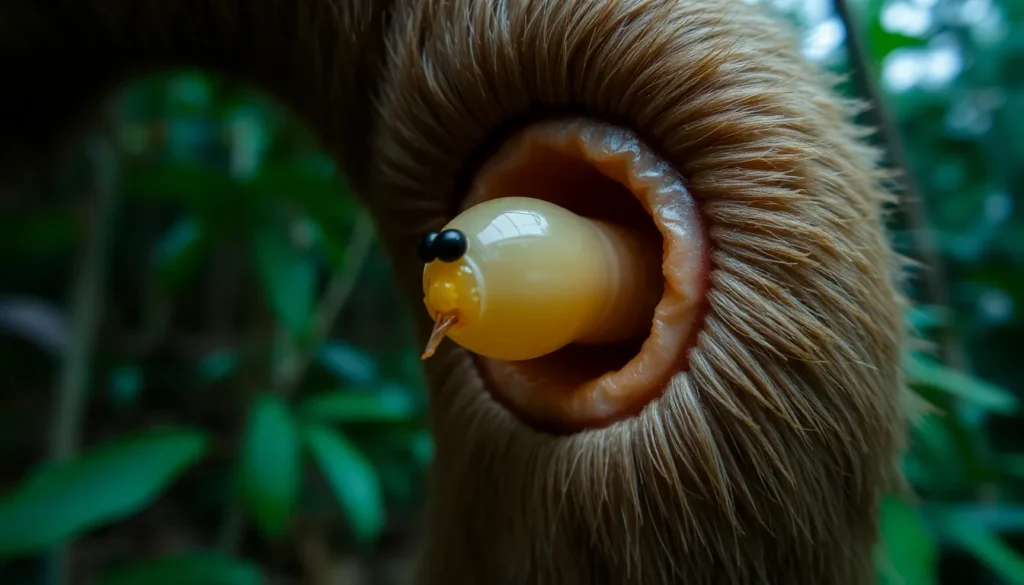
- Botfly larvae develop under the skin. After hatching, larvae burrow into the skin where they grow for several weeks.
- The larvae create breathing holes. These holes in the host’s skin allow the larvae to exchange gases while inside the tissue.
- Botflies can infest a variety of mammals. Their hosts include livestock such as cattle and horses as well as wild mammals and humans.
- Adult botflies do not feed. Their primary purpose is reproduction; adult botflies typically live only a short time.
- Botflies have a robust and hairy body. This adaptation helps them in attaching their eggs to vector insects.
- The life cycle of botflies involves multiple stages. These include egg, larva, pupa, and adult stages.
- Botflies are found mostly in tropical and subtropical regions. They are especially common in Central and South America.
- Some botfly species infest birds and rodents. This shows a degree of host specialization among species.
- Botflies can cause economic impact. Infestations in livestock can lead to reduced weight gain and damage to hides.
- Infestation symptoms include painful swelling and irritation. Hosts may experience discomfort and secondary infections.
- Removal of botfly larvae requires care. Improper removal can cause tissue damage or secondary infection.
- Botflies are studied for their medical and veterinary impact. Research aims to better understand and manage infestations.
- Some cultures recognize botflies in traditional folklore. Their presence has influenced local knowledge and practices.
- Botflies are not aggressive toward humans. They do not bite or sting but their larvae can cause infestations.
- Preventing botfly infestation involves avoiding their vectors. Protective clothing and insect repellents can reduce risk.
- Botflies have inspired scientific interest in parasitology. Their life cycle is a classic example of parasitic adaptation.
- Despite their parasitic nature, botflies are part of ecosystems. They play a role in regulating host populations and maintaining ecological balance.
Habitat and Behavior
Botflies are primarily found in tropical and subtropical regions, especially in Central and South America. They prefer warm, humid environments where their vector insects thrive. Botflies exhibit a parasitic lifestyle in their larval stage, developing inside the tissue of mammalian hosts. Adults are relatively short-lived and focus on reproduction. Females lay eggs on other insects like mosquitoes, which then transfer the eggs to the host’s skin. Once on the host, larvae hatch and burrow beneath the skin, forming a breathing hole. The larvae feed on host tissue for several weeks before emerging to pupate in the soil. Botflies typically infest livestock, wild mammals, and occasionally humans, with different species showing host specificity. Their behavior is adapted to ensure survival and development through a complex life cycle involving multiple hosts.
Why This Animal Matters
Botflies have ecological importance as parasites that influence the population dynamics of their hosts. By affecting the health of mammals, they can impact predator-prey relationships and ecosystem balance. In agriculture, botflies are significant because infestations in livestock can cause economic losses through decreased productivity and hide damage. From a scientific perspective, botflies are valuable subjects for studying parasitism, host-parasite interactions, and insect life cycles. Culturally, botflies have been part of traditional knowledge systems in regions where they are endemic, influencing practices to treat or prevent infestation. Conservation-wise, botflies are not currently endangered, but understanding their biology helps manage their impact on wildlife and domestic animals.
Common Misconceptions
Misconception: Botflies actively attack humans by biting or stinging.
Correction: Botflies do not bite or sting. Infestation occurs when their larvae develop under the skin after eggs are transferred by other insects.
Misconception: Botflies can survive outside a host indefinitely.
Correction: Botfly larvae require a host to develop; without a host, they cannot survive for long and must pupate in soil after emerging.
Misconception: All botflies infest humans.
Correction: Only certain species, such as Dermatobia hominis, infest humans. Many botfly species specialize in other mammals or birds.
Misconception: Botflies are harmful to ecosystems.
Correction: While parasitic, botflies are part of natural ecosystems and contribute to ecological balance by regulating host populations.
FAQ
What is a botfly?
A botfly is a parasitic fly belonging to the family Oestridae whose larvae develop inside the tissue of mammals, including humans.
How do botflies infect their hosts?
Female botflies lay eggs on biting insects like mosquitoes, which then transfer the eggs to a mammal's skin; the larvae hatch and burrow beneath the skin.
Are botflies dangerous to humans?
While botfly larvae can cause painful infestations, they are generally not life-threatening and can be treated by medical professionals.




Leave a Reply