
Short Answer
21 Facts About Animal Lifespans
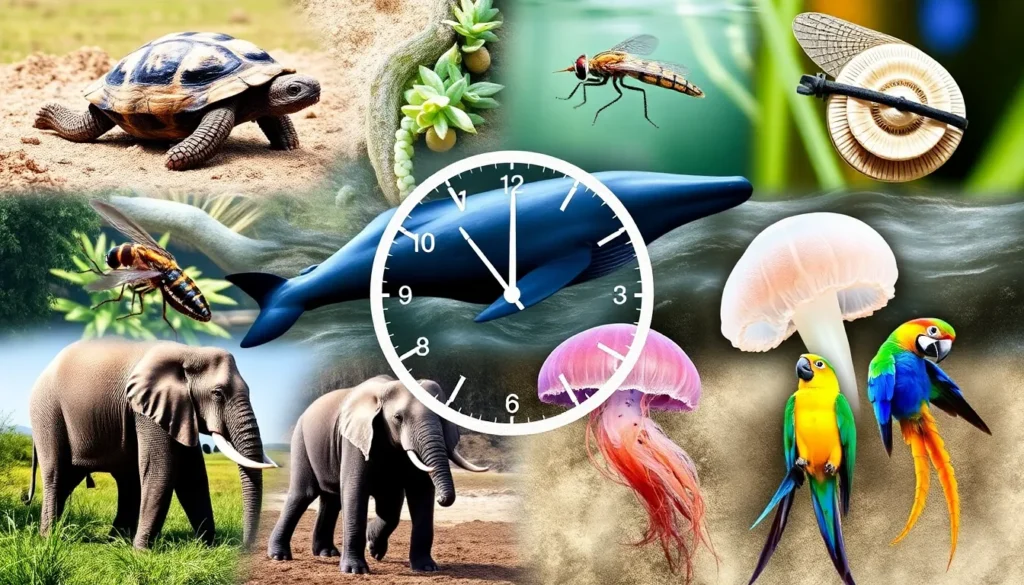
- Some turtles live for over 150 years. Certain species, like the Galápagos tortoise, are known for their exceptional longevity, often surpassing a century in age.
- Bowhead whales can live more than 200 years. These Arctic whales hold the record for the longest lifespan among mammals.
- Mayflies have some of the shortest lifespans. Adult mayflies live only a few hours to a couple of days, emphasizing their brief reproductive phase.
- Clams such as the ocean quahog can live for centuries. One specimen was found to be over 500 years old, making it one of the longest-living animals.
- Elephants live around 60 to 70 years in the wild. Their long childhood and social structures contribute to their lifespan.
- Parrots can live for 50 to 80 years. Some species, like macaws and cockatoos, are known for their longevity in captivity and the wild.
- Dogs’ lifespans vary widely by breed. Smaller breeds often live longer, sometimes up to 15 years or more, while larger breeds may live shorter lives.
- Some species of sharks can live over 400 years. The Greenland shark is notable for its extremely slow growth and long lifespan.
- Fruit flies have lifespans of about a month. They are widely used in scientific aging research due to their short life cycles.
- Humans have a maximum recorded lifespan of about 122 years. Jeanne Calment holds the verified record for human longevity.
- Some jellyfish exhibit biological immortality. The species Turritopsis dohrnii can revert to an earlier life stage, potentially avoiding death indefinitely.
- Birds generally live longer than similarly sized mammals. This is attributed to different metabolic rates and evolutionary adaptations.
- Insects often have rapid life cycles but can vary greatly. For example, cicadas can spend up to 17 years underground before emerging as adults.
- Longevity in captivity often exceeds that in the wild. Factors such as reduced predation and consistent food supply contribute to longer life in controlled environments.
- Some amphibians, like the olm, can live for over 100 years. Their slow metabolism and stable subterranean habitats aid longevity.
- Animals with slower metabolisms tend to live longer. This principle is part of the rate-of-living theory, though it has exceptions.
- Genetic factors play a significant role in lifespan determination. Species-specific genes regulate aging processes and resistance to diseases.
- Environmental stressors can drastically reduce lifespan. Habitat destruction, pollution, and climate change impact survival rates across species.
- Some animals exhibit negligible senescence. This means they show little to no signs of aging, maintaining physiological function throughout life.
- Reproductive strategies can influence lifespan. Species that reproduce once and die, like some salmon, have very short lifespans compared to iteroparous species that reproduce multiple times.
- Research into animal lifespans informs human aging studies. Understanding mechanisms behind longevity in animals helps explore potential interventions for human healthspan.
Habitat and Behavior
Animal lifespans are closely linked to their habitats and behaviors. Species living in stable, protected environments with fewer predators tend to live longer, as seen in some deep-sea creatures or island-dwelling tortoises. Behavioral adaptations, such as social structures in elephants and primates, contribute to survival and longevity through cooperative care and protection. Conversely, animals with high predation risk or harsh environments often evolve shorter lifespans with rapid reproduction to ensure species survival. Migration, diet, and metabolic rates also influence lifespan, with species adopting strategies that maximize survival based on ecological pressures.
Why This Animal Matters
Understanding animal lifespans is important for ecological balance, conservation efforts, and scientific research. Long-lived species often play crucial roles in ecosystems, such as keystone species or ecosystem engineers, influencing habitat structure and biodiversity. Species with exceptional longevity can serve as indicators of environmental health and resilience. Additionally, studying lifespan variations enhances knowledge of aging biology, offering insights into disease resistance and longevity that may be applicable to human medicine. Protecting animals with unique lifespan traits helps maintain genetic diversity and ecosystem stability.
Common Misconceptions
Misconception: All large animals live longer than small animals.
Correction: While size can influence lifespan, there are many exceptions. For example, some small birds and bats live longer than much larger mammals, due to differences in metabolism and evolutionary adaptations.
Misconception: Animals in captivity always live longer than in the wild.
Correction: Although captivity can reduce threats like predation and starvation, it can also introduce stress, limited space, and disease, which may shorten lifespan for some species.
FAQ
What determines the lifespan of an animal?
Animal lifespan is influenced by genetics, metabolic rate, environmental conditions, predation pressures, and reproductive strategies. These factors combine uniquely in each species to determine its typical lifespan.
Why do some animals live much longer than others?
Differences in aging processes, metabolic rates, and ecological adaptations explain why some animals live longer. For instance, slow metabolism and effective DNA repair mechanisms contribute to longevity in species like turtles and whales.
Can animals live longer in captivity?
Many animals can live longer in captivity due to reduced predation and consistent food supply, but this is not universal. Captivity can also introduce stress and diseases that may shorten lifespan in some species.

Leave a Reply