
Short Answer
21 Facts About Animal Camouflage
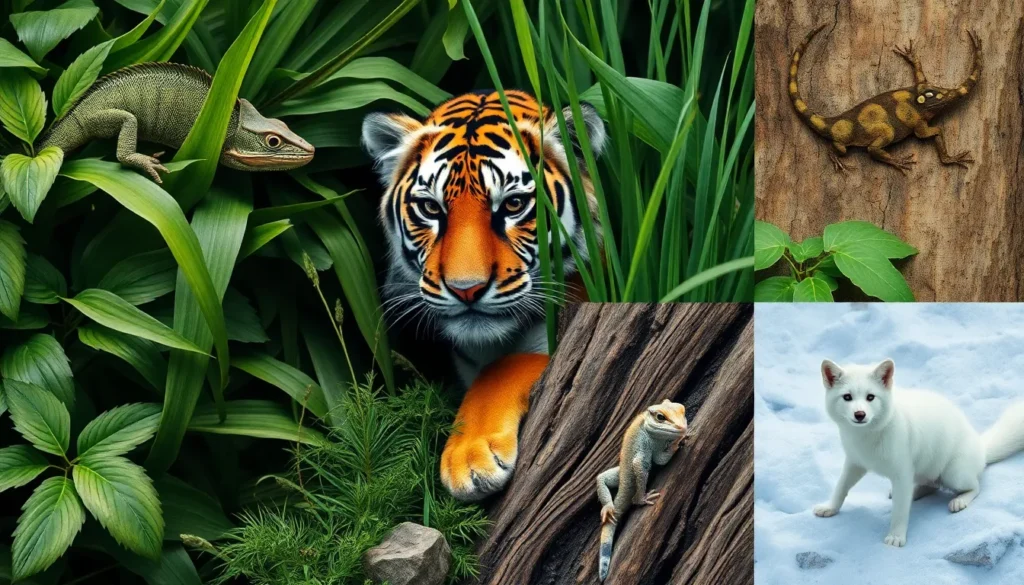
- Camouflage Helps Animals Avoid Predators. Many animals use camouflage to blend into their surroundings, reducing the chance of being spotted by predators.
- Camouflage Can Also Aid in Hunting. Predators such as the tiger and the anglerfish use camouflage to sneak up on or lure prey.
- Color Change is a Common Camouflage Method. Species like chameleons, cuttlefish, and some frogs change color to match their environment.
- Mimicry is a Form of Camouflage. Some animals imitate the appearance of other species or objects, such as the stick insect resembling twigs.
- Disruptive Coloration Confuses Predators. Bold patterns like stripes or spots break up the outline of an animal, making it harder to detect.
- Countershading Helps Conceal Shape. Many animals have darker backs and lighter bellies to reduce shadows and blend in when viewed from different angles.
- Seasonal Camouflage is Found in Some Species. Animals like the arctic fox and snowshoe hare change fur color with seasons to match snow or vegetation.
- Camouflage is Not Always Visual. Some marine animals use transparency or reflectivity to become less visible underwater.
- Some Animals Use Texture to Enhance Camouflage. Creatures like leaf-tailed geckos have skin textures that resemble tree bark or leaves.
- Camouflage Can Involve Behavioral Adaptations. Animals may remain motionless or position themselves strategically to maximize their concealment.
- Juvenile and Adult Animals May Use Different Camouflage. The young of some species have different patterns or colors optimized for their size and vulnerability.
- Some Animals Use Camouflage to Communicate. Camouflage can signal status or readiness to mate while still providing concealment.
- Camouflage Evolved Independently in Many Groups. This adaptation is seen in insects, reptiles, birds, mammals, and marine life, showing convergent evolution.
- Some Camouflaged Animals Can Switch Between Different Patterns. Octopuses and cuttlefish can rapidly change their skin pattern and color for camouflage or signaling.
- Predators Have Evolved to Detect Camouflage. Some animals have specialized vision to see through camouflage, driving an evolutionary arms race.
- Human Activity Can Reduce the Effectiveness of Camouflage. Habitat destruction and pollution may alter backgrounds, making camouflage less effective.
- Some Animals Use Camouflage to Avoid Parasitism. By blending in, they reduce the risk of being targeted by parasites or parasitoids.
- Camouflage Contributes to Biodiversity. It allows species to occupy diverse habitats and ecological niches safely.
- Military Camouflage Was Inspired by Animal Adaptations. Human-designed camouflage patterns borrow concepts from natural animal camouflage.
- Not All Camouflage is Perfect. Sometimes animals are partially camouflaged or use warning colors alongside camouflage for defense.
- Camouflage Plays a Role in Evolutionary Survival. Species with effective camouflage are more likely to survive and reproduce, influencing natural selection.
Habitat and Behavior
Animal camouflage occurs in a wide range of habitats, including forests, deserts, oceans, and tundra. Species adapt their camouflage strategies based on the specific environmental conditions and the presence of predators or prey. For example, desert animals often have sandy or mottled coloration to blend with arid landscapes, while aquatic species may utilize translucency or reflective scales to disappear in water. Behavioral traits, such as remaining motionless or choosing resting spots that match their coloration, enhance the effectiveness of camouflage. Seasonal changes in habitat, like snow cover, prompt some animals to alter their appearance accordingly. Camouflage is closely linked to survival strategies, influencing feeding, mating, and predator avoidance.
Why This Animal Matters
Camouflaged animals play critical roles in ecosystems by maintaining predator-prey dynamics and supporting biodiversity. Their adaptations help regulate populations and ensure ecosystem stability. From an evolutionary perspective, camouflage illustrates natural selection and adaptive radiation. Culturally, animals with remarkable camouflage have inspired art, literature, and military technology. Conservation of camouflaged species often involves protecting their habitats, which benefits broader ecological communities. Understanding camouflage can also aid scientists in studying animal behavior, evolution, and responses to environmental change.
Common Misconceptions
Misconception: Camouflage always makes animals invisible.
Correction: Camouflage reduces detection but rarely achieves complete invisibility; animals rely on a combination of camouflage and behavior to avoid detection.
Misconception: Only prey animals use camouflage.
Correction: Both predators and prey use camouflage, either to avoid being seen or to approach prey unnoticed.
FAQ
What is the primary purpose of animal camouflage?
The primary purpose of animal camouflage is to help animals avoid detection by predators or prey by blending into their environment or breaking up their outline.
Can all animals change their color for camouflage?
No, not all animals can change color. Color change for camouflage is seen in specific groups such as chameleons, cuttlefish, and certain frogs, but many animals rely on fixed color patterns or other camouflage methods.
How does camouflage benefit both predators and prey?
Camouflage benefits prey by helping them avoid being seen by predators, increasing their chances of survival. Predators use camouflage to approach prey undetected, improving their hunting success.
Leave a Reply