
Short Answer
21 Facts About African Elephants
- Largest Land Mammal
African elephants (Loxodonta africana) are the largest land mammals, with adult males weighing up to 6,000 kilograms (13,200 pounds). - Distinctive Ears
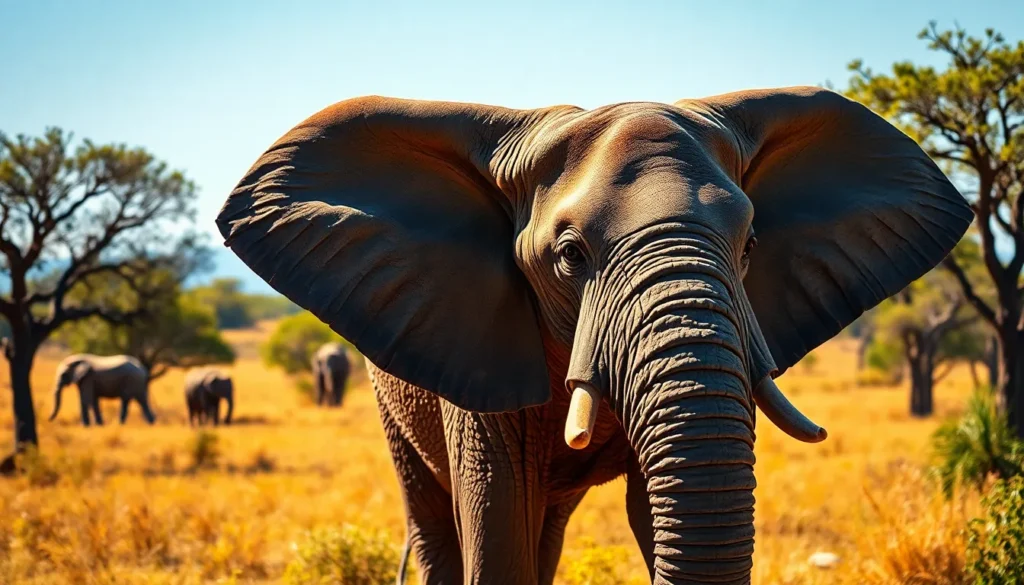
Their large ears help regulate body temperature by dissipating heat, and are shaped somewhat like the African continent. - Two Species
There are two recognized species of African elephants: the savanna (or bush) elephant and the smaller forest elephant. - Long Lifespan
They typically live 60 to 70 years in the wild, though exact longevity varies by environment and threats. - Complex Social Structure
Females live in matriarchal herds led by an older female, while males usually live solitary or form bachelor groups. - Highly Intelligent
African elephants show advanced problem-solving skills, self-awareness, and exhibit behaviors interpreted as mourning and empathy. - Communication
They use low-frequency sounds called infrasound that can travel several kilometers to communicate with distant herd members. - Trunk Versatility
Their trunk contains over 40,000 muscles and serves multiple functions including breathing, smelling, touching, grasping, and producing sound. - Tusks Are Modified Incisors
Both males and females have tusks, which are elongated incisors used for digging, stripping bark, and defense. - Herbivorous Diet
They consume hundreds of kilograms of vegetation daily, including grasses, leaves, bark, and fruit. - Water Dependency
African elephants require large amounts of water daily and often modify landscapes by digging waterholes. - Impact on Ecosystem
They are considered a keystone species, shaping habitats by clearing vegetation and dispersing seeds. - Reproduction
Female elephants have a long gestation period of about 22 months, the longest of any land animal. - Slow Reproduction Rate
Due to long gestation and extended parental care, population recovery is slow, making them vulnerable to threats. - Threats from Poaching
Ivory poaching has significantly reduced African elephant populations over the past century. - Protected by International Laws
Several international agreements, like CITES, regulate trade and protection of African elephants. - Use of Mud Baths
Elephants frequently cover themselves in mud or dust to protect skin from sunburn and insect bites. - Migration Patterns
Some populations undertake seasonal migrations to access water and food resources. - Unique Foot Structure
They have large, padded feet that help distribute their weight and minimize noise as they walk. - Memory and Navigation
Elephants are known for excellent memory, which aids in navigation and survival during droughts. - Cultural Significance
African elephants hold symbolic importance in many cultures, representing strength, wisdom, and spirituality.
Habitat and Behavior
African elephants inhabit diverse environments including savannas, forests, deserts, and marshes across sub-Saharan Africa. The savanna elephant is generally found in open grasslands and woodlands, while the forest elephant occupies dense tropical forests in Central and West Africa. Their behavior is characterized by strong social bonds, especially among females and their offspring. Herds are typically led by a matriarch, an older and experienced female. Males leave the natal herd upon reaching adolescence and may live solitary lives or form loose bachelor groups.
These elephants are herbivores, feeding on a wide range of plant materials. They require significant daily water intake, often visiting water sources multiple times a day. Their feeding and movement patterns can influence the ecosystem, including creating clearings that benefit other species. African elephants communicate through a combination of vocalizations, body language, and seismic signals, allowing coordination over large distances.
Why This Animal Matters
African elephants play a critical ecological role as ecosystem engineers. By uprooting trees and trampling vegetation, they maintain the balance between forest and grassland habitats, which supports biodiversity. Their seed dispersal activities promote forest regeneration. Beyond ecology, African elephants have cultural and economic importance in many African societies, featuring prominently in folklore, art, and rituals.
Conservation of African elephants is vital due to their declining populations caused by habitat loss, human-wildlife conflict, and poaching for ivory. They are flagship species for wildlife conservation, symbolizing broader efforts to protect Africa’s natural heritage and promote sustainable coexistence between humans and wildlife.
Common Misconceptions
Misconception: All African elephants are the same species.
Correction: There are two distinct species: the larger savanna elephant and the smaller forest elephant, differing in size, habitat, and genetics.
Misconception: Elephant tusks are only present in males.
Correction: Both male and female African elephants have tusks, although tusk size can vary between sexes and individuals.
Misconception: Elephants are slow and clumsy.
Correction: Despite their size, elephants can move quickly and quietly, with specialized foot structure that cushions their steps.
Misconception: Elephants are solitary animals.
Correction: Female African elephants are highly social and live in close-knit family groups, while males tend to be more solitary as adults.
Misconception: Elephants use their trunks only for drinking water.
Correction: The trunk is a multipurpose organ used for breathing, smelling, touching, feeding, social interaction, and making sounds.
FAQ
How do African elephants communicate over long distances?
African elephants use low-frequency sounds called infrasound that can travel several kilometers, allowing them to communicate with herd members far away.
What is the difference between African savanna and forest elephants?
Savanna elephants are larger with bigger ears and tusks and live in open grasslands, while forest elephants are smaller, have straighter tusks, and inhabit dense tropical forests.
Why are African elephants important to their ecosystems?
They act as ecosystem engineers by modifying habitats, dispersing seeds, and maintaining the balance between forest and grassland environments, supporting biodiversity.



Leave a Reply