
Short Answer
21 Facts About Mackerel
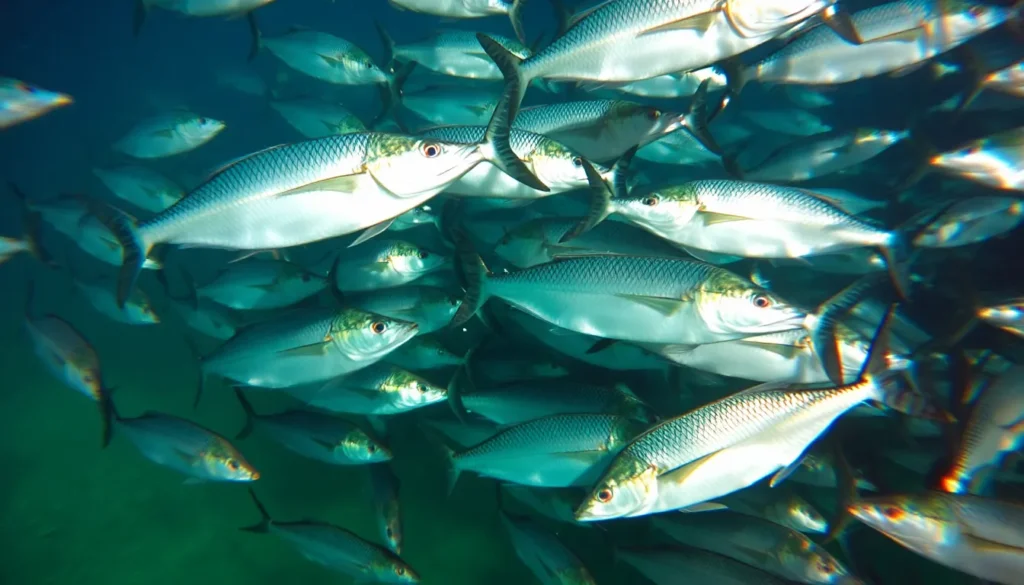
- Social Structure: Mackerel exhibit a complex social structure, often forming large schools that can number in the thousands.
- Communication: Mackerel communicate through body language and possibly through chemical signals.
- Predator Evasion: The schooling behavior of mackerel is a defense mechanism against predators.
- Migration Patterns: Mackerel are known to migrate seasonally, often moving in large schools to warmer waters.
- Feeding Behavior: Mackerel schools often hunt cooperatively, driving prey into tighter clusters.
- Visual Cues: Mackerel rely heavily on visual cues to maintain their schooling formations.
- Size Variation: Schools can vary in size, often depending on environmental conditions and food availability.
- Breeding Schools: During spawning seasons, mackerel may form specialized breeding schools.
- Coastal Habitats: Mackerel are typically found in coastal waters, favoring areas rich in plankton.
- Behavioral Synchrony: Mackerel exhibit synchronized swimming patterns, which enhance their schooling efficiency.
- Thermal Preferences: Mackerel are sensitive to water temperature and often school in areas with optimal thermal conditions.
- Predator Awareness: Mackerel can detect predators quickly through lateral line systems that sense vibrations in the water.
- Coloration: The unique coloration of mackerel helps them blend into their environment while schooling.
- Schooling Dynamics: The dynamics of mackerel schools can change rapidly in response to environmental stimuli.
- Ecological Role: Mackerel play a significant role in marine ecosystems as both predators and prey.
- Fisheries Importance: Mackerel are an important species for commercial fisheries worldwide.
- Reproductive Strategies: Mackerel practice external fertilization during spawning, which typically occurs in open water.
- Longevity: Mackerel can live up to 20 years, though most are caught before reaching full maturity.
- Schooling in Other Species: Mackerel’s schooling behavior is similar to that of other pelagic fish, such as herring and sardines.
- Fishing Techniques: Fishermen often use specific techniques to target mackerel schools effectively.
- Conservation Status: Many mackerel species are subject to overfishing, making conservation efforts critical.
- Adaptability: Mackerel are highly adaptable to different marine environments, which contributes to their widespread distribution.
These schools provide safety in numbers, making it more difficult for predators to target individual fish.
This communication aids in maintaining alignment and cohesion within the school.
By moving in unison, they create confusion, making it harder for predators to single out one fish.
This migration is typically driven by the search for food and spawning grounds.
This cooperative hunting increases their efficiency in catching prey.
Changes in light and water movement can trigger alterations in their schooling behavior.
In nutrient-rich waters, larger schools may form, while smaller schools may be seen in less favorable conditions.
These schools often consist of both males and females and may differ in structure from feeding schools.
These habitats provide ample food resources necessary for their growth and reproduction.
This synchrony helps them evade predators and improves their foraging success.
They prefer temperatures between 10°C and 20°C for optimal activity.
This ability allows them to react swiftly, either by fleeing or adjusting their school formation.
Their reflective scales can confuse predators as schools shift and change shape.
These changes can be crucial for adapting to threats or food availability.
They help regulate plankton populations and serve as food for larger marine animals.
This economic relevance underscores the need for sustainable fishing practices to protect their populations.
This strategy increases the likelihood of fertilization due to the large number of eggs released.
This longevity contributes to their population dynamics and reproductive potential.
Studying these behaviors can provide insights into the evolutionary advantages of schooling.
Understanding their schooling behavior can enhance catch efficiency and sustainability.
Regulations are essential to ensure the sustainability of mackerel populations.
This adaptability helps them thrive in varying ocean conditions.
Habitat and Behavior
Mackerel inhabit a variety of marine environments, typically favoring temperate and tropical waters. They are often found in coastal areas, where they can access abundant food sources such as plankton. Their schooling behavior is a crucial adaptation that enhances their survival, allowing them to evade predators and improve foraging efficiency. Mackerel are known for their migratory patterns, often moving to warmer waters during specific seasons to spawn and feed.
Why This Animal Matters
Mackerel play a vital role in marine ecosystems, acting as both predators and prey within the food web. They help regulate plankton populations and are a key food source for larger fish, seabirds, and marine mammals. Additionally, mackerel are economically significant, supporting commercial fisheries worldwide. Their conservation is essential for maintaining biodiversity and ensuring the sustainability of marine resources.
Common Misconceptions
Misconception: Mackerel are solitary fish that do not form social groups.
Correction: Mackerel are highly social and typically form large schools for protection and foraging.
Misconception: All mackerel species are endangered due to overfishing.
Correction: While some mackerel species face threats from overfishing, others are stable; conservation status varies by species.
FAQ
What do mackerel eat?
Mackerel primarily feed on small fish, crustaceans, and plankton.
How do mackerel evade predators?
They use their schooling behavior to confuse predators and escape.
Are mackerel important for ecosystems?
Yes, they play a critical role in marine food webs as both predators and prey.



Leave a Reply