
Short Answer
21 Facts About Noise Pollution and Marine Mammals
- Marine mammals rely heavily on sound. Unlike humans, many marine mammals depend on sound to navigate, communicate, find food, and detect predators in their often dark and murky underwater habitats.
- Noise pollution originates from multiple sources. Common sources include shipping traffic, naval sonar, seismic surveys, construction, and recreational boating.
- Shipping noise is the largest contributor to ocean noise pollution. The continuous low-frequency sounds produced by commercial vessels can travel long distances underwater.
- Noise pollution can cause behavioral changes. Marine mammals may alter their diving patterns, feeding habits, or migration routes to avoid noisy areas.
- Communication disruption is a significant effect. Elevated noise levels can mask marine mammals’ vocalizations, reducing their ability to communicate effectively.
- Stress responses have been observed in affected animals. Chronic noise exposure can elevate stress hormones, potentially impacting immune function and reproduction.
- Some species are more vulnerable than others. For example, beaked whales and certain dolphins have shown acute sensitivity to specific sonar frequencies.
- Naval sonar has been linked to strandings. Several mass strandings of beaked whales have coincided with naval sonar exercises, suggesting causation though the exact mechanisms remain under study.
- Noise pollution can cause hearing damage. Prolonged exposure to loud noises may lead to temporary or permanent hearing loss in marine mammals.
- Masking effect reduces detection of environmental cues. Noise can interfere with the ability to hear prey, predators, or mates, which can affect survival and reproduction.
- Mother-calf communication can be disrupted. Calves rely on vocalizations to maintain contact with mothers, and noise can interfere with this crucial bonding.
- Noise may force animals to expend more energy. Avoidance behavior or increased vocal effort to overcome noise masking can raise energy demands.
- Some marine mammals change vocalization patterns. Species like humpback whales have been observed to adjust call frequency or amplitude in noisy environments.
- Noise pollution can reduce habitat quality. Persistent noise makes some critical habitats less suitable, potentially reducing biodiversity.
- Regulatory measures exist but vary globally. Some countries have guidelines or restrictions on sonar use and shipping noise to protect marine life.
- Technological solutions are being explored. These include quieter ship designs, speed restrictions, and alternative survey techniques to reduce noise impact.
- Research efforts are ongoing. Scientists continue to study the complex impacts of noise pollution and develop mitigation strategies.
- Public awareness is increasing. Conservation organizations and governments are working to raise awareness about underwater noise and its effects.
- Noise pollution is considered a growing threat. With increasing industrial activity and ocean traffic, underwater noise is expected to rise if unregulated.
- Marine mammals are important indicators of ocean health. Their responses to noise pollution can signal broader environmental changes affecting marine ecosystems.
- International cooperation is crucial. Since marine mammals migrate across national boundaries, global agreements help coordinate efforts to manage noise pollution.
Habitat and Behavior
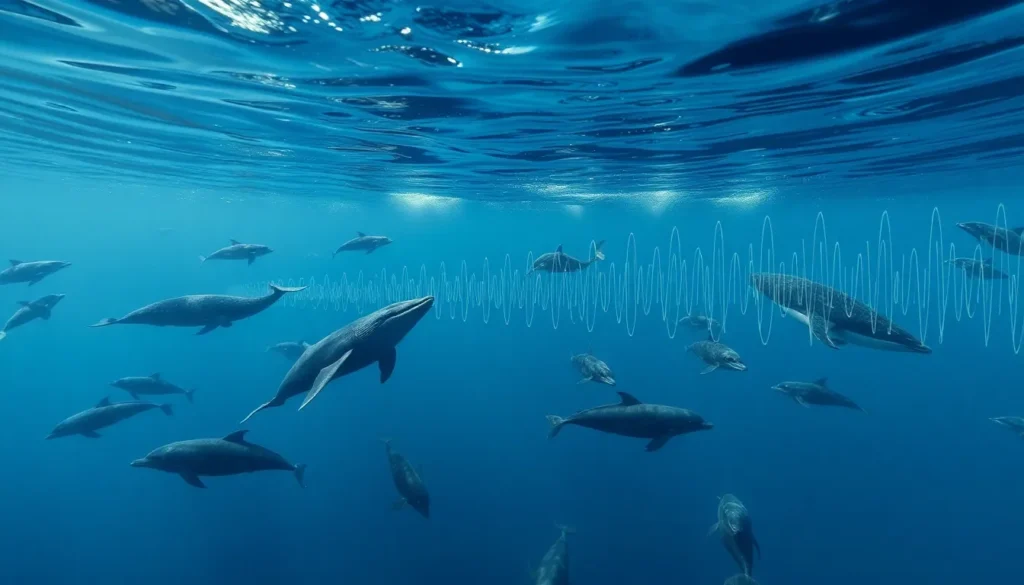
Marine mammals inhabit diverse oceanic habitats ranging from coastal zones to deep offshore waters. Species such as whales, dolphins, seals, and manatees have adapted to aquatic life with specialized physiological and behavioral traits. They use sound extensively for echolocation, communication, navigation, and social interaction. Many species undertake long migrations and rely on acoustic cues to find feeding and breeding grounds. Their survival depends on an acoustic environment that supports these vital behaviors, making them particularly susceptible to changes in underwater noise levels.
Why This Animal Matters
Marine mammals play critical ecological roles as apex predators, prey, and ecosystem engineers in marine food webs. They help maintain the balance of marine ecosystems by regulating populations of fish and invertebrates. Culturally, many indigenous communities have long-standing relationships with marine mammals, incorporating them into traditions and economies. From a conservation perspective, marine mammals are often flagship species for marine protection efforts, raising awareness about ocean health. Protecting them from noise pollution not only safeguards their populations but also contributes to the overall wellbeing of marine environments.
Common Misconceptions
Misconception: Marine mammals are not affected by human noise because sound travels differently underwater.
Correction: In fact, sound travels faster and farther underwater, which can amplify the impact of human-generated noise on marine mammals, disrupting their natural behaviors.
Misconception: Only loud, sudden noises affect marine mammals.
Correction: Continuous low-frequency sounds, such as from shipping, can cause chronic stress and behavioral changes even if they are not immediately startling.
Misconception: Marine mammals can just move away from noisy areas to avoid harm.
Correction: While some may relocate, suitable habitat is limited and displacement can lead to increased energy expenditure, reduced feeding opportunities, and other adverse effects.
Misconception: Noise pollution effects are well understood and easily mitigated.
Correction: The full extent of noise pollution impacts is complex and varies among species, requiring ongoing research and adaptive management strategies.
Misconception: Noise pollution is less important than chemical pollution in affecting marine life.
Correction: Both forms of pollution present significant threats, and noise pollution uniquely disrupts essential behaviors that chemical pollutants may not directly affect.
FAQ
How does noise pollution affect marine mammals' communication?
Noise pollution can mask the vocalizations of marine mammals, making it difficult for them to communicate over long distances. This can interfere with mating calls, mother-calf interactions, and group coordination.
What are the main sources of underwater noise pollution?
The main sources include commercial shipping, naval sonar exercises, seismic exploration for oil and gas, underwater construction, and recreational boating, all of which generate varying frequencies and intensities of sound.
Are there any regulations to protect marine mammals from noise pollution?
Yes, some countries and international bodies have established guidelines and regulations that limit the use of sonar, mandate quieter ship designs, and restrict noisy activities in sensitive marine habitats to reduce the impact on marine mammals.






Leave a Reply