
Short Answer
Italy, a land steeped in history, art, and culture, serves as a living testament to the rise and fall of empires, the birth of art movements, and the evolution of human thought. From antiquity to modernity, Italy’s past resonates with stories that highlight the country’s profound impact on the world. For many, Italy isn’t just a destination; it possesses a fascinating aura, beckoning those curious about its illustrious legacy. Discover these ten eternal and glorious facts that encapsulate Italy’s historical significance.
1. The Birthplace of a Civilization
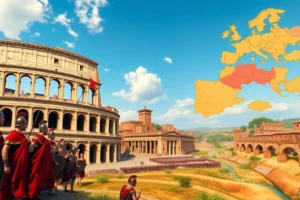
Italy is often deemed the cradle of Western civilization. The ancient Romans, armed with innovative ideas and impressive engineering skills, established a sprawling empire that, at its zenith, controlled vast territories across Europe, North Africa, and the Middle East. They pioneered concepts such as law, governance, and military strategy, which still permeate modern-day societies. The Roman legacy is palpable in contemporary governance, language, and culture, proving that history is indeed a continuum.
2. The Renaissance: A Cultural Rebirth
The 14th to the 17th century marked a seismic shift in art, science, and intellectual thought, known as the Renaissance. Emerging initially in Florence, this period was characterized by a return to classical ideals, and an unprecedented celebration of humanism. Visionaries like Leonardo da Vinci and Michelangelo not only revolutionized artistic expression but also inspired a thirst for knowledge that spurred advances in anatomy, engineering, and cosmology. This glorious era intertwines Italy’s identity with a legacy of innovation that continues to inspire creative minds worldwide.
3. The Vatican: Center of Spiritual Authority
Nestled within the heart of Rome, the Vatican City stands as a symbol of spiritual leadership for millions of Catholics across the globe. As the papal enclave, it is home to awe-inspiring treasures, including St. Peter’s Basilica and the Sistine Chapel with Michelangelo’s iconic ceiling. Beyond its magnificent architecture, the Vatican’s historical role in European politics and theology showcases Italy’s influence on global spirituality. The very walls echo with centuries of doctrine, controversy, and inspiration, embodying a vivid tapestry of religious history.
4. The Unification: From Fragmentation to Nationhood
Italy’s unification in the 19th century, known as the Risorgimento, marked a pivotal moment in its history. Despite being fragmented into various states and kingdoms for centuries, the surge for national identity culminated in the establishment of the Kingdom of Italy in 1861. Figures like Giuseppe Garibaldi and Count Cavour emerged as critical architects of this unity, embodying the fervent spirit of nationalism. This transition from disjointed entities to a cohesive nation is a testament to the enduring pursuit of identity and autonomy, themes that resonate with nations worldwide.
5. The Innovation of Italian Cuisine
Italy’s historical memory is not confined to politics and art; it is also profoundly evident in its culinary traditions. The diverse regions of Italy have given rise to a wealth of gastronomic innovations, setting the bar for global cuisine. Dishes like pizza and pasta have transcended borders, yet each carries the essence of its locale—from the sun-drenched orchards of Sicily to the alpine peaks of Trentino. This culinary heritage is steeped in communal rituals and local customs, showcasing how food becomes a vessel for cultural expression and historical continuity.
6. The Influence of Italian Literature
The literary output of Italy has profoundly shaped the canon of Western literature. With luminaries like Dante Alighieri, whose “Divine Comedy” explores complex themes of morality and existence, and Petrarch, whose sonnets popularized the lyrical form, Italy has long been a soil fertile for poetic innovation. The travels of Marco Polo opened Western eyes to the mysteries of the East while the works of Boccaccio provided insights into human nature and society. This vibrant literary tradition underlines the depth of intellectual engagement that has characterized Italian history.
7. Artistic Movements and Craftsmanship
Italian art is synonymous with genius. Beyond the Renaissance, the Baroque period flourished with artists like Caravaggio and Bernini redefining artistic norms. The textured emotions, dramatic use of light and shadow, and grandeur of Baroque art exhibit an intense vitality that continues to captivate audiences. Furthermore, regions like Murano and Florence are celebrated for their exquisite craftsmanship in glassmaking and textiles, respectively. These artistic legacies reinforce Italy’s status as a beacon of creativity and innovation, with techniques that are still revered and practiced today.
8. Italy’s Role in World War II
The complexities of Italy’s involvement in World War II provide a multi-faceted lens through which to understand its modern history. Initially aligned with the Axis powers under Mussolini, Italy’s subsequent switch to the Allies reflects shifting political landscapes and internal tumult. The post-war period necessitated profound socio-political restructuring, giving rise to a republic. This tumultuous chapter not only reshaped Italy’s national identity, but it also serves as a reminder of the delicate interplay between governance, ideology, and public sentiment.
9. The Global Diaspora and Cultural Exchange
Italy’s historical narrative has been accentuated by waves of emigration. Between the late 19th and early 20th centuries, millions of Italians ventured abroad, primarily to the Americas, seeking opportunities. This diaspora has contributed significantly to cultural exchange, with Italian traditions, dialects, and culinary practices enriching global communities. Such cross-pollination of cultures has created a multifaceted identity, illustrating how Italy’s historical influence endures far beyond its geographical borders.
10. Modern Italy: A Tapestry of Tradition and Innovation
As Italy strides further into the 21st century, it continues to balance its rich historical roots with modern advancements. From pioneering fashion houses in Milan to sustainable agriculture in Tuscany, Italy embodies a duality that marries tradition with contemporary ambition. This ongoing evolution highlights the resilience and dynamism of a nation whose past continues to inform its present, underscoring why Italy remains an enduring source of fascination for countless admirers around the globe.
In conclusion, Italy’s history is a vibrant mosaic woven from diverse influences and transformative events. As we delve into these ten glorious facts, we unearth a deeper understanding not only of Italy itself but of the shared values that link humanity across time and culture. The echoes of Italy’s past beckon, inviting exploration and contemplation, ensuring its legacy will shine brightly for generations to come.
FAQ
What are some key events in Italy's history?
Key events include the rise of the Roman Empire, the Renaissance, the Unification of Italy, and its role in World War II.
Why is Italy considered the cradle of Western civilization?
Italy is known for its ancient Roman contributions, including governance, law, and engineering, which have shaped modern society.



Leave a Reply