
Short Answer
Throughout history, eclipses have captivated humanity, igniting our imaginations and inspiring awe. These celestial phenomena, whether they involve the moon obscuring the sun or the earth casting its shadow upon the moon, serve not only as spectacles of natural beauty but also as markers of scientific curiosity and cultural significance. Here are ten cosmic and jaw-dropping interesting facts about eclipses that illustrate their wonder and complexity.
1. The Dance of Shadows and Lights
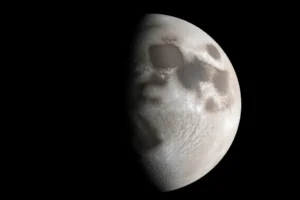
At the heart of an eclipse lies a simple yet profound interplay between celestial bodies. A solar eclipse occurs when the moon passes directly between the Earth and the sun, casting a shadow on Earth. Conversely, a lunar eclipse happens when the Earth comes directly between the sun and the moon, causing Earth’s shadow to envelop the moon. This intricate ballet of shadows and light provides not only a visually stunning experience but also a fascinating demonstration of orbital mechanics.
2. Types of Eclipses: More Than Meets the Eye
Eclipses are not monolithic; they vary significantly in form. A total solar eclipse occurs when the moon completely covers the sun, creating a moment of profound darkness during the day. An annular eclipse presents a different spectacle, wherein the moon covers the central part of the sun, leaving a “ring of fire” visible around its edges. Partial solar eclipses, on the other hand, involve only a portion of the sun being obscured. Lunar eclipses also diverge into total, partial, and penumbral varieties, each delivering unique visual experiences and scientific opportunities.
3. Frequency and Rarity: Eclipses Are Not Regular Guests
The rhythm of eclipses is dictated by the complex dance of celestial bodies and their alignments. Solar eclipses can occur up to five times a year, while lunar eclipses are slightly more frequent. However, total solar eclipses are rare at any given location, averaging just once every 375 years. This unlikelihood adds to the allure, as the anticipation builds over years or even decades as one awaits the chance to witness this spectacular occurrence from a specific vantage point.
4. Historical Significance: Eclipses as Portents
Throughout history, eclipses have often been interpreted as omens or divine messages. From ancient civilizations, such as the Mayans and Chinese, to more recent societies, eclipses have sparked a range of fears and superstitions. The total solar eclipse of 1919 played a pivotal role in the validation of Einstein’s theory of general relativity, showcasing how these events can alter not only perceptions but also the course of scientific history.
5. The Shadow Path: Geography and Eclipses
The geographic location of an observer is crucial when it comes to witnessing an eclipse. The path of totality for solar eclipses—the narrow lane where observers can witness the complete coverage of the sun—can be as brief as a few minutes and spans a limited area on Earth. In contrast, lunar eclipses can be seen from anywhere on the night side of the Earth. This makes solar eclipses particularly unique experiences, inevitably drawing crowds and increasing tourism in their projected paths.
6. Timing Is Everything: The Saros Cycle
The Saros cycle is a fascinating phenomenon that highlights the predictability of eclipses. Spanning approximately 18 years, 11 days, and 8 hours, this cycle leads to the repeat of similar eclipses, albeit viewing from different geographic locations. This cyclical nature allows astronomers to forecast future eclipses with remarkable accuracy, connecting past and future celestial events through the fabric of time.
7. A Phenomenon of Color: The “Blood Moon”
During a total lunar eclipse, one striking visual element emerges: the “Blood Moon.” As the Earth’s shadow envelops the moon, it takes on a reddish hue due to Rayleigh scattering—an effect that also causes sunsets to appear red. This mesmerizing transformation has given rise to folklore and intrigue, positioning lunar eclipses as not just astronomical events but also cultural spectacles that dazzle observers with their surreal beauty.
8. Solar Eclipses and Animal Behavior
Nature reacts in intriguing ways during a solar eclipse. Animals often exhibit behaviors akin to dusk or nighttime, as the sudden absence of sunlight can confuse them. Birds may cease their singing, crickets might start chirping, and wildlife interactions can shift dramatically during the brief span of darkness. This collective response illuminates the interconnectedness of life on Earth and how profoundly our environment is attuned to celestial rhythms.
9. The Solar Eclipse Chasers: A Global Community
A unique subculture exists among enthusiasts known as eclipse chasers, who travel the world to experience total solar eclipses. This passionate community contributes to global tourism, spurring local economies and enhancing scientific engagement. The thrill of witnessing an eclipse often transcends mere observation; it becomes a shared experience—a moment of camaraderie among those who travel to the same geographic areas in pursuit of nature’s marvel.
10. Eclipses in the Digital Age: Technology Meets Astronomy
In our modern age, technology has transformed the way we can experience eclipses. From live-streamed events to sophisticated simulations and augmented reality apps, observers can engage with eclipses in unprecedented ways. These innovations not only enhance public interest and education but also bridge gaps between scientific communities and the general population, allowing more people to appreciate the grandeur of these celestial events.
In conclusion, eclipses are not mere astronomical phenomena; they embody a confluence of history, culture, and science. From their intricate mechanisms to their sweeping influences on human thought, these celestial events continue to inspire wonder and reverence. As we look to the skies, each solar and lunar eclipse invites us to ponder our place in the cosmos, illuminating the enduring mysteries that lie just beyond our reach.
FAQ
What is a solar eclipse?
A solar eclipse occurs when the moon passes between the Earth and the sun, casting a shadow on the Earth.
How often do eclipses occur?
Solar eclipses can occur up to five times a year, while lunar eclipses can be slightly more frequent.
What is the Saros cycle?
The Saros cycle is an approximately 18-year cycle that leads to the repeat of similar eclipses at different geographic locations.
What is a 'Blood Moon'?
A ‘Blood Moon’ occurs during a total lunar eclipse when the moon takes on a reddish hue due to Earth’s shadow.



Leave a Reply