
Short Answer
21 Facts About Rat Intelligence
- Rats Can Navigate Complex Mazes
Rats are known for their ability to navigate intricate mazes, showcasing their advanced spatial awareness and memory. Their performance in maze tests has been used in scientific research to understand learning processes.
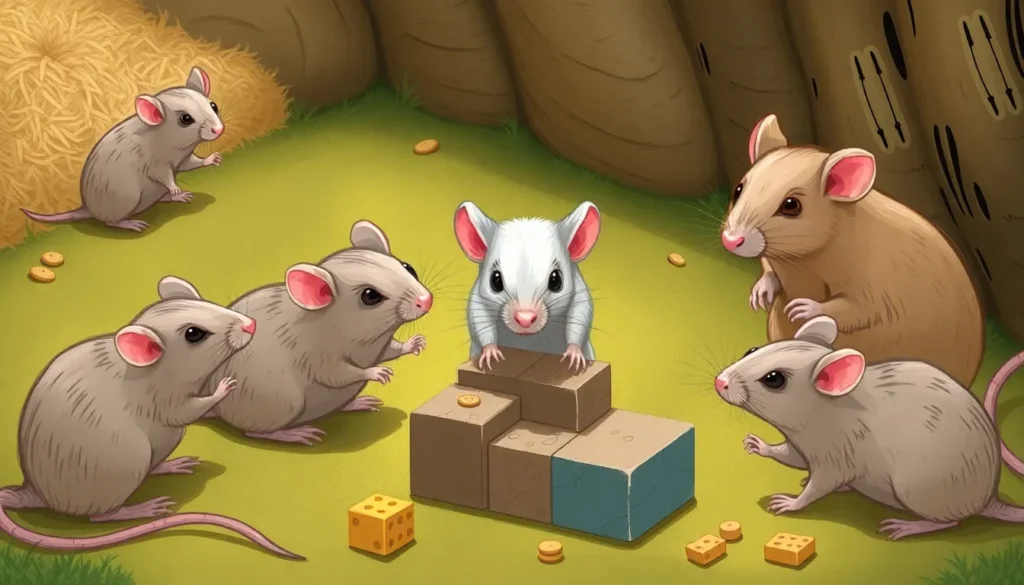
- They Exhibit Problem-Solving Skills
Studies have shown that rats can solve puzzles to obtain food rewards, demonstrating their ability to think critically and adapt to challenges in their environment.
- Rats Can Use Tools
Some species of rats have been observed using objects as tools to access food, indicating a level of cognitive sophistication previously thought to be limited to primates and certain birds.
- Social Learning is Common
Rats learn from observing each other, a trait known as social learning. This ability allows them to acquire new skills and behaviors without direct experience.
- Rats Have a Strong Sense of Smell
Their keen olfactory abilities are linked to their intelligence, as they can use scent to remember locations and identify food sources, allowing them to adapt to their surroundings.
- Rats Display Empathy
Research indicates that rats can empathize with one another, exhibiting concern for their fellow rats’ distress, which reflects a level of emotional intelligence.
- Memory Retention is Impressive
Rats can remember the locations of food sources and navigate back to them after a significant amount of time has passed, illustrating their long-term memory capabilities.
- They Can Understand Context
Rats can comprehend the context of various situations, allowing them to make decisions based on past experiences, which is a sign of advanced cognitive processing.
- Rats Communicate Effectively
Rats use a variety of vocalizations to communicate with each other, which can convey information about food, danger, and social dynamics.
- They Exhibit Playful Behavior
Young rats engage in playful activities, which is believed to be important for developing social skills and cognitive abilities.
- Rats Can Be Trained
They are highly trainable and can learn commands and tricks, which is often utilized in behavioral studies and as service animals.
- They Can Anticipate Rewards
Rats can predict the outcome of their actions based on previous experiences, demonstrating foresight and planning abilities.
- Rats Show Individual Differences
Just like humans, individual rats display varying degrees of intelligence and problem-solving skills, indicating that cognitive abilities can differ widely among species.
- Rats Have a Complex Social Structure
Their social interactions are complex, involving cooperation and competition, which require advanced cognitive skills to navigate.
- Rats Can Be Self-Aware
Some studies suggest that rats may possess a form of self-awareness, allowing them to reflect on their own actions and decisions.
- They Exhibit Cultural Behaviors
Rats in different environments have developed distinct behaviors and problem-solving techniques, reflecting a type of cultural adaptation.
- Rats Can Experience Stress
Rats demonstrate stress responses similar to those in humans, which can affect their cognitive functions and decision-making abilities.
- They Exhibit Altruistic Behavior
Rats have been observed helping other rats in need, which is a sign of advanced social awareness and intelligence.
- Rats Are Important in Research
Their intelligence and social behavior make rats a valuable model for studying human psychology and neurological disorders.
- Rats Have Unique Personalities
Research has shown that rats can have distinct personalities, influencing their behavior and interactions with other rats.
- They Can Recognize Faces
Rats may be able to recognize individual faces, which is a testament to their complex social cognition.
Habitat and Behavior
Rats are highly adaptable rodents found in a variety of environments, including urban areas, forests, and agricultural lands. They are social animals, often living in groups that exhibit complex social hierarchies. Their behavior includes foraging for food, building nests, and engaging in play, all of which demonstrate their cognitive abilities and social interactions.
Why This Animal Matters
Rats play a significant ecological role as both prey and scavengers. They contribute to the ecosystem by helping to break down organic materials and providing food for various predators. Furthermore, their intelligence makes them valuable subjects in scientific research, aiding our understanding of learning, memory, and social behaviors.
Common Misconceptions
Misconception: Rats are dirty animals that only spread disease.
Correction: While rats can carry diseases, they are also highly intelligent and clean animals that groom themselves regularly.
Misconception: Rats are incapable of forming social bonds.
Correction: Rats are social creatures that form strong bonds with other rats and can exhibit altruistic behaviors.
FAQ
What are the main cognitive abilities of rats?
Rats demonstrate problem-solving skills, social learning, memory retention, and the ability to navigate complex environments.
How do rats communicate with each other?
Rats use a variety of vocalizations and body language to convey messages about food, danger, and social interactions.
Why are rats used in scientific research?
Due to their intelligence and social behavior, rats serve as valuable models for studying human psychology and neurological disorders.






Leave a Reply