
Short Answer
21 Facts About Play Behavior in Animals
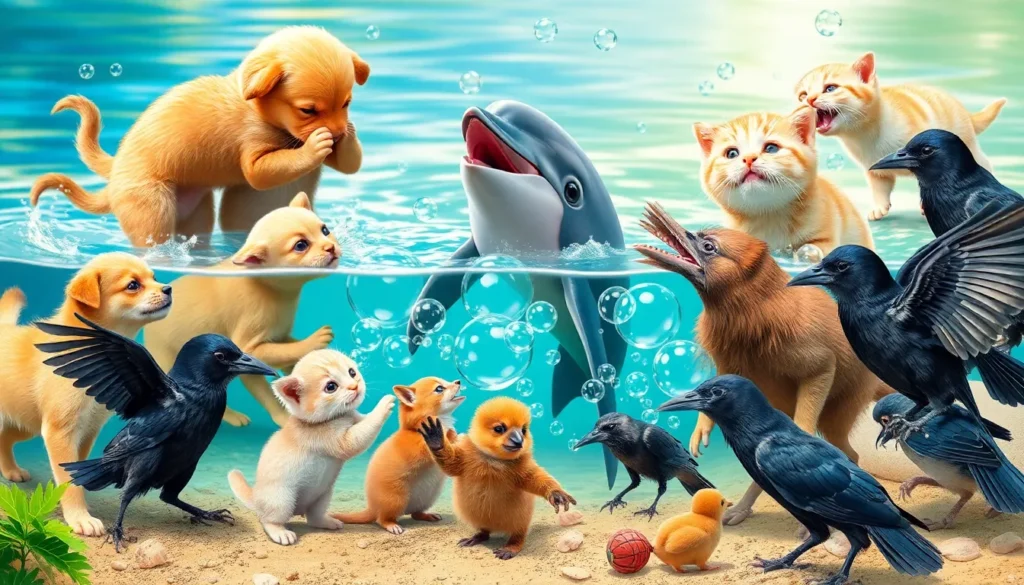
- Play is observed in many animal species. Play behavior occurs in mammals, birds, and some reptiles, indicating its evolutionary importance.
- Juveniles are the primary participants in play. Young animals often engage in play more frequently, which helps develop physical and social skills.
- Play has multiple forms. These include locomotor play (running, jumping), object play (manipulating objects), and social play (interactions with peers).
- Play can improve motor skills. Engaging in physical play helps animals refine coordination, balance, and strength.
- Social play facilitates learning social rules. Through play fighting or chasing, animals learn about dominance, submission, and cooperation.
- Play is linked to cognitive development. Problem-solving and creativity can be enhanced through playful exploration and experimentation.
- Some play behaviors mimic adult activities. For example, young predators practice hunting skills during play sessions.
- Play often occurs in safe environments. Animals tend to play when they feel secure and not under immediate threat.
- Play can serve as stress relief. Engaging in play may reduce anxiety and promote well-being.
- Play behavior is sometimes risky. Despite this, animals accept the risks, suggesting the benefits outweigh potential harm.
- Play is not always spontaneous. Some species show structured or ritualized play behaviors.
- Adult animals also engage in play. Although less frequent, adults may play to maintain social bonds or practice skills.
- Play behavior varies widely between species. The type and frequency of play depend on ecological and social factors.
- Play can involve cross-species interactions. For example, some domestic animals play with humans or other species.
- Play may help animals adapt to changing environments. Through exploratory play, animals learn about new challenges or opportunities.
- Neurochemical processes underlie play. Neurotransmitters like dopamine are involved in the rewarding aspects of play.
- Play behavior has evolutionary benefits. It contributes to survival by enhancing skills and social cohesion.
- Play is observed in both wild and captive animals. The presence of play in captivity indicates it is a fundamental behavior, not just a result of domestication.
- Some animals have unique play behaviors. For instance, dolphins engage in bubble ring play, and corvids use tools playfully.
- Play behavior can be used as an indicator of animal welfare. Regular play in captivity often reflects good health and psychological well-being.
- Scientific study of play behavior is ongoing. Researchers continue to explore its mechanisms, functions, and evolutionary origins.
Habitat and Behavior
Play behavior is documented across a wide range of habitats, from terrestrial to aquatic environments. Animals exhibiting play include mammals such as primates, canids, and felids; birds like corvids and parrots; and some reptiles. Play typically occurs in safe, resource-rich environments where animals can afford the energy and time investment without immediate survival pressures. Behavioral contexts vary but often involve social interactions, exploration, and physical activity. The behavior develops primarily in juvenile stages but can persist into adulthood for social bonding or skill maintenance. Play contributes to survival by honing motor skills, cognitive abilities, and social relationships, enhancing an animal’s adaptability and fitness within its habitat.
Why This Animal Matters
Understanding play behavior in animals provides insight into cognitive and social evolution, highlighting the complexity of animal minds and social systems. Play reflects an animal’s health and well-being, serving as an important welfare indicator in captivity and conservation. It also illuminates the evolutionary origins of human play and learning. Ecologically, play fosters skill development that supports survival, such as hunting or social negotiation. Additionally, studying play behavior can inform enrichment practices for captive animals and enhance conservation strategies by promoting natural behaviors. The cultural significance of animal play includes its role in inspiring human curiosity and empathy towards wildlife.
Common Misconceptions
Misconception: Play behavior is frivolous and serves no purpose.
Correction: Play has important developmental, cognitive, and social functions that contribute to survival and fitness.
Misconception: Only young animals play.
Correction: While juveniles play most frequently, adults also engage in play for social bonding and skill maintenance.
FAQ
Why do animals engage in play behavior?
Animals engage in play to develop motor skills, learn social rules, relieve stress, and enhance cognitive abilities, which contribute to their survival and fitness.
Is play behavior only observed in mammals?
No, play behavior is observed in a variety of species including mammals, birds, and some reptiles, indicating its broad evolutionary significance.
Can play behavior indicate an animal's well-being?
Yes, regular play behavior, especially in captive animals, is often a sign of good physical health and psychological welfare.


Leave a Reply