
Short Answer
21 Facts About Onychophoran Walking Legs
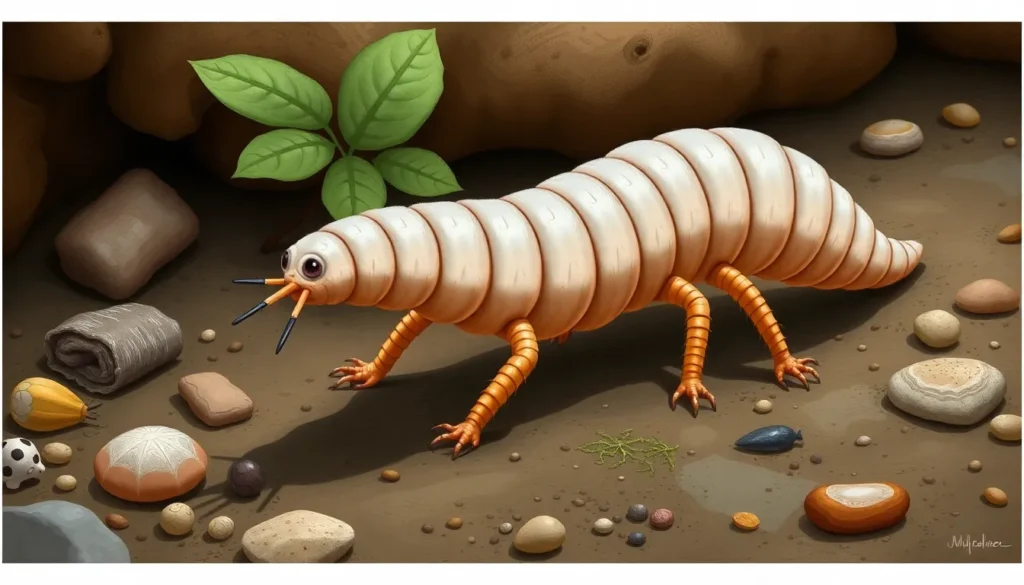
- Onychophorans are known as velvet worms. Their nickname comes from the soft, velvety texture of their body, which is covered in a chitinous cuticle.
- They possess a unique body plan. Onychophorans have a segmented body plan that provides flexibility and mobility.
- Walking legs are unjointed. Unlike insects, their legs are soft and unjointed, which allows for a crawling motion rather than jumping or flying.
- They have a pair of antennae. These sensory appendages help them navigate their environment and detect chemicals in the air.
- Onychophorans can regenerate lost limbs. If an appendage is lost, they have the ability to regenerate it over time.
- They are primarily nocturnal. Most onychophorans are active at night, which helps them avoid predators and conserve moisture.
- They utilize slime for defense. Onychophorans can secrete a sticky slime to entrap predators or escape threats.
- They have a unique reproductive system. Some species exhibit ovoviviparity, where eggs hatch inside the female body, leading to live births.
- Onychophorans are terrestrial. They inhabit moist environments such as leaf litter, forest floors, and caves.
- They are carnivorous. Their diet mainly consists of soft-bodied invertebrates, which they capture using their slime or by ambushing.
- Onychophorans have a simple nervous system. Their nervous system is less complex than that of insects, featuring a ventral nerve cord.
- They breathe through tracheae. Onychophorans have a system of tracheae for gas exchange, similar to insects.
- Their eyes are simple. Most onychophorans possess simple eyes that can detect light but do not form detailed images.
- They can live for several years. Depending on the species, onychophorans may live up to several years in the wild.
- They are part of a primitive lineage. Onychophorans are considered a transitional form between annelids and arthropods, providing insights into evolutionary biology.
- Some species are bioluminescent. Certain onychophoran species can emit light, possibly for communication or camouflage.
- They are sensitive to environmental changes. Onychophorans require humid conditions and are sensitive to changes in moisture levels, making them indicators of environmental health.
- They can be found in diverse habitats. Although primarily found in tropical and subtropical regions, some species inhabit temperate zones as well.
- Onychophorans have a unique feeding mechanism. They use a combination of suction and grasping to consume prey, using their jaws and slime simultaneously.
- They exhibit a wide range of colors. Onychophorans come in various colors, including shades of brown, green, and even blue, depending on the species.
- They are of ecological importance. Onychophorans play a role in the ecosystem by controlling insect populations and contributing to nutrient cycling.
Habitat and Behavior
Onychophorans are primarily found in damp, terrestrial environments, such as leaf litter, forest floors, and caves. They thrive in humid conditions, which are crucial for their survival, as they can easily desiccate. These creatures are nocturnal, actively foraging for food during the night to avoid predators and conserve moisture. Their behavior includes crawling slowly and using their slime to capture prey, mainly soft-bodied invertebrates like small insects and worms.
Why This Animal Matters
Onychophorans play a significant role in their ecosystems by serving as both predators and prey. They help regulate insect populations and contribute to the decomposition process by feeding on detritus and other organic materials. Additionally, their sensitivity to environmental changes makes them important indicators of ecosystem health. From a scientific perspective, studying onychophorans provides insights into evolutionary biology, particularly regarding the transition from simple to more complex organisms.
Common Misconceptions
FAQ
What are onychophorans?
Onychophorans, commonly known as velvet worms, are soft-bodied, segmented invertebrates that belong to their own phylum.
How do onychophorans move?
They move using unjointed walking legs that allow for a crawling motion, and they require moist environments to thrive.
Are onychophorans endangered?
Some species of onychophorans face threats due to habitat destruction and climate change, making them vulnerable.



Leave a Reply