
Short Answer
21 Facts About Nurse Shark Suction Feeding
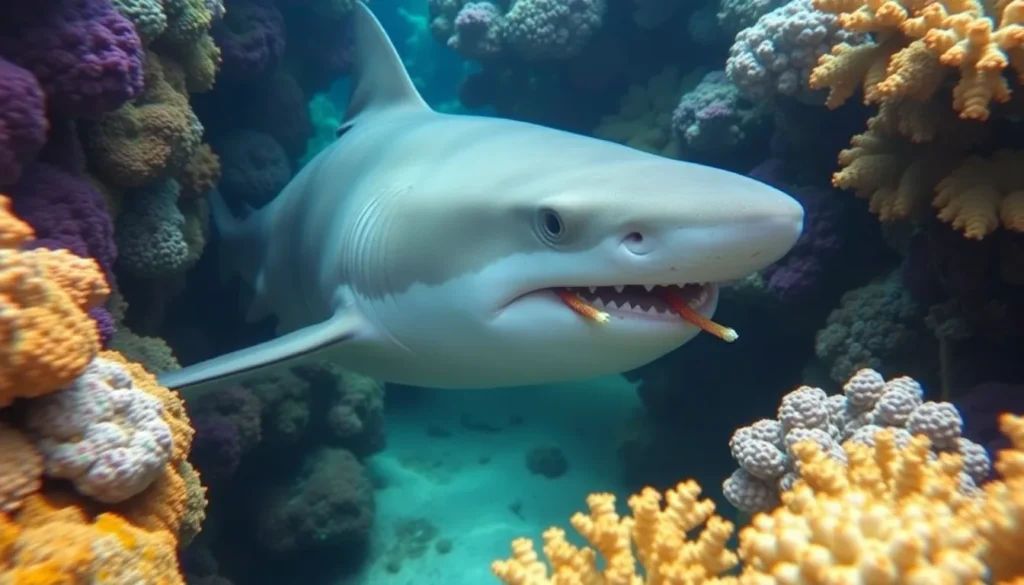
- Nurse sharks have a unique feeding method. They utilize suction feeding to consume prey, which involves creating a vacuum to draw in small fish and invertebrates.
- They possess specialized oral structures. Their mouths are equipped with powerful, muscular lips that help them create suction.
- Nurse sharks are nocturnal feeders. They primarily hunt at night, using their suction feeding technique to catch prey that is less active during these hours.
- They often hunt in groups. Nurse sharks can be observed feeding cooperatively, which may increase their efficiency in capturing prey.
- Nurse sharks have a diverse diet. Their diet mainly consists of crustaceans, mollusks, and small fish, showcasing their adaptability.
- Their suction feeding is highly effective. This method allows them to extract prey from crevices and tight spaces where other predators may struggle.
- Nurse sharks can be found in warm waters. They inhabit shallow coastal areas, particularly in the Caribbean Sea and the western Atlantic Ocean.
- They prefer sandy or rocky bottoms. These environments provide ample opportunities for hunting and hiding from larger predators.
- Nurse sharks can grow quite large. They typically reach lengths of 7 to 10 feet, with some individuals reported to exceed 14 feet.
- They are generally docile. Nurse sharks are known for their calm demeanor and are less likely to attack humans compared to other shark species.
- They have a unique social structure. Nurse sharks often rest piled on top of each other, which is unusual among sharks.
- Nurse sharks can live for several decades. Their lifespan in the wild can reach up to 25 years or more.
- They are ovoviviparous. Nurse sharks give birth to live young, with females typically giving birth to 20 to 30 pups at a time.
- Nurse sharks have a low reproductive rate. This slow reproduction can make them vulnerable to overfishing and habitat loss.
- They have a relatively small range. Nurse sharks are primarily found in tropical and subtropical waters, limiting their distribution.
- Nurse sharks can tolerate low oxygen levels. Their ability to thrive in hypoxic environments allows them to inhabit areas where other species might not survive.
- They have a unique skin texture. Nurse sharks have rough skin covered in dermal denticles, providing protection and aiding in hydrodynamics.
- Nurse sharks can exhibit curious behavior. They often investigate their surroundings and may approach divers out of curiosity.
- They can be affected by environmental changes. Habitat degradation and pollution threaten their populations, underscoring the need for conservation efforts.
- Nurse sharks play a role in their ecosystem. By controlling the populations of their prey, they help maintain the balance of marine ecosystems.
- They are sometimes targeted in fisheries. Although not heavily fished, they can be captured as bycatch in commercial fishing operations.
Habitat and Behavior
Nurse sharks inhabit warm, shallow waters, typically found in coastal areas of the Caribbean Sea and the western Atlantic Ocean. They prefer environments with sandy or rocky bottoms, where they can easily find prey and hide from larger predators. Nurse sharks are primarily nocturnal and often hunt for food at night, using their suction feeding technique to capture small fish and invertebrates. They are also known to rest in groups, often seen piled on top of one another in a behavior that is not common among other shark species.
Why This Animal Matters
Nurse sharks play a crucial role in their ecosystem by helping to regulate the populations of their prey, which includes various small fish and invertebrates. This control helps maintain the balance within marine environments. Additionally, their relatively docile nature makes them a popular species for ecotourism and diving activities, contributing to local economies. However, their low reproductive rate and vulnerability to habitat loss highlight the importance of conservation efforts to ensure their populations remain stable.
Common Misconceptions
FAQ
What is suction feeding in nurse sharks?
Suction feeding is a method used by nurse sharks to draw in prey using a vacuum created by their mouth.

Are nurse sharks dangerous to humans?
Nurse sharks are generally docile and not considered a threat to humans unless provoked.
Where can nurse sharks be found?
Nurse sharks inhabit warm, shallow waters primarily in the Caribbean and western Atlantic Ocean.




Leave a Reply