
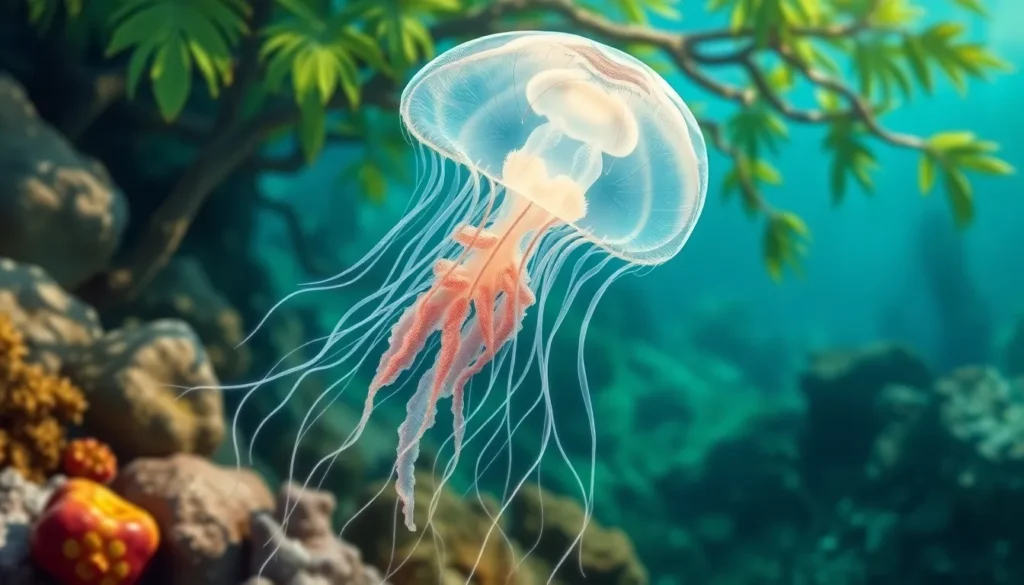
Short Answer
21 Facts About Irukandji Syndrome
- Origin: Irukandji syndrome is named after the Irukandji people of Australia, who first described the symptoms associated with jellyfish stings.
- Symptoms: Symptoms of Irukandji syndrome include severe pain, hypertension, tachycardia, anxiety, and nausea.
- Geographic Distribution: Irukandji jellyfish are primarily found in the waters of northern Australia.
- Jellyfish Species: The primary species responsible for Irukandji syndrome is Carukia barnesi, but other species may also contribute.
- Mechanism of Envenomation: The venom causes a cascade of physiological changes, including the release of catecholamines.
- Diagnosis: Diagnosis of Irukandji syndrome is primarily clinical, based on symptoms and history of a jellyfish sting.
- Treatment: Treatment typically involves pain management, intravenous fluids, and monitoring of cardiovascular function.
- Prevention: Preventive measures include wearing protective clothing and avoiding swimming in areas known to have jellyfish.
- First Aid: Immediate first aid for jellyfish stings includes rinsing the affected area with vinegar to neutralize the venom.
- Research: Ongoing research is being conducted to understand the full effects of Irukandji venom and potential treatments.
- Geographic Risk: The risk of encountering Irukandji jellyfish increases during the warmer months in northern Australia.
- Public Awareness: Public health campaigns aim to educate the public about the dangers of jellyfish stings.
- Severity: The severity of Irukandji syndrome can vary significantly among individuals.
- Long-term Effects: Some individuals may experience lingering symptoms, known as post-Irukandji syndrome.
- Ecological Role: Irukandji jellyfish play a role in marine ecosystems as both predators and prey.
- Cultural Significance: The Irukandji people have cultural narratives surrounding these jellyfish, reflecting their historical significance.
- Venom Composition: Irukandji venom is complex, containing a mix of neurotoxins and other bioactive compounds.
- Emergency Response: Quick access to medical care is critical for those affected by Irukandji syndrome.
- Global Awareness: Irukandji syndrome is becoming more recognized outside of Australia due to increased travel and tourism.
- Education: Educational initiatives in schools and communities emphasize the importance of awareness regarding marine stings.
The syndrome was identified in the early 1960s when researchers linked it to the stings of certain jellyfish species, notably the Carukia barnesi.
These symptoms can arise within 30 minutes to several hours after being stung, making the syndrome particularly alarming for those affected.
This region’s warm, tropical waters provide an ideal environment for these jellyfish, especially during the warmer months.
Additional species, such as the Malo kingi, can also cause similar symptoms, but Carukia barnesi is the most well-known.
This release can lead to severe cardiovascular effects and systemic pain, contributing to the syndrome’s severity.
Healthcare professionals often rely on the patient’s symptoms and exposure history to make an accurate diagnosis.
In severe cases, additional interventions, such as medications to manage hypertension, may be necessary.
Awareness of local jellyfish presence is crucial for safe swimming practices.
Vinegar can help inactivating the nematocysts that have not yet discharged venom into the skin.
Studies are focused on the biochemical properties of the venom and how it interacts with human physiology.
Awareness of seasonal patterns can help mitigate risks associated with jellyfish stings.
Such campaigns often provide information on symptoms, prevention, and first aid measures.
Factors such as the amount of venom injected and individual sensitivity play critical roles in symptom severity.
These symptoms can include chronic pain and psychological effects, necessitating further medical attention.
They contribute to the balance of marine food webs, influencing the populations of other marine organisms.
These stories often emphasize the dangers associated with the jellyfish and their role in local ecology.
Understanding its composition is essential for developing antivenoms and treatments.
Rapid intervention can significantly improve outcomes for affected individuals.
This awareness is crucial, especially in regions where these jellyfish may be found.
Such programs aim to prepare individuals for encounters with jellyfish and their potential effects.
Habitat and Behavior
Irukandji jellyfish inhabit warm coastal waters, particularly in northern Australia. They are typically found in shallow waters but can also be present in deeper regions. These jellyfish are known to exhibit a pelagic lifestyle, drifting with ocean currents and tides. Their behavior includes a unique hunting strategy, where they use their tentacles to capture small fish and plankton, which are their primary food sources.
Why This Animal Matters
Irukandji jellyfish play a crucial role in marine ecosystems, serving as both predators and prey. They are an important part of the food web, influencing the populations of small fish and other marine organisms. Additionally, the study of their venom has potential implications for medical research, including pain management and neurobiology. Understanding Irukandji syndrome enhances awareness of marine safety and contributes to public health initiatives.
Common Misconceptions
Misconception: Irukandji syndrome is only caused by the Irukandji jellyfish.
Correction: While the Irukandji jellyfish is the primary culprit, other species, such as the Malo kingi, can also cause similar symptoms.
Misconception: All jellyfish stings are equally dangerous.
Correction: Not all jellyfish stings result in Irukandji syndrome; the severity depends on the species and individual response to the venom.
FAQ
What causes Irukandji syndrome?
Irukandji syndrome is caused by the sting of certain jellyfish, primarily the Irukandji jellyfish.
How is Irukandji syndrome treated?
Treatment typically involves pain management and monitoring, with immediate first aid including vinegar rinsing.
Where are Irukandji jellyfish found?
They are primarily found in the warm coastal waters of northern Australia.




Leave a Reply