
Short Answer
21 Facts About Feather Star
- Feather Stars Are Echinoderms
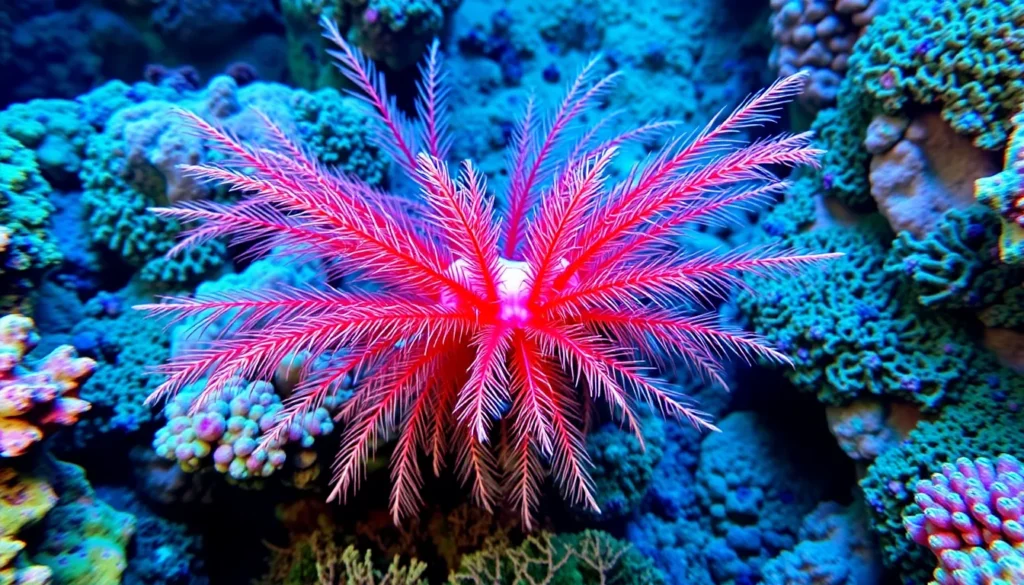
Explain the fact with useful context. Feather stars, or crinoids, belong to the phylum Echinodermata, which also includes sea stars and sea urchins. They are characterized by their unique body structure and are often found in deep-sea environments. - Filter Feeders
Feather stars feed primarily through filter feeding, using their feathery arms to trap plankton and small particles from the water. This method allows them to efficiently acquire nutrients in their aquatic habitats. - Arms for Feeding
Each feather star has multiple arms lined with tube feet, which help in capturing food particles. The arms spread out like a flower, increasing the surface area for feeding. - Regeneration Capabilities
Feather stars can regenerate lost arms, a common trait among echinoderms. This ability helps them survive predation or environmental hazards. - Habitat Diversity
They inhabit a variety of marine environments, from shallow coastal waters to the deep ocean, often found on coral reefs and rocky substrates. - Slow Movement
Feather stars are generally slow-moving creatures, relying on ocean currents to bring food to them rather than actively swimming for it. - Color Variation
Their coloration can vary widely, with some species exhibiting vibrant hues, which may help in camouflage or attracting mates. - Symbiotic Relationships
Feather stars often share their habitat with other marine organisms, such as small fish and shrimp, forming symbiotic relationships that can benefit both parties. - Reproductive Strategies
They reproduce both sexually and asexually, with some species releasing eggs and sperm into the water column while others can regenerate into new individuals. - Feeding Mechanism Adaptation
Their feeding mechanism is highly adapted to their environment, allowing them to capture a wide range of food sizes, making them versatile feeders. - Respiratory Structures
Feather stars possess specialized respiratory structures called papulae, which allow them to exchange gases efficiently while filter feeding. - Ecological Indicators
The health of feather star populations can serve as indicators of marine ecosystem health, as they are sensitive to changes in water quality. - Conservation Status
Some species of feather stars are threatened by habitat destruction and climate change, highlighting the importance of marine conservation efforts. - Longevity
Feather stars can live for several years, depending on the species and environmental conditions, contributing to their role in marine ecosystems over time. - Feeding During the Night
Many feather stars are more active at night, extending their arms to feed during this time when plankton are more abundant in the water column. - Not True Stars
Despite their name, feather stars are not true stars; rather, they are more closely related to sea cucumbers and sea urchins within the echinoderm family. - Importance in Food Webs
As filter feeders, feather stars play a crucial role in marine food webs, providing a food source for various predators, including fish and sea turtles. - Adaptability to Environments
Feather stars are adaptable and can thrive in various marine environments, showcasing their resilience to different ecological conditions. - Bioluminescence
Some species of feather stars exhibit bioluminescence, which may serve various purposes, including attraction of mates or deterring predators. - Research Importance
Feather stars are often studied in marine biology for their unique adaptations and roles in ecosystem dynamics, contributing to our understanding of marine life. - Historical Significance
Fossil records show that crinoids have existed for hundreds of millions of years, making them important for studying evolutionary biology.
Habitat and Behavior
Feather stars inhabit various marine environments, including coral reefs, rocky substrates, and sandy bottoms. They are primarily found in tropical and subtropical waters, although some species reside in deeper, colder regions. Their slow-moving nature allows them to rely on ocean currents to bring food, and they often extend their arms to maximize their feeding surface area. They exhibit a range of behaviors, including the ability to retract their arms when threatened and engage in symbiotic relationships with other marine organisms.
Why This Animal Matters
Feather stars play a vital role in their ecosystems as filter feeders, helping to maintain water quality and clarity. They are an essential part of the marine food web, serving as a food source for various predators. Additionally, their sensitivity to environmental changes makes them important indicators of ecosystem health. Conserving their habitats is crucial for maintaining biodiversity and the overall health of marine environments.
Common Misconceptions
FAQ
What do feather stars eat?
Feather stars primarily consume plankton and small organic particles filtered from the water.
Where can feather stars be found?
They inhabit a range of marine environments, from shallow waters to the deep sea.
How do feather stars reproduce?
They can reproduce both sexually and asexually, with some species releasing gametes into the water.
Leave a Reply