
Short Answer
21 Facts About Pyrosome Bioluminescent Colonies
- Bioluminescent Nature
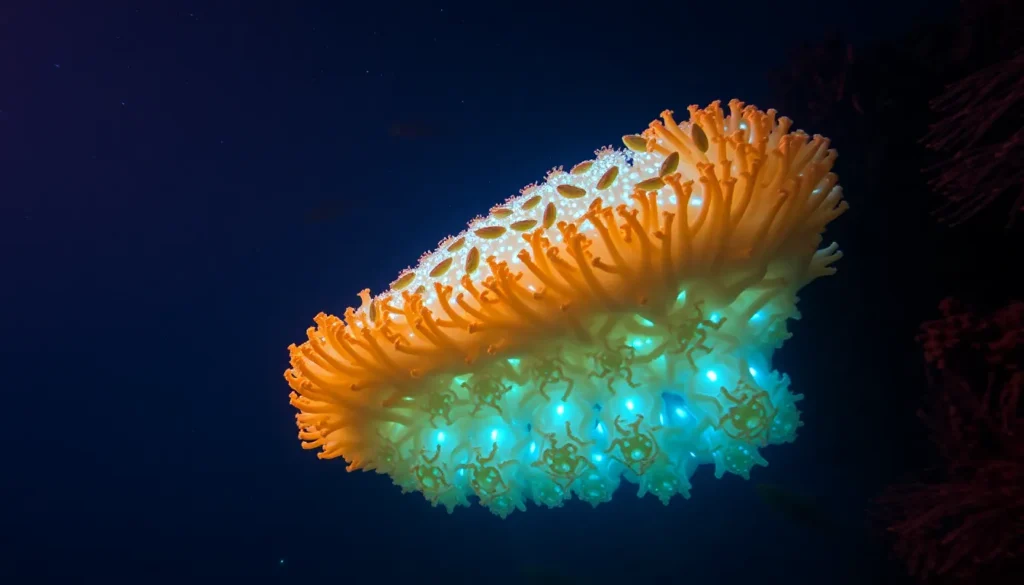
Pyrosomes are known for their bioluminescence, which is the ability to produce light through biochemical reactions within their bodies. This phenomenon is particularly visible in dark environments, creating a stunning visual display in the ocean. - Colonial Organisms
Pyrosomes are not individual organisms but colonies of genetically identical zooids that are connected. Each zooid functions independently but contributes to the overall functioning of the colony. - Size Variability
Pyrosome colonies can vary greatly in size, with some reaching lengths of up to 30 meters (98 feet). This makes them some of the largest colonial organisms in the world. - Habitat Diversity
They are typically found in warm, tropical waters but can also inhabit temperate regions. Their presence is often linked to nutrient-rich waters, where they thrive. - Feeding Mechanism
Pyrosomes are filter feeders, using their mucus-covered bodies to trap plankton and other small particles from the water, which they then consume. - Reproductive Strategy
Reproduction occurs through asexual budding, where new zooids develop from the parent colony, allowing for rapid population growth under favorable conditions. - Movement
Pyrosomes are propelled through the water by the rhythmic contraction of their bodies, allowing them to move as a unit and cover large distances. - Global Distribution
They are found in oceans worldwide but are particularly abundant in regions such as the Caribbean, the Mediterranean, and along the coasts of California and New Zealand. - Ecological Role
As filter feeders, pyrosomes play a crucial role in marine ecosystems by helping to regulate plankton populations and serving as a food source for various marine animals. - Bioluminescent Mechanism
The light produced by pyrosomes is a result of chemical reactions involving luciferin and luciferase, similar to the bioluminescence found in other marine organisms like jellyfish. - Historical Observations
Pyrosomes have been documented by scientists since the 18th century, with early descriptions highlighting their unique shapes and glowing properties. - Research Interest
Their bioluminescent properties have attracted the attention of researchers exploring potential applications in biotechnology, including lighting and medical technologies. - Human Interaction
While they are not considered harmful to humans, large blooms can impact fishing and other marine activities, highlighting the need for monitoring their populations. - Bloom Formation
Massive blooms can occur under specific environmental conditions, often linked to nutrient upwelling, which can lead to spectacular displays of light in the ocean. - Adaptation to Environment
Pyrosomes can adapt to varying environmental conditions, including changes in temperature and salinity, which is critical for their survival in diverse habitats. - Symbiotic Relationships
Some species of pyrosomes have been found to harbor symbiotic relationships with microorganisms, which may enhance their bioluminescent capabilities. - Species Diversity
There are over 50 recognized species of pyrosomes, each exhibiting varying degrees of bioluminescence and colony structure. - Impact of Climate Change
Research suggests that climate change and ocean acidification may affect pyrosome populations, potentially leading to shifts in their distribution and bloom frequency. - Cultural Significance
In some cultures, the bioluminescent displays of pyrosomes have inspired folklore and artistic expressions, highlighting their place in human imagination. - Conservation Status
Currently, there is limited information on the conservation status of pyrosomes, but their ecological role suggests that monitoring their populations is important for marine health. - Potential for Biotechnological Applications
The study of pyrosome bioluminescence may lead to advancements in natural lighting solutions and medical imaging technologies.
Habitat and Behavior
Pyrosomes are predominantly found in warm temperate and tropical oceans, often in areas with abundant nutrients. They thrive in the upper layers of the ocean, where sunlight penetrates, allowing for photosynthetic organisms to flourish. Their colonial structure allows them to filter feed effectively, capturing small organisms from the water column. Pyrosomes are known to form large blooms, particularly in nutrient-rich waters, where they can rapidly reproduce and increase in number. Their bioluminescent properties may serve various functions, including deterring predators and attracting mates.
Why This Animal Matters
Pyrosomes play a significant ecological role in marine ecosystems as filter feeders, contributing to the control of plankton populations and serving as a food source for larger marine animals. Their bioluminescence not only adds to the beauty of oceanic environments but also attracts the interest of scientists exploring bioluminescent organisms for potential applications in biotechnology. Understanding pyrosome populations is crucial for assessing the health of marine ecosystems, particularly in the face of environmental changes and human impact.
Common Misconceptions
Misconception: Pyrosomes are jellyfish.
Correction: Pyrosomes are colonial tunicates, not jellyfish. They are made up of numerous individual zooids that function together, whereas jellyfish are solitary organisms.
Misconception: Pyrosomes are harmful to humans.
Correction: Pyrosomes are not harmful to humans; they do not sting or pose a direct threat. While large blooms can affect marine activities, they are generally benign organisms.
FAQ
What are pyrosomes?
Pyrosomes are colonial tunicates that exhibit bioluminescence and can be found in warm ocean waters.
How do pyrosomes reproduce?
They reproduce asexually through budding, creating new zooids that contribute to the colony.
Are pyrosomes harmful to humans?
No, pyrosomes are not harmful and do not pose a threat to humans.



Leave a Reply