
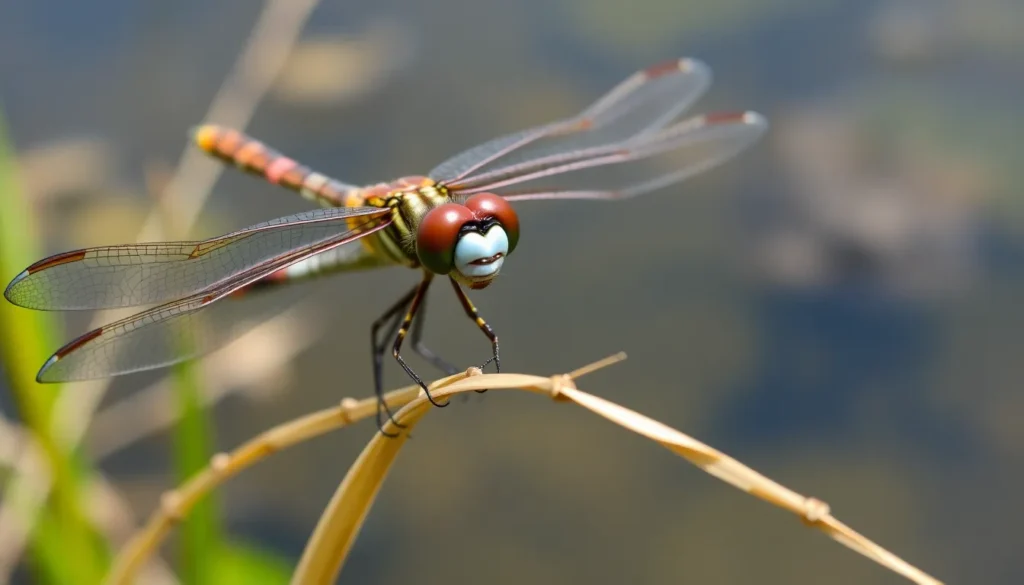
Short Answer
21 Facts About Dragonflies
- Ancient Origins: Dragonflies have existed for over 300 million years, predating dinosaurs and some of the earliest birds.
- Impressive Size: Some prehistoric dragonflies had wingspans up to 2.5 feet, much larger than modern species.
- Exceptional Flight: Dragonflies can fly in six directions: up, down, forward, backward, and side to side, with the ability to hover and glide.
- Two Sets of Wings: Their two pairs of wings operate independently, allowing complex flight maneuvers.
- Large Compound Eyes: Dragonflies have nearly 30,000 individual lenses in their compound eyes, giving them nearly 360-degree vision.
- Predatory Skills: Both adults and larvae are carnivorous, feeding on mosquitoes, flies, and other small insects.
- Larval Stage Underwater: Dragonfly larvae, called nymphs, live underwater and hunt aquatic insects and small fish.
- Metamorphosis: Dragonflies undergo incomplete metamorphosis, transitioning from nymphs to adults without a pupal stage.
- Short Adult Lifespan: Adult dragonflies typically live for a few weeks to a few months, depending on the species.
- Territorial Behavior: Males often defend territories near water to attract females for mating.
- Unique Mating Process: Dragonflies mate in a distinctive “wheel” or “heart” position, where the male clasps the female behind the head.
- Egg-laying in Water: Females lay eggs directly into or near water bodies, ensuring the larvae have an aquatic environment.
- Environmental Indicators: Dragonflies are sensitive to water quality and are often used as bioindicators of ecosystem health.
- Global Distribution: They are found on every continent except Antarctica, favoring freshwater habitats.
- Color Variations: Dragonflies display a wide range of colors including blues, greens, reds, and yellows, often changing with age or temperature.
- Flight Speed: Some species can reach speeds of up to 35 miles per hour in short bursts.
- Energy Efficiency: The structure of dragonfly wings reduces drag and allows energy-efficient flight.
- Role in Mosquito Control: By preying on mosquitoes, dragonflies help reduce populations of disease-carrying insects.
- Symbolic Significance: In many cultures, dragonflies symbolize change, adaptability, and self-realization.
- Conservation Status: Habitat loss and pollution threaten some dragonfly species, making conservation efforts important.
- Scientific Study: Dragonflies are studied in fields like biomechanics and ecology due to their flight abilities and environmental sensitivity.
Habitat and Behavior
Dragonflies are primarily found near freshwater habitats such as ponds, lakes, rivers, and wetlands. These environments provide suitable conditions for their aquatic larvae and abundant prey for adults. Dragonfly larvae live underwater and undergo several molts before emerging as adults. Adults are strong fliers, often seen patrolling territories or hunting for flying insects. They rely on their exceptional eyesight and agile flight to catch prey midair. Dragonflies are diurnal, most active during daylight hours, and often return to perches to rest between flights.
Why This Animal Matters
Dragonflies play a critical ecological role as predators in both aquatic and terrestrial ecosystems. Their larvae help control populations of aquatic insects, while adults consume many flying pests, including mosquitoes. This predatory behavior contributes to natural pest control and helps maintain balanced ecosystems. Additionally, dragonflies serve as bioindicators; their presence and diversity can reflect the quality of freshwater habitats, providing valuable information for environmental monitoring and conservation. Culturally, dragonflies feature in folklore and symbolism worldwide, representing themes such as transformation and adaptability.
Common Misconceptions
Misconception: Dragonflies can sting humans.
Correction: Dragonflies do not possess stingers and are harmless to humans. They may briefly land on people but do not sting or bite aggressively.
Misconception: Dragonflies are related to butterflies or moths.
Correction: Dragonflies belong to the order Odonata, which is distinct from the order Lepidoptera that includes butterflies and moths. They have different life cycles and anatomical features.
Misconception: Dragonflies live only near water.
Correction: While dragonflies are commonly associated with aquatic environments for breeding and larval development, adults can travel far from water in search of food or new habitats.
FAQ
How long do dragonflies live?
Dragonflies spend most of their life in the larval stage underwater, which can last from several months to several years depending on the species. The adult stage is relatively short, typically lasting a few weeks to a few months.
Are dragonflies dangerous to humans?
No, dragonflies are harmless to humans. They do not sting and rarely bite, and are generally considered beneficial for controlling pest insect populations.
Why are dragonflies considered good indicators of environmental health?
Dragonflies require clean, unpolluted water to complete their life cycle. Their presence and diversity can indicate good water quality and a healthy ecosystem, while their absence may signal environmental problems.




Leave a Reply