
Short Answer
21 Facts About Acorn Worm Burrow Castings
- Acorn worms create burrow castings
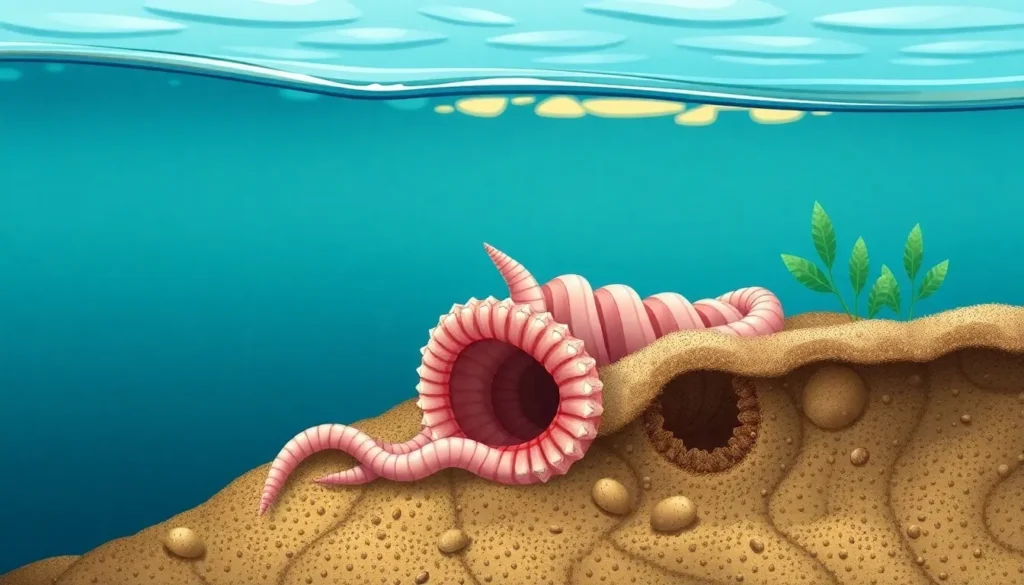
Acorn worms, belonging to the class Enteropneusta, are known for their ability to create burrow castings, which are essentially the waste products of their feeding activities. - The castings enrich soil
These burrow castings play a crucial role in enriching the surrounding soil, contributing organic matter and nutrients that enhance soil fertility. - They improve soil structure
The castings help improve soil structure, allowing for better aeration and drainage, which benefits plant growth. - Acorn worms are deposit feeders
Acorn worms primarily feed on organic matter found in sediments, which they process to create their castings. - Habitat diversity
These organisms inhabit a variety of marine environments, including intertidal zones and deeper oceanic areas, often burrowing into soft substrates. - Castings vary by species
The characteristics of burrow castings can vary significantly between different species of acorn worms, influenced by their diet and habitat. - Role in nutrient cycling
By breaking down organic material, acorn worm castings facilitate nutrient cycling within marine ecosystems, supporting a diverse array of marine life. - Indication of ecosystem health
The presence of acorn worms and their burrow castings can serve as indicators of the health of marine ecosystems, reflecting the quality of sediments and organic matter availability. - Size and shape variations
Burrow castings can vary in size and shape, often resembling small mounds or pellets depending on the species and environmental conditions. - Natural fertilizers
Due to their nutrient-rich composition, acorn worm castings are sometimes considered natural fertilizers and can benefit agricultural practices. - Low environmental impact
The process of casting does not disturb the surrounding environment significantly, making acorn worms valuable for maintaining ecosystem balance. - Burrow complexity
The burrows created by acorn worms can be complex, providing habitats for other marine organisms and enhancing biodiversity. - Life cycle of acorn worms
These organisms undergo a unique life cycle, including a larval stage that may drift in the ocean before settling and forming burrows. - Respiration through skin
Acorn worms respire through their skin, absorbing oxygen directly from the surrounding water, which is crucial for their survival. - Behavioral adaptations
Their behavior includes retracting into their burrows for protection from predators, showcasing their adaptability to environmental threats. - Historical significance
Acorn worms have been studied for their evolutionary significance, providing insights into the transition from invertebrates to vertebrates. - Research interest
They are of great interest in scientific research, particularly in studies related to marine biology and ecology. - Potential medicinal properties
Some studies suggest that substances derived from acorn worms may have medicinal properties, although more research is needed. - Vulnerability to habitat loss
Acorn worms face threats from habitat loss and pollution, making conservation efforts essential for their populations. - Educational value
These creatures serve as excellent subjects for educational programs focused on marine biology and environmental science. - Contribution to carbon sequestration
Through their activities, acorn worms may also play a role in carbon sequestration, helping mitigate climate change.
Habitat and Behavior
Acorn worms primarily inhabit marine environments, particularly in soft sediment areas such as estuaries and coastal zones. They create burrows in the substrate, which provide shelter and feeding grounds. Their behavior is characterized by deposit feeding, where they extract nutrients from the sediment and organic matter. Acorn worms can retract into their burrows when threatened, showcasing their ability to adapt to predation risks.
Why This Animal Matters
Acorn worms are vital to marine ecosystems, participating in nutrient cycling and enhancing soil quality through their burrow castings. Their presence contributes to biodiversity and the overall health of marine habitats. Additionally, they serve educational and research purposes, helping scientists understand marine evolution and ecology. Conservation of acorn worm habitats is essential, as they are susceptible to environmental changes and pollution.
Common Misconceptions
Misconception: Acorn worms are harmful to marine environments.
Correction: Acorn worms actually benefit marine ecosystems by enriching sediment and promoting nutrient cycling.
Misconception: Acorn worm castings are similar to terrestrial worm castings.
Correction: While both are beneficial, acorn worm castings are specifically adapted to marine ecosystems and differ significantly in composition and function.
FAQ
What are acorn worms?
Acorn worms are marine organisms known for their burrowing abilities and contribution to nutrient cycling.
How do acorn worms contribute to soil health?
Their burrow castings enrich soil by adding organic matter and improving structure.
Why are acorn worms important for ecosystems?
They play a crucial role in maintaining biodiversity and supporting marine life.



Leave a Reply