
Short Answer
21 Facts About Shark Teeth Replacement
- Sharks Have Multiple Rows of Teeth
Sharks typically have several rows of teeth, with new teeth constantly forming behind the visible ones, allowing for continuous replacement. - Teeth Are Replaced Frequently
Depending on the species, sharks can lose and replace their teeth every few weeks to months, ensuring they have sharp, functional teeth at all times. - Up to 30,000 Teeth in a Lifetime
Some shark species can grow and lose as many as 30,000 teeth over their lifetime, a testament to their adaptive feeding strategies. - Teeth Are Not Attached to Gums
Shark teeth are not rooted in gums like human teeth; instead, they are embedded in the jaw, allowing for easier shedding and replacement. - Shark Teeth Are Made of Dentin
The structure of shark teeth primarily consists of dentin, a material that provides strength and resilience, crucial for their predatory lifestyle. - Different Species Have Different Patterns
The replacement rate and structure of teeth can vary significantly between shark species, adapted to their specific dietary needs. - Teeth Can Be Used as Identification
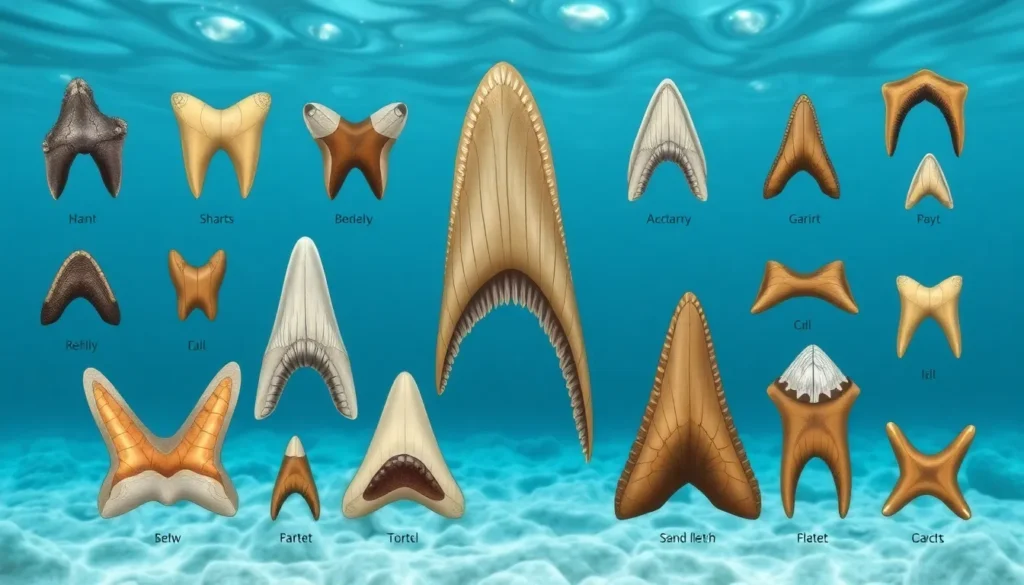
Marine biologists often use shark teeth to identify species, as the shape and size can vary widely among different types of sharks. - Evolutionary Advantage
The ability to replace teeth frequently gives sharks a significant evolutionary advantage, allowing them to maintain effective predation throughout their lives. - Teeth Are Shed with Prey
Sharks often lose teeth while feeding, which is a normal part of their feeding behavior and does not impair their ability to hunt. - Fossil Evidence
Fossilized shark teeth can provide insights into ancient shark species and their evolutionary history, as teeth are one of the most durable parts of the shark skeleton. - Sharks Have Unique Tooth Shapes
Tooth morphology varies widely among species, with some having sharp, serrated teeth for cutting, while others have flat teeth for crushing prey. - Self-Sharpening Mechanism
Shark teeth are designed to be self-sharpening; as they wear down, they become sharper, which is advantageous for their feeding habits. - Teeth in the Jaw Structure
Shark jaws are structured to allow teeth to slide forward as older teeth are lost, ensuring a constant supply of new teeth. - Bone Structure
Unlike mammals, sharks lack bones; their teeth are composed of cartilage and are more similar to fish scales than human teeth. - Teeth Are Not All the Same
Sharks often have different types of teeth in different parts of their jaws, depending on their feeding habits and prey preferences. - Role in Ecosystem
Shark teeth play a significant role in their ecosystems; as apex predators, sharks help regulate fish populations and maintain ecological balance. - Research and Conservation
Understanding shark teeth and their replacement can inform conservation efforts, as it highlights the health and adaptability of shark populations. - Teeth and Human Use
Shark teeth are often collected and sold as curios or jewelry, raising concerns about overfishing and sustainable practices in shark populations. - Teeth and Behavior
The frequency of tooth loss and replacement can be influenced by a shark’s feeding behavior and environmental factors such as prey availability. - Genetic Factors
Research into the genetics of tooth development in sharks could provide insights into evolutionary biology and dental health in other species. - Conservation Status
Many shark species are threatened or endangered, making research into their biology, including tooth replacement, vital for conservation strategies.
Habitat and Behavior
Sharks inhabit a diverse range of aquatic environments, from coastal waters to the deep sea. They exhibit various behaviors, including solitary hunting and social interactions in some species. Sharks are primarily carnivorous, relying on their keen senses to detect prey, which can include fish, marine mammals, and even other sharks. Their adaptability to different habitats contributes to their survival across the globe.
Why This Animal Matters
Sharks are essential for maintaining the health of marine ecosystems. As apex predators, they regulate the populations of other marine species, which helps maintain the balance within their environments. Culturally, sharks have held significant roles in various societies, symbolizing strength and resilience. Their conservation is critical as many species face threats from overfishing and habitat loss, impacting overall marine biodiversity.
Common Misconceptions
Misconception: Sharks can regrow any tooth indefinitely.
Correction: While sharks can replace their teeth frequently, there is a finite limit to how many teeth they can produce throughout their lives.
Misconception: All shark teeth are the same.
Correction: Different species of sharks have various tooth shapes and sizes adapted to their specific feeding methods.
FAQ
How do sharks lose their teeth?
Sharks lose teeth during feeding, as they often bite into hard prey, which can cause teeth to detach.
What happens to the teeth once they are lost?
Lost teeth can either sink to the ocean floor or be consumed by other marine animals.
Are shark teeth valuable?
Yes, shark teeth are often collected for jewelry or as collectibles, but this practice raises concerns about shark populations.




Leave a Reply