
Short Answer
21 Facts About Sardine Predator Avoidance
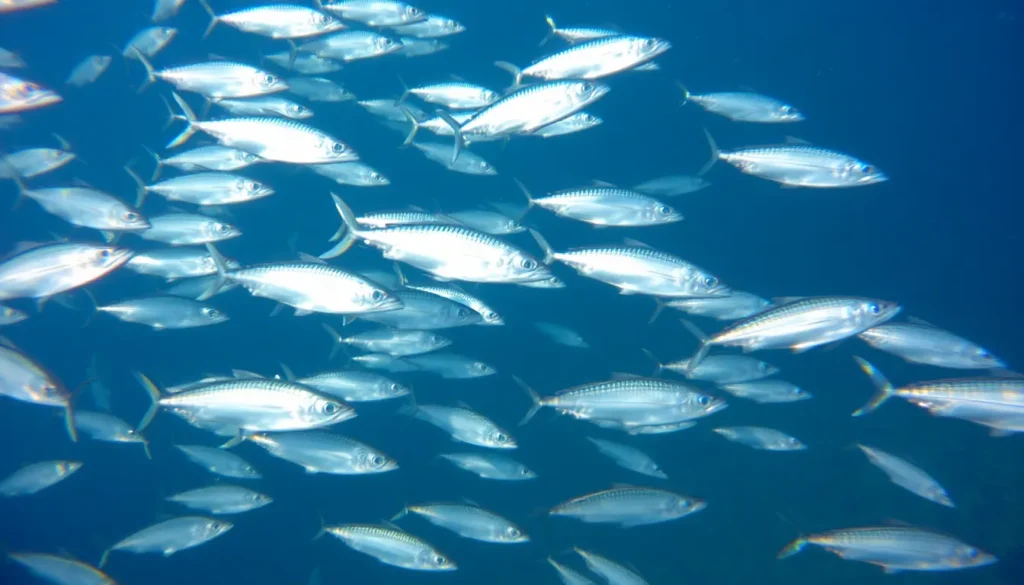
- Sardines use schooling as a primary defense mechanism. Schools of sardines can number in the thousands, providing safety in numbers against predators.
- Rapid movement helps evade predators. Sardines are capable of quick, agile movements, allowing them to escape from threats swiftly.
- Coloration plays a role in camouflage. Sardines have a silver coloration on their sides that can reflect light, making them less visible in the water.
- Sardines exhibit coordinated swimming. When threatened, sardines swim in unison to confuse predators and create a dynamic, shifting target.
- They can detect changes in water pressure. Sardines have sensory organs that allow them to sense pressure changes, alerting them to nearby predators.
- Some species have specialized predator avoidance behaviors. Certain sardine species may employ specific tactics like diving or sudden changes in direction when threatened.
- Juvenile sardines often seek refuge in shallow waters. Young sardines tend to stay in shallower areas to avoid larger predatory fish.
- Predation pressure influences sardine population dynamics. The presence of predators can significantly affect sardine breeding and survival rates.
- Environmental factors impact predator avoidance. Changes in water temperature, salinity, and food availability can influence sardine behavior and predator evasion tactics.
- Sardines rely on their lateral line system. This sensory system helps them detect vibrations and movement in the water, aiding in predator awareness.
- They can change depth to avoid predators. Sardines often adjust their swimming depth in response to the presence of threats.
- Predators of sardines include larger fish and marine mammals. Species such as tuna, mackerel, and dolphins are known to prey on sardines.
- Sardines can remain in a tight ball for protection. When threatened, they can form a tight ball, making it difficult for predators to single out an individual.
- Some sardine species utilize sound for communication. These sounds can help coordinate group movements and alert others to danger.
- Predator avoidance is learned behavior. Young sardines often learn from older members of their school about effective escape tactics.
- Seasonal changes can affect predator interactions. Migration patterns of predators may shift during certain times of the year, impacting sardine behavior.
- Sardines are an important food source for many marine animals. Their role in the food web underscores the importance of effective predator avoidance strategies.
- Overfishing can lead to increased predation. Reductions in sardine populations due to fishing can alter predator-prey dynamics in marine ecosystems.
- Sardines can exhibit behavioral plasticity. They can adapt their behaviors based on environmental conditions and predator presence.
- Predator avoidance strategies can vary by region. Different sardine populations may develop unique strategies based on their local predator species.
- Research on sardine predator avoidance informs conservation efforts. Understanding these behaviors is crucial for managing sardine populations and their ecosystems.
Habitat and Behavior
Sardines typically inhabit coastal and continental shelf waters, where they form large schools. They are pelagic fish that thrive in nutrient-rich waters, often found in areas with upwelling currents. Sardines exhibit social behavior, often staying in tight-knit schools that enhance their chances of survival against predators. Their diet primarily consists of plankton, which they filter from the water while swimming with their mouths open.
Why This Animal Matters
Sardines play a crucial role in marine ecosystems as a key species in the food web. They serve as an important food source for a variety of marine animals, including larger fish, seabirds, and marine mammals. Additionally, sardines are significant in commercial fisheries, contributing to local economies and global markets. Their population dynamics can influence the health of marine ecosystems, making their conservation essential for maintaining biodiversity.
Common Misconceptions
Misconception: Sardines are only found in deep ocean waters. Correction: Sardines primarily inhabit coastal and continental shelf waters, where they are more likely to find food and avoid predators.
Misconception: All sardines are the same species. Correction: There are several species of sardines, each with unique behaviors and adaptations to their environments.
FAQ
Why do sardines school together?
Sardines school together as a defense mechanism to reduce the risk of predation.
How do sardines evade predators?
They utilize quick movements, coordinated swimming, and camouflage to escape from threats.
What is the ecological role of sardines?
Sardines are essential in marine ecosystems, serving as a food source for many predators.




Leave a Reply