
Short Answer
21 Facts About Pipefish Male Pregnancy
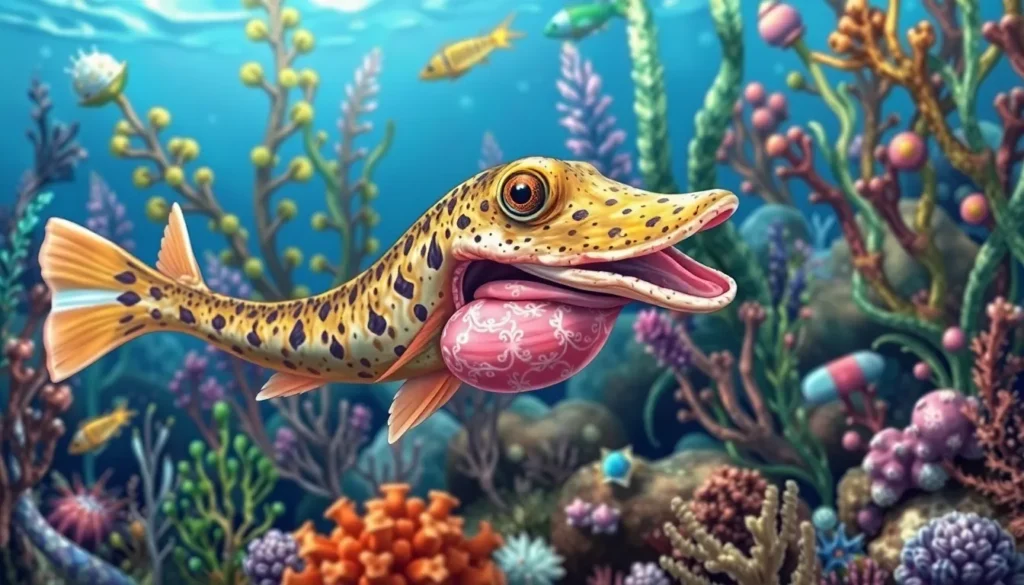
- Male Pipefish Experience Pregnancy: Unlike most fish, male pipefish carry and nurture their young in a special brood pouch.
- Brood Pouch Structure: The brood pouch varies in structure among different species of pipefish.
- Fertilization Process: Male pipefish fertilize the eggs after the female deposits them into his brood pouch.
- Gestation Period: The gestation period for pipefish varies widely, generally ranging from 10 days to several weeks.
- Parental Investment: Male pipefish exhibit significant parental investment by carrying the young until they are fully developed.
- Behavioral Changes: During pregnancy, males may exhibit changes in behavior, including reduced activity and increased hiding.
- Size of Brood: The number of embryos in a male pipefish’s pouch can vary widely, from just a few to over a hundred.
- Birth Process: Males release fully formed miniature pipefish during the birthing process.
- Species Diversity: There are over 200 species of pipefish, each exhibiting unique reproductive behaviors.
- Sexual Selection: Males can be selective about which females they mate with, often choosing those that display the best health and vigor.
- Environmental Impact: The reproductive success of pipefish is influenced by environmental factors, including habitat quality and food availability.
- Conservation Status: Some pipefish species are considered vulnerable due to habitat loss and overfishing.
- Social Behavior: Male pipefish often engage in social behaviors, including forming bonds with females before mating.
- Color Changes: Male pipefish can change color during pregnancy, which may serve as a signal to potential mates.
- Feeding Habits: Pipefish primarily feed on small crustaceans and plankton, relying on camouflage to hunt.
- Evolutionary Adaptation: Male pregnancy in pipefish is seen as an evolutionary advantage, allowing for increased offspring survival.
- Research Interest: The phenomenon of male pregnancy in pipefish has garnered significant interest in scientific research.
- Distinct from Seahorses: Although similar, pipefish and seahorses differ in their reproductive strategies and brood pouch structures.
- Global Distribution: Pipefish are found in various marine environments, including coral reefs, seagrass beds, and estuaries.
- Adaptation to Habitat: Some pipefish species have developed adaptations to thrive in specific habitats, such as camouflage in seagrass.
- Impact of Climate Change: Climate change poses risks to pipefish populations through habitat degradation and altering food availability.
- Role in Ecosystem: Pipefish play a role in their ecosystems as prey for larger predators and as part of the marine food web.
This brood pouch is an adaptation that allows males to provide a controlled environment for the developing embryos, akin to the role of female seahorses.
This pouch often contains a tissue that provides nutrients to the embryos and regulates salinity and oxygen levels.
The female typically uses a specialized organ called an ovipositor to transfer eggs into the male’s pouch.

Factors such as water temperature and species influence the exact duration.
This investment increases the survival rate of the offspring in their early life stages.
This behavior helps protect the developing embryos from predators.
This variability can depend on the species and environmental conditions.
The young are independent immediately after birth and do not require parental care.
This diversity plays a significant role in their adaptability to various marine environments.
This selection is crucial for ensuring the survival of the next generation.
Healthy ecosystems are vital for maintaining stable populations.
Conservation efforts are essential to protect their habitats and ensure their survival.
These behaviors can enhance mating success and strengthen pair bonds.
This visual cue can attract females looking for a healthy partner.
Effective feeding is essential for sustaining both the male and developing embryos.
This adaptation has likely evolved to enhance reproductive success in challenging environments.
Studies focus on reproductive strategies and the impact of environmental changes.
Understanding these differences can provide insights into their evolutionary paths.
This wide distribution highlights their adaptability to different ecological niches.
These adaptations contribute to their survival in diverse marine ecosystems.
Understanding these impacts is crucial for conservation efforts.
Maintaining healthy populations is important for overall marine biodiversity.
Habitat and Behavior
Pipefish inhabit a variety of marine environments, including coral reefs, estuaries, and seagrass beds. They are typically found in shallow waters and often rely on their elongated bodies and ability to camouflage to evade predators. Pipefish exhibit a range of social behaviors, including forming pair bonds during the mating season.
Why This Animal Matters
Pipefish play a significant role in their ecosystems, serving as both predator and prey within the food web. Their unique reproductive strategies, particularly male pregnancy, provide insights into evolutionary biology and reproductive ecology. Additionally, some species are threatened by habitat loss and environmental changes, making their conservation vital for marine biodiversity.
Common Misconceptions
Misconception: All male fish can become pregnant, like pipefish and seahorses.
Correction: Male pregnancy is a unique adaptation found primarily in pipefish and seahorses, with most fish species having traditional reproductive roles.
Misconception: The brood pouch in male pipefish is the same as that of seahorses.
Correction: While both have brood pouches, their structures and functions can differ significantly between species.
FAQ
What is a pipefish?
Pipefish are elongated fish related to seahorses, known for their unique reproductive strategies.
How do male pipefish get pregnant?
Males become pregnant by carrying fertilized eggs in a specialized brood pouch.
Are pipefish endangered?
Some species of pipefish are threatened by habitat loss and environmental changes, making conservation efforts important.



Leave a Reply