
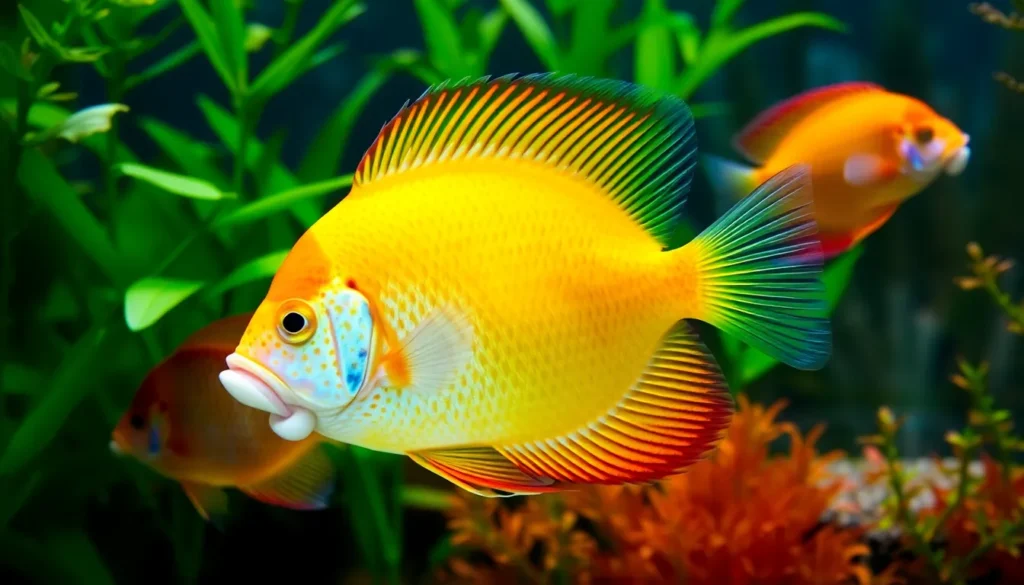
Short Answer
21 Facts About Discus Fish
- Origin of Milk Feeding
Discus fish, specifically the species Symphysodon, are known for their unique feeding behavior where they consume a secretion called ‘mucus’ from their parents, often referred to as ‘milk feeding.’ This is particularly observed in juvenile fish. - Parental Care
The parents of discus fish are attentive caregivers. They produce this nutrient-rich mucus to feed their young, providing essential nutrients for growth and development. - Nutritional Benefits
The mucus secreted by adult discus fish contains proteins, lipids, and other vital nutrients, making it an ideal first food for the fry. - Feeding Mechanism
Young discus fish feed by grazing on the surface of their parents’ bodies, using their mouths to scrape the mucus off. - Duration of Milk Feeding
Milk feeding typically lasts until the fry reach a size where they can consume other types of food, usually around 3-4 weeks of age. - Social Structure
Discus fish exhibit strong social behavior, often forming pairs and small groups, which can influence their breeding and feeding patterns. - Color Variations
Discus fish come in various color morphs, with some being more desirable in the aquarium trade due to their vibrant colors. - Habitat
Discus fish are native to the Amazon River Basin, where they inhabit slow-moving waters with abundant vegetation. - Water Conditions
They thrive in warm, acidic water, which is crucial for their health and breeding success. - Growth Rate
Discus fry grow rapidly during the first few months, primarily due to the nutrient-rich milk they consume. - Behavioral Adaptations
These fish exhibit unique behaviors, including territoriality and parental care, which enhance their survival in the wild. - Threats
Discus fish face threats from habitat destruction and overfishing, which can impact their populations in the wild. - Aquarium Care
In captivity, discus fish require specific water parameters and diet to mimic their natural feeding habits, including milk feeding in their early life. - Breeding Practices
Aquarists often simulate natural conditions to encourage breeding and successful rearing of fry. - Dietary Needs
As adults, discus fish transition to a diet that includes high-quality pellets, live foods, and frozen options. - Impact of Stress
Stress can severely impact discus fish, affecting their feeding habits and overall health, making it essential to maintain stable conditions. - Longevity
With proper care, discus fish can live for 10 years or more in captivity. - Community Tanks
While discus fish can be kept in community tanks, they require compatible tank mates to reduce stress and aggression. - Breeding Behavior
During breeding, discus fish exhibit specific courtship displays and rituals to strengthen pair bonds. - Fry Development
The fry develop rapidly as they consume the nutrient-rich mucus, significantly influencing their growth trajectory. - Ecological Role
In their natural habitat, discus fish play a role in the ecosystem by contributing to the nutrient cycle and serving as prey for larger fish.
Habitat and Behavior
Discus fish are typically found in the warm waters of the Amazon River Basin. They prefer slow-moving waters with dense vegetation, which provides cover and breeding sites. Their social structure is complex, often forming small groups or pairs. They are known for their unique feeding behavior, especially during the early stages of life when they rely on parental care for sustenance. Adult discus fish are generally peaceful but can become territorial during breeding periods.
Why This Animal Matters
Discus fish play a crucial ecological role in their habitat, contributing to the balance of aquatic ecosystems. Their unique reproductive strategies and parental care behaviors underscore the importance of nurturing in the animal kingdom. Additionally, they have significant cultural and economic importance, particularly in the aquarium trade, where they are valued for their beauty and unique characteristics. Conservation of their natural habitats is essential for their survival, as they face threats from environmental changes and overfishing.
Common Misconceptions
Misconception: Discus fish do not need parental care after birth.
Correction: Juvenile discus fish rely heavily on parental care and the nutrient-rich mucus produced by their parents for growth and survival during their early life stages.
Misconception: All discus fish are the same color.
Correction: Discus fish exhibit a wide range of color variations, influenced by genetics and breeding practices, leading to numerous morphs being available in the aquarium trade.
FAQ
How do discus fish feed their young?
Discus fish feed their young by secreting a nutrient-rich mucus that the fry graze on directly from the parents' bodies.
What are the ideal water conditions for discus fish?
Discus fish thrive in warm, acidic water with temperatures between 82-88°F (28-31°C) and a pH of 6.0-7.0.
Can discus fish live with other species?
Yes, discus fish can live with compatible species in community tanks, but stress levels must be monitored.


Leave a Reply