
Short Answer
21 Facts About Bearded Dragon Arm Waving
- Arm Waving as a Sign of Submission
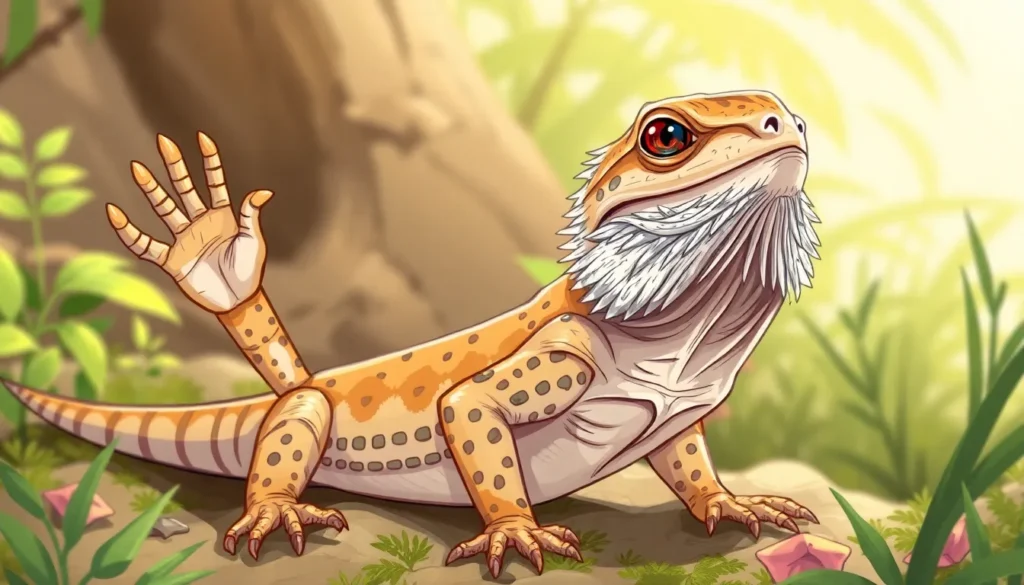
Bearded dragons often wave their arms as a form of submission to more dominant individuals. This behavior is prevalent in both wild and captive settings. - Communication Tool
Arm waving serves as a crucial communication tool among bearded dragons, utilized to convey social hierarchy and intentions. - Age and Experience Influence
Younger bearded dragons may exhibit more frequent arm waving as they navigate social structures, whereas older individuals may display it less often. - Gender Differences
Males and females may exhibit different arm waving patterns, with males often displaying more pronounced movements to assert dominance. - Environmental Factors
Changes in environmental stressors, such as temperature and habitat, can influence the frequency and style of arm waving. - Species Variation
While the arm waving behavior is characteristic of the Central Bearded Dragon, other species within the Pogona genus may exhibit similar, though distinct, behaviors. - Context-Dependent Behavior
Arm waving can vary significantly based on context, such as during territorial disputes or when encountering potential mates. - Gesture Recognition
Bearded dragons are capable of recognizing arm waving gestures from other individuals, which aids in their social interactions. - Not a Sign of Aggression
Unlike other reptiles, arm waving in bearded dragons is not typically associated with aggression; rather, it signals a lack of threat. - Behavioral Adaptation
Bearded dragons may adapt their arm waving behavior based on the presence of humans or other pets in their environment. - Observation in Captivity
Captive bearded dragons often exhibit more pronounced arm waving due to the stress and complexity of their environment. - Social Learning
Young bearded dragons learn arm waving behaviors through observation of older individuals, highlighting the importance of social learning. - Physical Health Indicator
Changes in arm waving frequency can indicate the physical health of a bearded dragon, as lethargy may reduce this behavior. - Seasonal Variations
Arm waving can increase during breeding seasons, as individuals may use it to attract mates. - Influence of Lighting
Lighting conditions can affect how well bearded dragons can see and interpret arm waving, influencing their social interactions. - Arm Waving Mimicry
Some bearded dragons may mimic the arm waving of others to fit into social groups or avoid conflict. - Behavioral Research
Research into bearded dragon arm waving has contributed to a better understanding of reptilian social behavior and communication. - Arm Waving and Stress
Increased arm waving may also be a response to stressors in their environment, signaling a need for attention or care. - Role in Territory Establishment
Arm waving may play a role in establishing and maintaining territory among male bearded dragons. - Interaction with Other Animals
Bearded dragons may adjust their arm waving when interacting with other species, showcasing their adaptability. - Impact of Domestication
Domestication has led to changes in arm waving behavior in captive bearded dragons compared to their wild counterparts.
Habitat and Behavior
Bearded dragons are native to arid and semi-arid regions of Australia, often found in scrublands, woodlands, and deserts. They are diurnal, meaning they are active during the day and rely on basking in sunlight to regulate their body temperature. Their behavior includes foraging for insects and plants, as well as engaging in social interactions through various body language signals, including arm waving. This behavior is part of their complex social structure, which helps establish dominance and submission among individuals within their habitat.
Why This Animal Matters
Bearded dragons play an important role in their ecosystems as both predators and prey. They help control insect populations while also serving as food for larger animals. Culturally, bearded dragons have gained popularity as pets, leading to increased interest in their care and conservation. Understanding their behaviors, such as arm waving, contributes to better welfare practices in captivity and highlights the importance of preserving their natural habitats.
Common Misconceptions
Arm waving is a sign of aggression.
Arm waving in bearded dragons is typically a sign of submission or social communication, not aggression.
All bearded dragons wave their arms the same way.
Arm waving can vary significantly between individuals based on age, gender, and environmental factors.
FAQ
What does arm waving mean in bearded dragons?
It is a form of submission and communication among individuals.
Do all bearded dragons wave their arms?
Not all; behaviors can vary based on age, gender, and environmental factors.
How can arm waving indicate health issues?
Changes in frequency or style may signal stress or health problems.






Leave a Reply