
Short Answer
21 Facts About Arctic Survival Adaptations
- Insulating Fur and Feathers
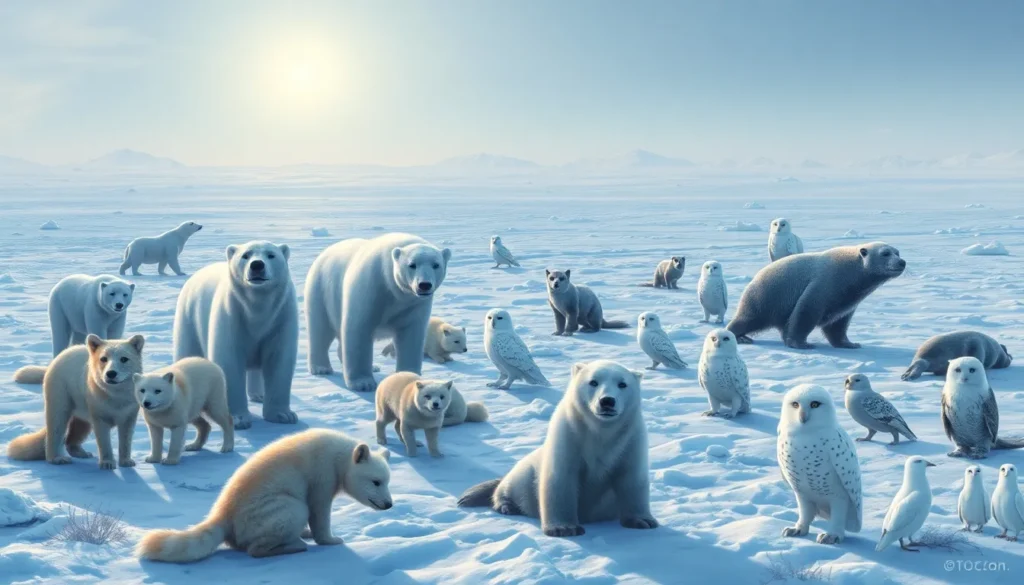
Many Arctic animals, such as polar bears and Arctic foxes, have thick fur or dense feathers that trap air, providing insulation against freezing temperatures. - Fat Layers for Thermal Regulation
Marine mammals like seals and whales develop thick blubber layers that store energy and provide thermal insulation in icy waters. - Seasonal Camouflage
Species such as the Arctic hare change fur color from brown in summer to white in winter to blend with snow and avoid predators. - Compact Body Shapes
Animals in the Arctic tend to have shorter limbs and ears, a principle known as Allen’s Rule, to minimize heat loss. - Counter-Current Heat Exchange
Arctic birds and mammals use specialized blood vessel arrangements to warm cold blood before it returns to the body core, conserving heat. - Reduced Metabolic Rate
Some Arctic species lower their metabolism during extreme cold or scarce food availability to conserve energy. - Hibernation and Torpor
Animals like Arctic ground squirrels enter hibernation or torpor states to survive winter months with limited resources. - Behavioral Adaptations
Many animals migrate seasonally or alter activity patterns to avoid the coldest periods or optimize food intake. - Specialized Diets
Arctic species often exploit limited food sources, such as fish under ice or lichen in tundra, adapting their digestive systems accordingly. - Antifreeze Proteins
Some Arctic fish produce antifreeze proteins in their blood to prevent ice crystal formation at subzero temperatures. - Large Body Mass
Following Bergmann’s Rule, Arctic animals often have larger body masses to reduce surface area relative to volume, aiding heat retention. - Fur Density Variation
Polar bear fur is not only thick but also hollow, which enhances insulation and buoyancy for swimming in cold waters. - Fat-Storing Habits
Many Arctic mammals accumulate fat reserves during summer to survive the winter’s food scarcity. - Thick Skin and Specialized Paw Pads
Animals like muskoxen and polar bears have thick skin and paw pads with rough surfaces to provide traction on ice. - Reduced Exposure to Wind
Some species use natural shelters such as snow burrows or rock crevices to avoid wind chill. - Enhanced Sensory Abilities
Arctic animals often have acute senses, including smell and hearing, to detect prey or predators under snow or ice. - Water Conservation
In a cold, dry environment, animals minimize water loss through adaptations like concentrated urine or reduced sweating. - Social Grouping
Several Arctic species form groups or herds to conserve heat and increase protection against predators. - Human Arctic Adaptations
Indigenous peoples have adapted clothing, shelter designs, and hunting techniques optimized for survival in extreme cold. - Photoperiod Adaptation
Organisms adjust biological rhythms to cope with extended periods of darkness or continuous daylight in the Arctic. - Rapid Growth and Reproduction Cycles
Due to the short Arctic summer, many species have accelerated growth and breeding to take advantage of favorable conditions.
Habitat and Behavior
The Arctic region is characterized by extreme cold, seasonal variations in daylight, and a landscape dominated by ice, snow, tundra, and cold oceans. Animals and humans living in this environment have developed unique adaptations to survive. Behaviorally, many Arctic species migrate or hibernate to cope with harsh winters, while others remain active year-round, relying on physiological adaptations. For example, polar bears roam sea ice hunting seals, while Arctic foxes scavenge and hunt small animals. Indigenous peoples have traditionally adapted through specialized clothing made from animal pelts, efficient shelter construction such as igloos, and hunting methods suited to the environment.
Why This Animal Matters
Arctic species play crucial ecological roles in their environment, such as maintaining the balance of marine and terrestrial food webs. Their adaptations offer insights into evolutionary biology and climate resilience. Furthermore, Arctic wildlife and Indigenous cultures are important to global biodiversity and heritage. Understanding these adaptations is also critical for conservation, especially as climate change threatens Arctic ecosystems by reducing ice cover and altering habitats.
Common Misconceptions
Misconception: All Arctic animals hibernate during winter.
Correction: While some Arctic animals hibernate or enter torpor, many remain active year-round, using other strategies such as thick fur and fat layers to survive.
Misconception: Arctic animals rely solely on white coloration for survival.
Correction: Coloration is important for camouflage, but survival also depends on multiple other adaptations such as fat insulation, metabolic changes, and behavioral strategies.
FAQ
How do Arctic animals keep warm in extreme cold?
Arctic animals use a combination of thick fur or feathers, fat layers called blubber, compact body shapes, and specialized blood flow systems to conserve heat and survive extreme cold.
Why do some Arctic animals change fur color seasonally?
Seasonal fur color changes provide camouflage, helping animals blend with snowy environments in winter and tundra landscapes in summer, which aids in predator avoidance and hunting.
How do humans survive in the Arctic environment?
Indigenous peoples of the Arctic have developed specialized clothing made from animal skins, built insulated shelters, and use hunting and food preservation techniques adapted to the extreme cold and seasonal changes.


Leave a Reply