
Short Answer
21 Facts About Mythical Animals
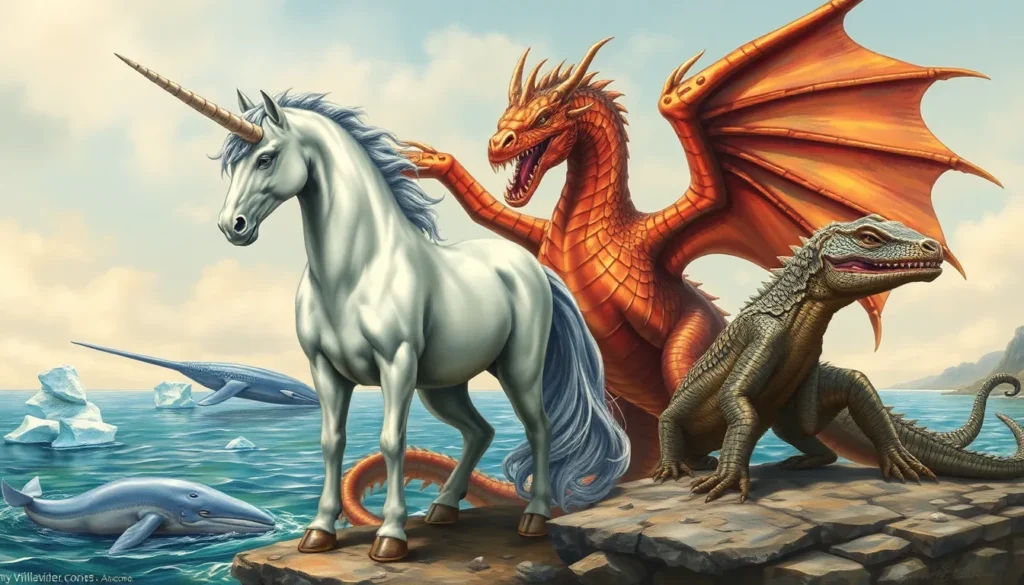
- Unicorns appear in many ancient cultures. The unicorn is a legendary creature often depicted as a horse with a single spiraled horn, appearing in myths from Europe, Asia, and the Middle East.
- The narwhal likely inspired the unicorn myth. Narwhals are Arctic whales with a long, spiral tusk that early sailors and traders may have mistaken for unicorn horns.
- Medieval unicorn horns were sometimes made from narwhal tusks. These tusks were highly valued and believed to have magical properties in Europe.
- The dragon myth varies widely across cultures. Dragons appear as fire-breathing reptiles in Western lore and as wise, serpentine creatures in East Asian traditions.
- Large reptiles like crocodiles likely inspired dragon legends. Crocodiles’ size, armored skin, and aquatic habits could have contributed to dragon imagery.
- Fossil discoveries may have fueled dragon myths. Ancient people finding dinosaur or large prehistoric animal bones may have interpreted them as evidence of dragons.
- Komodo dragons are real animals that share the name but differ from mythical dragons. These large lizards live in Indonesia and are the largest living species of lizard.
- Sea serpents reported by sailors could have inspired dragon stories. Sightings of large marine animals like oarfish or giant squid may have been exaggerated into dragon tales.
- Unicorns were symbolic in medieval art and literature. They often represented purity, grace, and unattainable beauty in Christian symbolism.
- Dragons symbolize power and wisdom in East Asian cultures. In China and Japan, dragons are revered as benevolent and auspicious creatures.
- The rhinoceros may have contributed to unicorn legends. Its single prominent horn and imposing presence align with some unicorn descriptions.
- The okapi, a rare forest mammal, was once thought to be mythical. Its unusual appearance may have inspired legend-like stories in African folklore.
- Some medieval bestiaries included unicorns and dragons as real animals. These illustrated compendiums mixed fact, myth, and moral lessons about animals.
- The narwhal tusk was sometimes sold as a “unicorn horn” to European royalty. This trade helped sustain the unicorn legend in the Middle Ages.
- Dragons in Western myths are often associated with fire and destruction. This contrasts with Eastern dragons, which are more commonly linked to water and fertility.
- Legends about unicorns and dragons were used to convey moral and spiritual lessons. They often symbolized virtues, dangers, or divine intervention.
- The hippocampus, a mythological sea horse, may connect to real marine animals like seahorses. Its mythical depiction combines horse traits with aquatic features.
- Some scholars propose that unicorn myths arose from misinterpretations of ancient art or travelers’ tales. The blending of fact and imagination played a role in myth creation.
- Dragons remain prominent in modern fantasy literature and popular culture. Their mythical qualities continue to inspire stories, films, and games worldwide.
- Unicorns and dragons illustrate how human cultures interpret the natural world through myth. They reflect curiosity, awe, and the desire to explain unfamiliar phenomena.
- Scientific study of fossils and real animals helps separate myth from reality. This ongoing research enriches understanding of how mythical creatures originated.
Habitat and Behavior
Since unicorns and dragons are mythical creatures, they do not have natural habitats or behaviors. However, the real animals associated with these myths inhabit diverse environments. Narwhals, which inspired unicorn legends, live in Arctic waters and are adapted to cold marine environments, feeding on fish and squid. Crocodiles, linked to dragon myths, inhabit freshwater rivers, lakes, and swamps in tropical regions and are carnivorous predators. Komodo dragons reside on Indonesian islands, preferring hot, dry habitats, and hunt a variety of prey. These real animals exhibit behaviors such as hunting, territoriality, and social communication that have been observed and studied by scientists.
Why This Animal Matters
Mythical animals like unicorns and dragons hold significant cultural and symbolic value worldwide, influencing art, literature, and religious beliefs. The real animals behind these myths, such as narwhals and crocodiles, play important ecological roles in their respective environments. For example, crocodiles are apex predators that help maintain healthy ecosystems by controlling prey populations. Narwhals contribute to Arctic marine biodiversity. Understanding the origins of mythical creatures sheds light on human history, folklore, and how people interpret natural phenomena. It also emphasizes the importance of conserving real species that have inspired cultural heritage.
Common Misconceptions
Misconception: Unicorns were once real animals that roamed the Earth.
Correction: Unicorns are mythical creatures; no scientific evidence supports their existence as real animals. The myth likely originated from sightings or trade of animals like the narwhal or rhinoceros.
Misconception: Dragons are purely evil monsters.
Correction: While Western cultures often depict dragons as destructive, many Eastern cultures regard dragons as benevolent creatures symbolizing wisdom and good fortune.
Misconception: Komodo dragons are the same as mythical dragons.
Correction: Komodo dragons are real large lizards native to Indonesia and do not possess the supernatural traits attributed to mythical dragons.
Misconception: The unicorn horn has magical healing powers.
Correction: Historical claims about unicorn horns’ magical properties were based on myths and the rarity of narwhal tusks, but no scientific evidence supports these effects.
Misconception: Dragons breathe fire in reality.
Correction: No real animal can breathe fire; this characteristic is purely a mythological invention.
FAQ
Are unicorns real animals?
No, unicorns are mythical creatures with no scientific evidence of real existence. They were inspired by animals like narwhals and rhinoceroses.
What real animal inspired the dragon myth?
Several real animals likely inspired dragon myths, including crocodiles, large snakes, and marine creatures like oarfish, as well as fossil discoveries of prehistoric animals.
Do any animals actually have horns like a unicorn?
Certain animals such as rhinoceroses have a single horn, and narwhals have a long spiral tusk, which may have contributed to the unicorn legend.


Leave a Reply