
Short Answer
21 Facts About Springtails
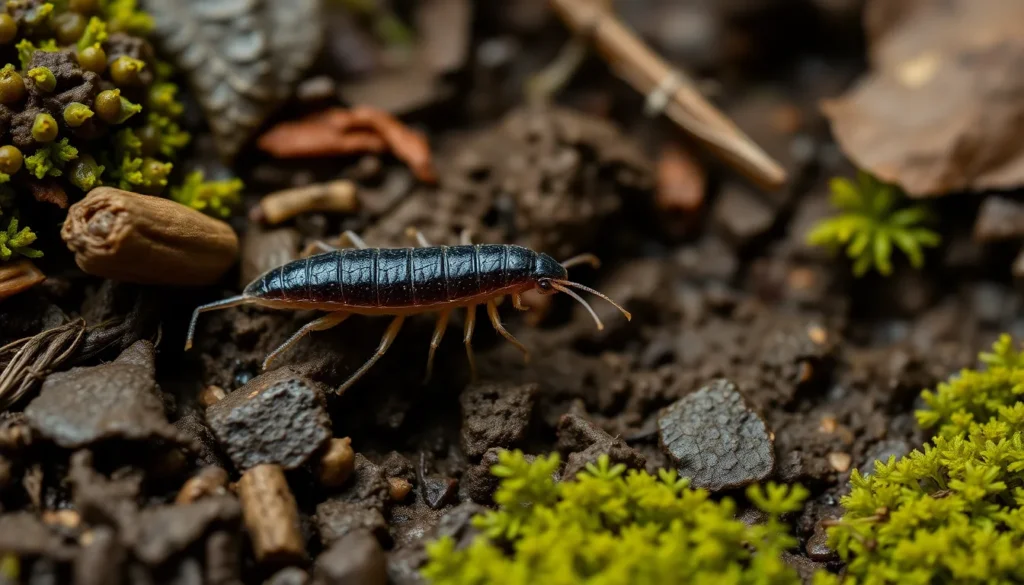
- Springtails belong to the subclass Collembola. They are hexapods closely related to insects but are classified separately due to unique characteristics.
- They are among the most abundant terrestrial arthropods. Springtails can number in the millions per square meter of soil, making them key soil organisms.
- Springtails are typically very small. Most species range from 1 to 3 millimeters in length, though some can be smaller or slightly larger.
- They possess a specialized appendage called the furcula. This forked structure allows springtails to jump by releasing stored tension, helping them evade predators.
- Springtails have a global distribution. They inhabit nearly all terrestrial environments, from tropical rainforests to polar regions.
- They play a crucial role in soil ecosystems. Springtails contribute to decomposition by feeding on fungi, bacteria, decaying plant matter, and help recycle nutrients.
- Springtails have simple eyes or may lack eyes entirely. Their vision capabilities vary by species, with some relying more on other sensory organs.
- Their respiratory system is unusual. Many springtails respire through their cuticle or trachea, depending on the species and habitat.
- Springtails exhibit direct development. They do not have a larval stage; juveniles resemble adults.
- They are sensitive to environmental conditions. Springtail populations can indicate soil health and pollution levels due to their sensitivity to contaminants.
- Springtails can reproduce sexually or asexually. Some species show parthenogenesis, where females produce offspring without fertilization.
- They have a diverse diet. Besides fungi and bacteria, some species consume pollen, algae, and even microscopic plant roots.
- Springtails contribute to soil structure. Their movement helps aerate soil and mix organic material, enhancing soil fertility.
- They have existed for hundreds of millions of years. Fossil records show springtails date back to the early Devonian period.
- Springtails are prey for many soil predators. They serve as food for mites, spiders, beetles, and small amphibians.
- Some species are adapted to extreme environments. Certain springtails survive in Arctic and Antarctic conditions as well as in caves.
- Springtails have a cuticle that can absorb water. This adaptation helps them survive in moist environments and avoid desiccation.
- They can exhibit aggregation behavior. Some species form groups, which may help in moisture retention and protection.
- Springtails communicate through chemical signals. Pheromones may play a role in mating and aggregation.
- They are important bioindicators. Their presence and diversity can provide information about ecosystem health and soil quality.
- Springtail research contributes to agriculture and environmental science. Understanding their roles can lead to better soil management and conservation strategies.
Habitat and Behavior
Springtails inhabit diverse terrestrial environments, predominantly in soil, leaf litter, mosses, and decaying wood. They thrive in moist conditions which help prevent dehydration due to their permeable cuticle. Behaviorally, springtails use their specialized furcula to jump away from threats, a key survival mechanism. They feed primarily on fungi, bacteria, and organic detritus, contributing significantly to nutrient cycling and soil fertility. Many species aggregate in moist microhabitats, and their activity patterns vary with environmental factors such as humidity and temperature. Some species have adapted to extreme environments like polar regions and caves, demonstrating remarkable ecological versatility.
Why This Animal Matters
Springtails are integral to soil ecosystems worldwide. By breaking down organic matter, they facilitate microbial activity and nutrient recycling essential for plant growth. Their abundance and sensitivity to soil pollutants make them valuable bioindicators for environmental monitoring and assessment. Springtails also influence soil structure by enhancing aeration and organic matter mixing. Despite their small size, their ecological impact is substantial, supporting soil biodiversity and ecosystem functions. Additionally, researching springtails offers insights into soil health, aiding sustainable agricultural practices and conservation efforts.
Common Misconceptions
Misconception: Springtails are insects.
Correction: Although springtails are hexapods and closely related to insects, they belong to a distinct subclass called Collembola and are not classified as true insects.
Misconception: Springtails bite humans.
Correction: Springtails do not bite or sting humans; they are harmless and do not feed on humans or pets.
Misconception: Springtails cause damage to plants.
Correction: Springtails primarily feed on fungi and decaying material and generally do not harm healthy plants; they may sometimes feed on seedlings but are not considered significant pests.
Misconception: Springtails are aquatic insects.
Correction: While some species live in moist environments or near water, springtails are primarily terrestrial and not aquatic insects.
Misconception: Springtails are pests indoors.
Correction: Although they can occasionally be found indoors in damp areas, springtails do not infest homes or cause structural damage.
FAQ
What are springtails?
Springtails are small hexapods belonging to the subclass Collembola, known for their ability to jump using a specialized appendage called the furcula.
Are springtails harmful to humans or plants?
No, springtails do not bite or sting humans and generally do not cause significant damage to healthy plants. They primarily feed on fungi and decaying organic matter.
Why are springtails important in ecosystems?
Springtails play a vital role in soil ecosystems by helping decompose organic material, recycling nutrients, improving soil structure, and serving as bioindicators of soil health.




Leave a Reply