
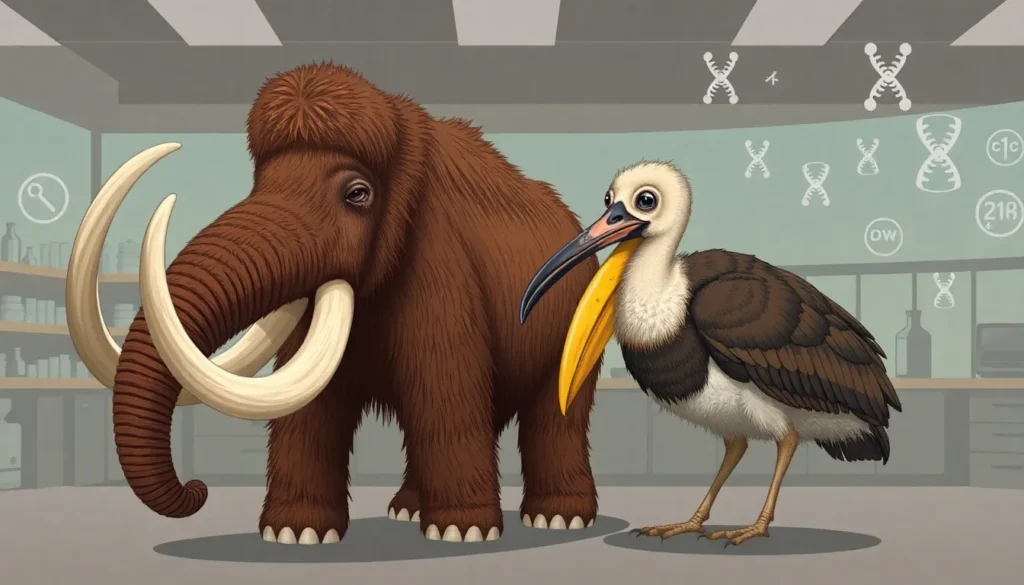
Short Answer
21 Facts About Mammoth and Dodo De-extinction Projects
- De-extinction Defined: De-extinction involves using biotechnology to bring back extinct species or create close genetic approximations by editing genomes or cloning.
- Woolly Mammoth Priority: The woolly mammoth is among the most studied extinct species for de-extinction due to well-preserved remains in permafrost.
- Dodo Interest: The dodo, extinct since the late 1600s, is a symbolic candidate for de-extinction despite limited DNA availability.
- CRISPR Technology: Gene-editing tools like CRISPR-Cas9 are central to current de-extinction strategies, allowing precise insertion of extinct species’ traits.
- Hybrid Approach: Many projects aim to create hybrids by inserting extinct species’ genes into the genome of close living relatives, such as Asian elephants for mammoths.
- Cloning Challenges: Cloning extinct animals is difficult due to DNA degradation and the absence of living cells.
- Environmental Goals: De-extinction proponents argue that resurrected species could restore lost ecological functions, such as mammoths potentially helping to preserve tundra ecosystems.
- Ethical Debates: De-extinction raises ethical concerns about animal welfare, ecological risks, and prioritization of conservation resources.
- Conservation Value: Some scientists view de-extinction as a tool to complement traditional conservation by increasing biodiversity.
- Funding and Support: De-extinction research receives funding from private foundations, academic institutions, and sometimes government agencies.
- Genome Sequencing: High-quality genome sequencing of extinct species is a prerequisite for any de-extinction attempt.
- Species Revival Status: No extinct species has yet been fully brought back to life; most projects are still in experimental stages.
- Public Fascination: De-extinction projects attract significant media and public interest, fueling debates on science and natural history.
- Legal Frameworks: There are currently no specific international laws regulating de-extinction, creating regulatory uncertainty.
- Potential Risks: Introducing resurrected species could disrupt modern ecosystems or spread new diseases.
- Technological Limitations: DNA damage and gaps in ancient genomes limit the accuracy of reconstructed animals.
- Mammoth Project Milestones: Key milestones include creating elephant cells with mammoth genes and attempting embryo development in surrogate mothers.
- Dodo DNA Issues: Dodo DNA is often fragmented and contaminated, complicating reconstruction efforts.
- Ecological Niche Restoration: De-extinction could restore lost ecological roles, such as seed dispersal and landscape modification.
- Public Policy Discussions: Governments and conservation bodies are increasingly discussing the implications of de-extinction science.
- Future Prospects: Ongoing scientific advances may bring de-extinction closer to reality, but many challenges remain.
Habitat and Behavior
The woolly mammoth (Mammuthus primigenius) inhabited cold tundra and steppe environments across northern Eurasia and North America during the Pleistocene epoch. It was adapted to cold climates with thick fur, fat layers, and specialized teeth for grazing on grasses and shrubs. Mammoths lived in herds and had social structures similar to modern elephants.
The dodo (Raphus cucullatus) was a flightless bird native to Mauritius, an island in the Indian Ocean. It lived in forested and coastal habitats, feeding primarily on fruits, seeds, and possibly small land animals. The dodo was ground-nesting and had no natural predators before human arrival, which contributed to its vulnerability.
Why This Animal Matters
The woolly mammoth played a vital role in shaping cold ecosystems by influencing vegetation patterns through grazing and trampling, potentially impacting carbon storage in soils. Its extinction led to changes in tundra landscapes. Reviving mammoths is seen as a way to restore these ecological processes and mitigate climate change effects.

The dodo is culturally significant as a symbol of human-driven extinction and ecological fragility. It represents the consequences of invasive species and habitat destruction. De-extinction efforts highlight conservation lessons and the importance of protecting current biodiversity.
Common Misconceptions
Misconception: De-extinction will bring back exact copies of extinct animals.
Correction: Current techniques create genetically close proxies or hybrids, not exact replicas, due to incomplete DNA and technological constraints.
Misconception: De-extinction eliminates the need for traditional conservation.
Correction: De-extinction is complementary and cannot replace efforts to protect existing species and habitats.
Misconception: De-extinction is purely science fiction.
Correction: While challenging, de-extinction is an active area of scientific research with tangible progress in genome editing and cloning technologies.
FAQ
What is de-extinction?
De-extinction is a scientific process involving biotechnological methods such as gene editing and cloning to bring back extinct species or create close genetic analogs.
Why focus on woolly mammoths and dodos?
Woolly mammoths are well-preserved with accessible DNA and ecological significance, while dodos are iconic extinct species representing human impact on biodiversity.
Are de-extinct animals exact replicas?
No, current methods produce animals genetically similar to extinct species but not exact copies due to DNA degradation and technological limits.

Leave a Reply