
Short Answer
21 Facts About Prairie Dog Towns
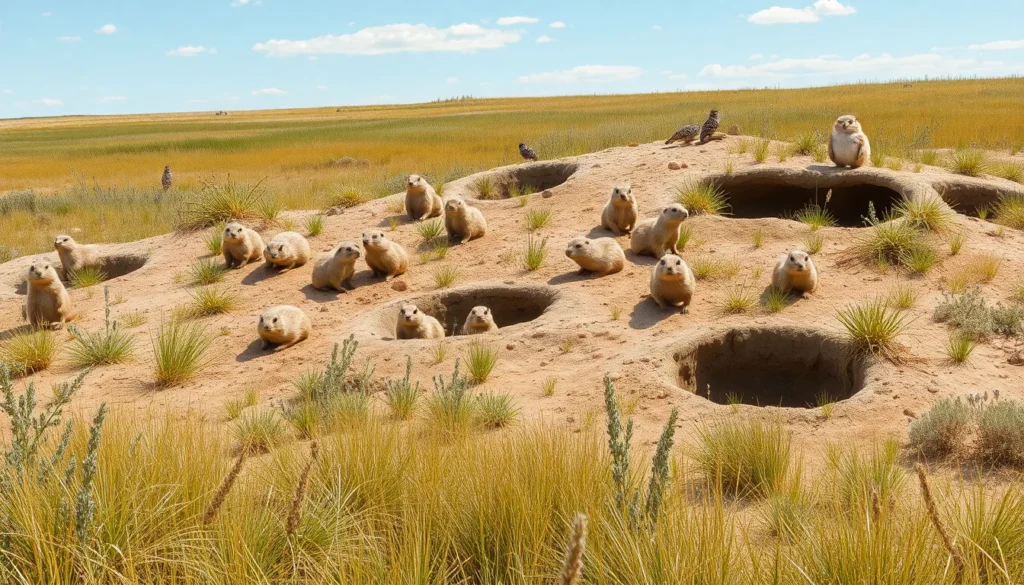
- Prairie dog towns are large colonies. These communities can range from a few dozen to thousands of individuals living in interconnected burrows.
- They are found primarily in North America’s grasslands. Prairie dog towns are mostly located in the Great Plains region, including parts of the United States and Canada.
- The towns consist of complex burrow systems. These underground networks include multiple chambers and tunnels used for nesting, food storage, and protection from predators.
- Prairie dogs communicate with unique vocalizations. They have distinct calls to warn of different types of predators, including hawks, coyotes, and humans.
- Social structure within towns is hierarchical. Prairie dogs live in family groups called coteries, typically consisting of one male, several females, and their offspring.
- These towns can cover extensive areas. Some prairie dog towns span several hundred acres, creating visible patches of bare soil in grasslands.
- Their burrowing activity affects the ecosystem. By aerating soil and modifying plant growth, prairie dogs contribute to habitat diversity for other species.
- Prairie dog towns provide shelter for other animals. Species such as burrowing owls, snakes, and insects often use abandoned prairie dog burrows.
- Population densities fluctuate seasonally. Towns experience changes in numbers due to breeding cycles and predation.
- Prairie dogs display cooperative behaviors. They groom each other and engage in sentinel duty, where individuals watch for danger while others feed.
- Town boundaries are marked by territorial behavior. Prairie dogs defend their coteries’ burrows from outsiders through vocal and physical displays.
- They play a keystone role in grassland ecosystems. Their presence influences plant composition and supports biodiversity.
- Human activities have reduced prairie dog town sizes. Agriculture, urban development, and eradication programs have diminished many historical towns.
- Conservation efforts aim to protect towns. Some prairie dog towns are located in protected areas to preserve their ecological functions.
- Towns can be monitored using aerial and satellite imagery. These methods help track changes in size and health over time.
- Prairie dogs are diurnal animals. They are most active during the day, which influences town activity patterns.
- Weather impacts town dynamics. Harsh winters or droughts can affect survival and reproductive success within towns.
- Burrowing helps control soil erosion. The extensive digging stabilizes soil and reduces runoff in prairie ecosystems.
- Towns exhibit genetic diversity. Interactions between different coteries promote gene flow within the population.
- Prairie dog towns are important for scientific research. They provide insights into social behavior, communication, and ecosystem processes.
- Some towns have been documented for over a century. Long-term studies have tracked their changes and responses to environmental pressures.
Habitat and Behavior
Prairie dog towns are primarily located in the grasslands and prairies of North America, particularly in the Great Plains region. These towns consist of interconnected burrows that serve as shelter, nesting sites, and protection from predators. Prairie dogs are social animals that live in family groups called coteries, which form the building blocks of larger colonies. They exhibit cooperative behaviors including grooming and sentinel duty, where some individuals watch for threats while others forage. Prairie dogs are diurnal and their activity patterns are influenced by weather and seasonal changes. Their burrowing activity aerates the soil, promotes plant diversity, and creates habitats for other species, making their towns integral to grassland ecosystems.
Why This Animal Matters
Prairie dog towns play a critical ecological role as keystone structures within grassland ecosystems. Their burrowing improves soil health and water infiltration, while their grazing affects plant community composition. These towns provide shelter for multiple species, including burrowing owls and snakes, enhancing local biodiversity. Prairie dogs’ communication and social systems have also made them subjects of scientific interest. Culturally, prairie dogs have been recognized by indigenous communities and are part of the natural heritage of the North American plains. Conservation efforts focus on preserving prairie dog towns because their decline can have cascading negative effects on ecosystem stability and species diversity.
Common Misconceptions
Misconception: Prairie dog towns are destructive pests that ruin farmland.
Correction: While prairie dog burrowing can alter land, their ecological benefits include soil aeration and supporting biodiversity. Some conflicts with agriculture exist, but they are an important native species in grassland habitats.
Misconception: Prairie dogs are solitary animals.
Correction: Prairie dogs are highly social and live in complex colonies with strong social bonds and communication.
Misconception: Prairie dog towns are small and insignificant.
Correction: Prairie dog towns can cover large areas and have significant ecological impacts, serving as keystone communities in their environments.
FAQ
What is a prairie dog town?
A prairie dog town is a large colony of prairie dogs living in interconnected burrow systems, often covering extensive areas of grassland.
Why are prairie dog towns important to the ecosystem?
Prairie dog towns improve soil aeration, support plant diversity, and provide habitats for various other species, making them keystone structures in grassland ecosystems.
How do prairie dogs communicate within their towns?
Prairie dogs use a range of vocalizations to alert others to specific predators and coordinate social behaviors within their colony.



Leave a Reply