
Short Answer
21 Facts About Orca Pods
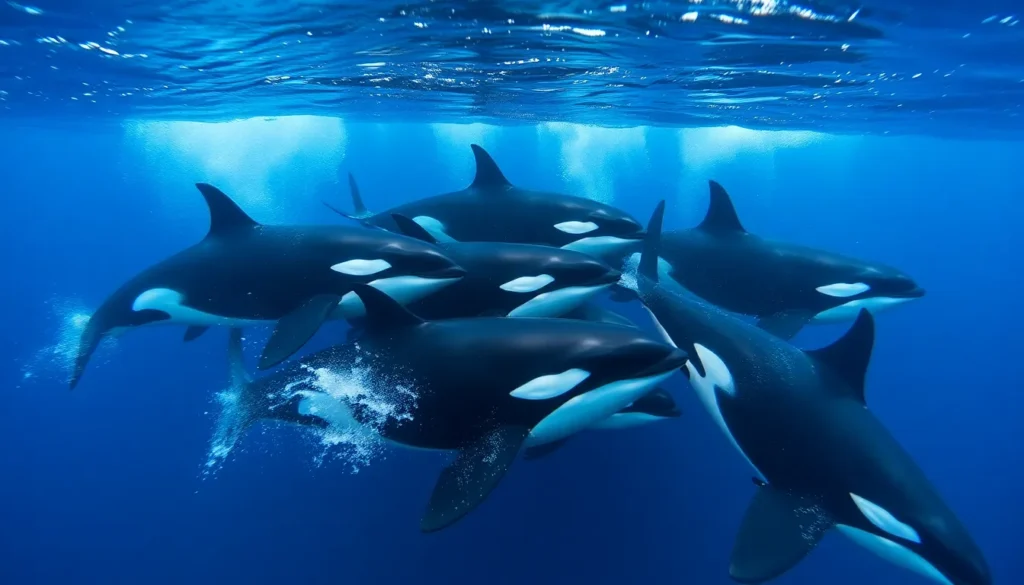
- Orca pods are matrilineal family groups. Each pod is typically led by a dominant female, and members remain with their maternal relatives for life.
- Pods vary in size. Depending on factors like location and food availability, orca pods can range from just a few individuals to over 40 members.
- Distinct vocal dialects characterize pods. Each pod has unique calls and whistles that function as a form of communication and identification.
- Pod members cooperate in hunting. Orcas use coordinated strategies within pods to capture prey, showcasing sophisticated social hunting techniques.
- Pods exhibit strong social bonds. Members engage in behaviors such as rubbing, vocalizing, and synchronized swimming to maintain group cohesion.
- Pods belong to larger clans and communities. Several closely related pods form clans based on shared vocalizations, which in turn belong to larger communities.
- Resident, transient, and offshore ecotypes show different pod structures. Pods vary according to ecotype, with residents generally having stable pods, while transients have smaller, more fluid groups.
- Female orcas often dominate pod leadership. The oldest female frequently leads, guiding social and movement decisions.
- Pods are vital for calf rearing. Calves receive protection, food, and social learning from all pod members.
- Pods maintain stable membership over decades. Lifelong bonds are common, with individuals rarely leaving their natal pod.
- Pods communicate using echolocation clicks. This aids navigation, prey detection, and intra-group communication.
- Pods can be identified by their unique dorsal fin shapes and markings. Researchers use these features for individual and pod identification.
- Pods engage in cultural transmission. Hunting techniques, vocalizations, and social behaviors are passed down generations within pods.
- Pods show cooperative care of sick or injured members. Ill individuals are often supported by the group, indicating empathy.
- Pods influence local marine ecosystems. Their predation impacts prey populations and marine food webs.
- Pods can be disrupted by human activities. Noise pollution, boat traffic, and habitat degradation affect pod communication and behavior.
- Pods demonstrate complex social learning. Younger orcas learn behaviors by observing elders.
- Pods have been observed using tools and innovative hunting methods. Some pods exhibit unique behaviors like beaching to catch seals.
- Pod members often synchronize their breathing and swimming patterns. This synchronization strengthens social bonds and group coordination.
- Pods may merge temporarily or interact with other pods. Such interactions vary depending on ecological and social contexts.
- Pods serve as units of conservation management. Protecting pods is crucial for maintaining orca populations and genetic diversity.
Habitat and Behavior
Orca pods inhabit oceans worldwide, from polar regions to tropical seas, with a preference for coastal and continental shelf waters. Their behavior is highly social, with pods forming tight-knit groups that cooperate in hunting, travel, and nurturing young. Pods communicate through a variety of vocalizations, including clicks, whistles, and pulsed calls, which are specific to each pod and allow members to coordinate activities and maintain social bonds. They exhibit complex hunting strategies depending on their prey, ranging from fish to marine mammals. Pods tend to be stable over time, with offspring remaining with their mothers for life, thus forming enduring social structures. Seasonal movements and habitat use vary by ecotype, reflecting adaptations to different ecological niches.
Why This Animal Matters
Orca pods play a significant ecological role as apex predators, regulating prey populations and maintaining the balance of marine ecosystems. Their presence affects the behavior and distribution of species throughout the food web. Culturally, orcas have been important to indigenous peoples and coastal communities, symbolizing strength and intelligence. In scientific research, orca pods provide insights into social behavior, communication, and animal culture. Conservation efforts focus on protecting pod integrity and habitat, as disruptions can have cascading effects on orca populations and ocean health. Understanding pod dynamics aids in creating effective management strategies to ensure the survival of these iconic marine mammals.
Common Misconceptions
Misconception: Orcas are solitary hunters.
Correction: Orcas typically hunt cooperatively within pods, using complex strategies that depend on social coordination.
Misconception: All orca pods are the same.
Correction: Pods differ widely across ecotypes, regions, and cultures, each with unique vocalizations, behaviors, and social structures.
Misconception: Pods disband once calves mature.
Correction: Orca pods are matrilineal and stable, with offspring usually remaining in their natal pod for life.
Misconception: Orcas are whales that always travel in large groups.
Correction: Pod size varies, and some ecotypes, such as transients, form small, fluid groups rather than large pods.
Misconception: All orcas eat the same prey.
Correction: Different pods specialize in different prey types, such as fish or marine mammals, depending on their ecotype and location.
FAQ
What defines an orca pod?
An orca pod is a social group of killer whales, usually consisting of related individuals, typically matrilineal, that live, hunt, and travel together.
How do orca pods communicate?
Orca pods communicate through unique vocalizations, including clicks, whistles, and pulsed calls, which help maintain social bonds and coordinate group activities.
Do orca pods ever change members?
Orca pods are generally stable over time, with members remaining in their natal pod for life; however, temporary interactions with other pods can occur.



Leave a Reply