
Short Answer
21 Facts About Japanese Macaques
- Scientific Name: Japanese macaques are scientifically known as Macaca fuscata.
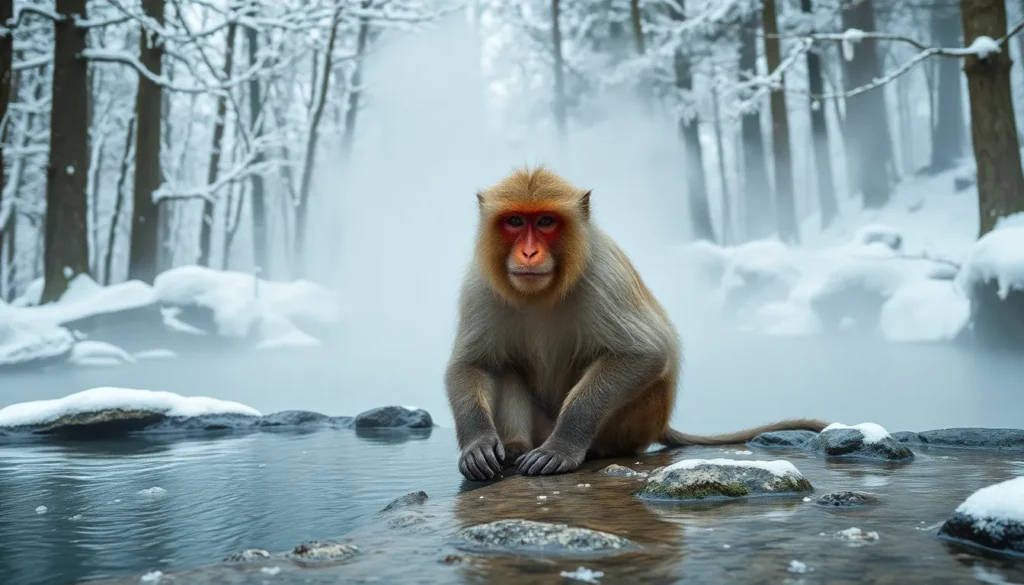
- Common Name: They are often called snow monkeys due to their habitat in cold regions of Japan.
- Geographic Range: They are endemic to Japan and found throughout the country’s islands, including Honshu, Shikoku, and Kyushu.
- Cold Adaptation: Japanese macaques are the most northern-living non-human primates, able to survive in snowy and cold environments.
- Hot Spring Use: They are known for soaking in natural hot springs (onsen) during winter to keep warm, a behavior observed especially in the Jigokudani Monkey Park.
- Social Structure: They live in matrilineal troops with complex hierarchies dominated by females.
- Diet: Their diet is omnivorous, including fruits, seeds, insects, and even small animals depending on seasonal availability.
- Tool Use: Some populations have been documented washing sweet potatoes and wheat before eating, showing cultural transmission of behaviors.
- Communication: They communicate using vocalizations, facial expressions, and body postures.
- Reproduction: Females give birth to a single infant after a gestation period of about 170 days.
- Lifespan: In the wild, they typically live around 20 to 30 years.
- Intelligence: Japanese macaques demonstrate problem-solving skills and social learning abilities.
- Seasonal Behavior: Their behavior and diet change with the seasons, adapting to the availability of food and temperature fluctuations.
- Physical Appearance: They have thick fur that varies in color from brown to gray with a distinctive red face and bottom.
- Size: Adult males typically weigh between 11 to 14 kilograms, while females are smaller, averaging 8 to 10 kilograms.
- Conservation Status: They are currently listed as Least Concern by the IUCN, but habitat loss and human interaction affect some populations.
- Habitat Range: They live in diverse environments ranging from subtropical forests to subalpine regions.
- Predators: Natural predators include eagles and wild dogs, though adult macaques have few threats.
- Human Interaction: They sometimes raid crops, which causes conflicts with farmers.
- Cultural Significance: Japanese macaques are featured in various aspects of Japanese culture, including folklore and tourism.
- Research Importance: They are studied extensively for insights into primate behavior, cognition, and evolution.
Habitat and Behavior
Japanese macaques inhabit a wide range of environments across Japan, from warm subtropical forests to cold mountainous areas. They are highly adaptable and have developed behaviors to survive harsh winters, such as huddling together for warmth and soaking in natural hot springs. Their social groups, or troops, are typically led by dominant females, with strict hierarchies influencing access to food and mates. These primates are omnivorous, adjusting their diet seasonally to include available fruits, seeds, insects, and small animals. Their ability to learn and transmit behaviors culturally is notable, as seen in their food-washing habits and use of hot springs.
Why This Animal Matters
Japanese macaques play a vital ecological role in their habitats by aiding in seed dispersal and maintaining forest health. Culturally, they hold significance in Japan as symbols of nature’s resilience and adaptability, often featured in art and folklore. From a scientific perspective, they provide valuable insights into primate behavior, social dynamics, and the effects of environmental pressures on adaptation. Their interactions with humans also highlight challenges in wildlife management and conservation. Protecting their habitats and understanding their behavior contributes to biodiversity preservation and offers broader lessons on coexistence between humans and wildlife.
Common Misconceptions
Misconception: Japanese macaques only live in snowy, cold areas.
Correction: While they are famous for living in cold climates, Japanese macaques inhabit a variety of environments throughout Japan, including warmer forested areas.
Misconception: All Japanese macaques regularly use hot springs.
Correction: Only certain populations, such as those in Jigokudani Monkey Park, are known for soaking in hot springs; this behavior is not universal among all groups.
Misconception: Japanese macaques are aggressive toward humans.
Correction: Although they can become habituated to humans and occasionally raid crops, they are generally not aggressive unless provoked.
Misconception: Japanese macaques are solitary animals.
Correction: They are highly social, living in large troops with complex social hierarchies and interactions.
Misconception: Their red faces indicate illness or anger.
Correction: The red coloration is natural, especially prominent during mating season, and is a normal characteristic of the species.
FAQ
Why are Japanese macaques called snow monkeys?
They are called snow monkeys because they live in regions of Japan that experience heavy snowfall and cold winters, which is unusual for primates.
Do all Japanese macaques use hot springs?
No, only certain populations, such as those in Jigokudani Monkey Park, have been observed using hot springs to keep warm during winter.
Are Japanese macaques endangered?
Japanese macaques are currently classified as Least Concern by the IUCN, though some local populations face threats from habitat loss and human conflict.





Leave a Reply