
Short Answer
21 Facts About Brumating Reptiles
- Brumation is distinct from hibernation. Unlike mammals that hibernate, brumation is specific to reptiles and involves a period of dormancy triggered by cold temperatures where metabolic rates drop significantly.
- Brumation occurs in cold-blooded animals. Since reptiles rely on external heat sources, brumation helps them conserve energy when environmental temperatures are too low for normal activity.
- Not all reptiles brumate. Species in consistently warm climates may not enter brumation, as environmental conditions do not warrant it.
- Brumation duration varies. Depending on the species and climate, brumation can last from a few weeks to several months during winter.
- Reptiles become less active but do not sleep continuously. During brumation, reptiles may occasionally wake to drink water but generally remain inactive.
- Before brumation, reptiles often stop eating. In preparation, many species reduce or cease feeding to empty their digestive systems for the dormant period.
- Temperature and light changes trigger brumation. Declining temperatures and shorter daylight hours serve as environmental cues for reptiles to enter brumation.
- Brumation helps reptiles survive unfavorable conditions. It reduces energy needs when food is scarce and temperatures are too low for normal physiological functions.
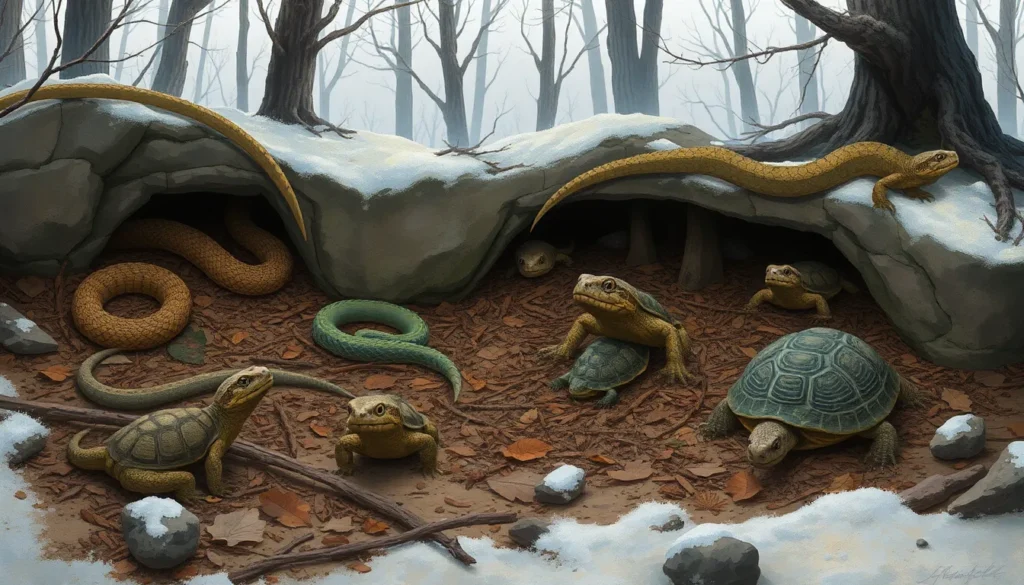
- Reptiles seek sheltered locations during brumation. These may include burrows, caves, or under leaf litter to protect from predators and harsh weather.
- Reptiles’ heart rates and breathing slow significantly. This reduction supports energy conservation during brumation.
- Brumation is observed in many reptiles including snakes, lizards, and turtles. Different species have adapted this strategy to survive seasonal changes.
- Some pet reptiles also require brumation. In captivity, mimicking natural environmental cues is important for the health of species that naturally brumate.
- Improper brumation conditions can be harmful. Without correct temperature and humidity, reptiles may suffer health issues or fail to brumate properly.
- Brumation impacts reproductive cycles. Many reptiles time their breeding seasons to follow brumation periods.
- Reptiles can still respond to stimuli during brumation. They are not in a deep sleep but in a state of reduced metabolic activity with periodic arousals.
- Brumation is an evolutionary adaptation. It enables reptiles to inhabit temperate zones with seasonal climates.
- Environmental changes may affect brumation patterns. Climate change and habitat alterations can disrupt normal brumation cycles.
- Some reptiles brumate communally. Certain species share brumation sites to increase survival chances.
- Brumation differs from estivation. While brumation occurs in cold conditions, estivation is dormancy during hot or dry periods.
- Monitoring brumation is important for conservation. Understanding brumation helps in habitat management and species protection efforts.
- Scientific research on brumation is ongoing. Studies continue to explore physiological and ecological aspects of this dormancy state.
Habitat and Behavior
Brumating reptiles are primarily found in temperate and seasonal environments where temperature fluctuations necessitate a dormancy period. Typical habitats include forests, grasslands, deserts, and wetlands, where reptiles seek insulated shelters such as burrows, rock crevices, logs, or leaf litter to escape the cold. Behaviorally, reptiles slow down their metabolism, reduce movement, and may cease feeding days or weeks before brumation. They remain hidden and relatively inactive, awakening sporadically to hydrate. This behavior allows them to conserve energy when environmental conditions are inhospitable for hunting or digestion. In captivity, providing suitable brumation conditions—such as controlled temperature drops and humidity—is essential for species that naturally undergo this process.
Why This Animal Matters
Brumating reptiles play important roles in their ecosystems, including pest control and serving as prey for other wildlife. Their brumation behavior is a critical survival strategy that allows them to endure harsh seasonal changes, contributing to the biodiversity of temperate regions. From a conservation perspective, understanding brumation assists in habitat preservation and captive care, especially as environmental changes threaten natural cycles. Moreover, reptiles that brumate provide valuable research opportunities into physiological adaptations to extreme conditions, enhancing broader ecological and biological knowledge.
Common Misconceptions
Misconception: Brumation is the same as hibernation.
Correction: While both involve dormancy, brumation occurs in reptiles with periodic waking and reliance on external heat, unlike mammalian hibernation which is a deep sleep with continuous inactivity.
Misconception: Reptiles do not need to eat or drink during brumation.
Correction: Although reptiles stop feeding, they may occasionally drink water during brumation to stay hydrated.
Misconception: All reptiles brumate during winter.
Correction: Only species in temperate or cooler climates brumate; reptiles in tropical or consistently warm environments usually remain active year-round.
FAQ
What is brumation in reptiles?
Brumation is a period of dormancy in reptiles, similar to hibernation, where their metabolic activity decreases significantly during cold weather, allowing them to conserve energy.
How do reptiles behave during brumation?
During brumation, reptiles become less active, often hiding in sheltered locations. They may wake occasionally to drink water but generally do not eat or move much.
Do all reptiles brumate?
No, only reptiles living in temperate or colder climates typically brumate. Reptiles in tropical or stable warm environments usually remain active year-round.

Leave a Reply