
Short Answer
21 Facts About Estivating Snails
- Estivation is a survival strategy. Estivating snails enter a period of dormancy during hot or dry conditions to conserve moisture and energy.
- It is similar to hibernation but occurs in summer. While hibernation is a winter dormancy, estivation takes place in response to heat and drought.
- Many land snail species estivate. Various terrestrial snails, especially those in arid or seasonal environments, use estivation to survive harsh periods.
- Snails produce a protective epiphragm. During estivation, snails secrete a mucus-based barrier that hardens to seal the shell opening and reduce water loss.
- The epiphragm can be calcareous or gelatinous. Depending on species, the epiphragm may contain calcium carbonate, enhancing its durability.
- Estivation can last from weeks to months. The duration depends on environmental conditions and species-specific adaptations.
- Metabolic rate decreases significantly. Snails reduce their metabolic activity to conserve energy during estivation.
- They retract deeply into their shells. Snails pull their bodies inside the shell, minimizing exposure to heat and desiccation.
- Estivation aids survival in drought-prone areas. It allows snails to persist through dry seasons when moisture is scarce.
- Some snails estivate underground or under debris. This behavior helps maintain humidity and protection during dormancy.
- Temperature and humidity trigger estivation. Snails respond to environmental cues such as rising temperatures and decreasing moisture.
- Estivation is reversible. Snails resume normal activity when conditions improve, often after rainfall.
- It helps prevent desiccation and overheating. By reducing water loss and body temperature, snails increase their chances of survival.
- Estivating snails can survive for extended periods without food. Their metabolic slowdown minimizes energy requirements during dormancy.
- Estivation has evolved multiple times among gastropods. It is a convergent adaptation across different snail lineages facing similar environmental stresses.
- Some aquatic snails also estivate. Certain freshwater species enter dormancy during droughts by burrowing into mud.
- Estivation influences snail reproductive cycles. Dormancy periods may delay or synchronize breeding to favorable conditions.
- It may affect population dynamics. Periods of estivation can reduce snail activity, impacting predator-prey relationships.
- Estivating behavior has been studied as a model for desiccation tolerance. Understanding snail estivation helps research on water conservation in animals.
- Climate change may impact estivation patterns. Increasing temperatures and altered precipitation could affect snail dormancy and survival.
- Human activities threaten some estivating snail species. Habitat destruction and pollution can disrupt the delicate balance required for estivation.
Habitat and Behavior
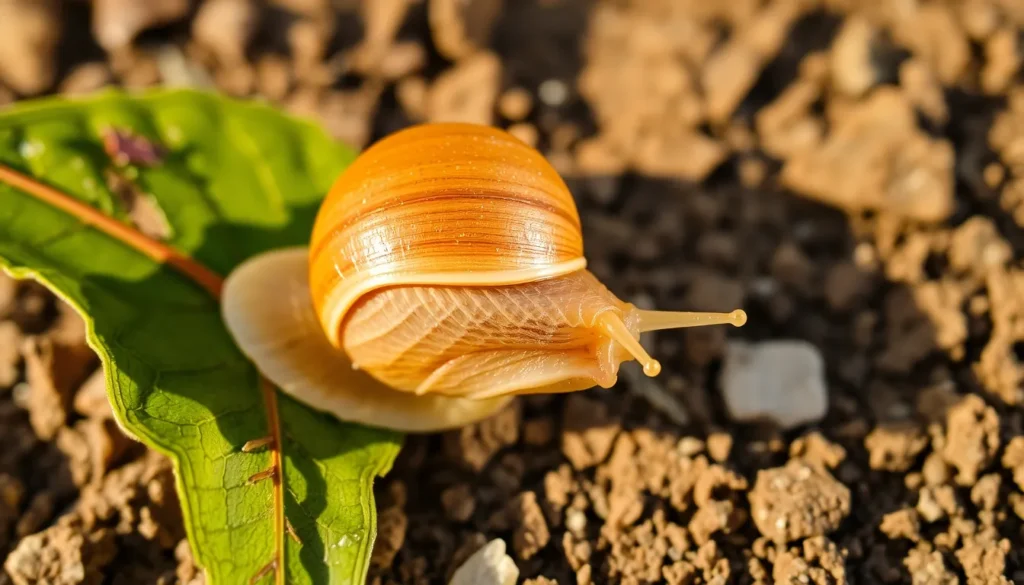
Estivating snails are typically found in terrestrial habitats that experience seasonal dryness or heat, such as Mediterranean climates, deserts, and grasslands. They occupy microhabitats like under rocks, leaf litter, or buried in soil, which provide shelter during estivation. Behaviorally, these snails enter dormancy by retracting into their shells and secreting an epiphragm to conserve moisture. Their reduced metabolic rate during estivation allows survival without food or water for extended periods. Once environmental conditions become favorable, usually with increased humidity or rainfall, they emerge to feed, reproduce, and continue their life cycle.
Why This Animal Matters
Estivating snails play important ecological roles as decomposers, contributing to nutrient cycling by breaking down plant material. Their dormancy strategy allows them to persist in challenging environments, maintaining biodiversity and ecosystem stability. Furthermore, their physiological adaptations provide insight into mechanisms of desiccation resistance and metabolic regulation, valuable for scientific research. Some snail species are also indicators of environmental health and are culturally significant in certain regions, featuring in traditional diets and folklore. Conservation of estivating snails helps protect fragile ecosystems and maintains the balance of species interactions.
Common Misconceptions
Misconception: Estivation is the same as hibernation.
Correction: While both are dormancy states, estivation occurs during hot and dry periods to avoid heat stress, whereas hibernation occurs in cold conditions to survive winter.
Misconception: Snails die during estivation.
Correction: Estivation is a survival mechanism; snails remain alive in a dormant state and resume activity when conditions improve.
FAQ
What is estivation in snails?
Estivation is a period of dormancy that snails enter during hot or dry conditions to conserve moisture and reduce metabolic activity, allowing them to survive unfavorable environmental conditions.
How do snails protect themselves during estivation?
Snails produce a structure called an epiphragm, a mucus-based or calcareous barrier that seals the shell opening, reducing water loss and protecting them during dormancy.
How long can snails estivate?
The duration of estivation varies by species and environment but can range from several weeks to several months, depending on how long the adverse conditions last.

Leave a Reply