
Short Answer
21 Facts About Elephant Tusks
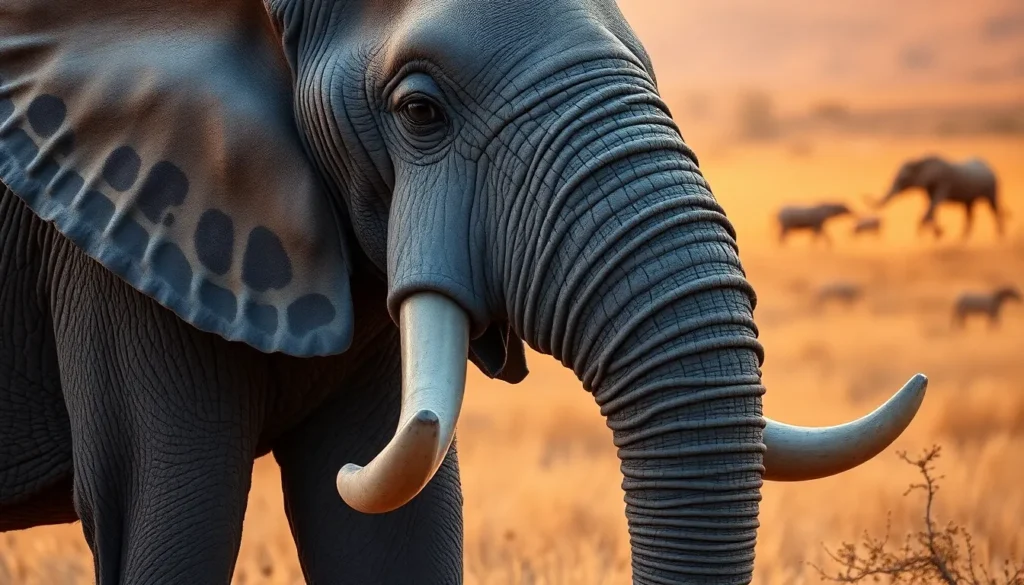
- Elephant tusks are elongated incisors. Unlike most animals with tusks, elephant tusks are modified upper incisors that continue to grow throughout their lives.
- Ivory is the main component of tusks. Tusks are primarily made of dentin, a dense, ivory-like material, which makes them valuable and unfortunately targeted by poachers.
- Both male and female African elephants can have tusks. In African elephants, both sexes typically grow tusks, though males usually have larger ones.
- In Asian elephants, usually only males have prominent tusks. Female Asian elephants often have small or no visible tusks, sometimes referred to as tushes.
- Tusk size varies widely among elephants. Some tusks can grow over 10 feet (3 meters) long, especially in older males.
- Tusks are used for defense and combat. Elephants use their tusks to protect themselves from predators and in fights with other elephants for dominance.
- Elephants use tusks for digging and foraging. They dig for water, minerals, and roots, and strip bark from trees using tusks.
- Tusks serve social and display purposes. Larger tusks can be a sign of strength and status within elephant groups.
- Elephants can survive if their tusks break or are removed. Though tusks are useful, elephants can adapt to life without them.
- Tusk growth continues throughout an elephant’s life. Growth rates vary but tusks generally grow about 15 cm (6 inches) per year.
- Tusks have a unique internal structure. They contain a pulp cavity inside, which supplies nerves and blood vessels.
- Elephants sometimes use tusks to manipulate objects. They can move logs, branches, and other materials using their tusks.
- Tusk shape and curvature vary by species and individual. African elephant tusks tend to curve outward and upward, while Asian elephant tusks are straighter.
- Not all elephants have tusks. Some populations have evolved tusklessness, possibly due to selective pressures from poaching.
- Tusks are highly sensitive. The presence of nerves in the pulp cavity makes them sensitive to touch and injury.
- Ivory from tusks has been used for art and tools historically. Human use of ivory dates back thousands of years but has contributed to elephant population declines.
- International trade in elephant ivory is regulated. The Convention on International Trade in Endangered Species (CITES) seeks to control ivory trade to protect elephants.
- Tusk size can influence elephant behavior. Larger tusks may give males an advantage during mating competitions.
- Tusk removal or damage can impact elephant social dynamics. Individuals with broken tusks may face challenges in dominance or foraging efficiency.
- Conservation efforts focus on protecting tusked elephants. Anti-poaching initiatives aim to safeguard elephants from illegal ivory hunting.
- Tusks are a symbol in many cultures. They often represent strength, wisdom, and are used in ceremonial objects or traditional medicine in some societies.
Habitat and Behavior
Elephants, the animals that bear tusks, primarily inhabit diverse ecosystems across Africa and Asia, including savannas, forests, deserts, and grasslands. African elephants are found in sub-Saharan Africa, while Asian elephants inhabit parts of South and Southeast Asia. Their behavior is complex and social; they live in matriarchal herds led by an older female. Tusks play a critical role in their survival strategies, assisting in foraging by stripping bark, digging for water, and moving obstacles. They also serve as tools in social interactions such as dominance displays and sparring during mating competitions. Elephants rely heavily on their tusks for interacting with their environment and maintaining their social structures.
Why This Animal Matters
Elephants are keystone species, meaning their activities significantly shape their ecosystems. Their tusks aid in these ecological roles by enabling behaviors like digging water holes that benefit other wildlife. Culturally, elephant tusks have held symbolic and practical importance across many human societies, used in art, ritual, and craftsmanship. However, the demand for ivory has also led to severe poaching threats, making elephant tusks central to conservation debates. Protecting elephants and their tusks is critical for biodiversity preservation, maintaining ecological balance, and respecting the cultural heritage associated with these majestic animals.
Common Misconceptions
Misconception: All elephants have tusks. Correction: Not all elephants have tusks; some populations, particularly among Asian elephants and African forest elephants, include individuals or entire groups that are tuskless.
Misconception: Elephant tusks are horns. Correction: Tusks are modified teeth (incisors), whereas horns are made of keratin and grow differently.
Misconception: Removing an elephant’s tusks will always kill or severely harm it. Correction: While tusks are important, elephants can survive without them, though their behavior and survival strategies may be impacted.
Misconception: Ivory is a renewable resource. Correction: Ivory is part of the elephant’s body and grows slowly; overharvesting through poaching is not sustainable and threatens elephant populations.
Misconception: All large tusks belong to male elephants. Correction: Although males generally have larger tusks, female African elephants also can have substantial tusks.
FAQ
What are elephant tusks made of?
Elephant tusks are primarily made of dentin, a dense, ivory-like material that forms the bulk of the tusk. Inside the tusk is a pulp cavity containing nerves and blood vessels.
Do all elephants have tusks?
Not all elephants have tusks. While both male and female African elephants usually have tusks, many female Asian elephants have very small or no tusks, and some populations include tuskless individuals.
Why do elephants have tusks?
Elephants use tusks for multiple purposes including defense against predators, fighting with other elephants, digging for water and minerals, stripping bark from trees, and as tools for manipulating objects.


Leave a Reply