
Short Answer
21 Facts About Monarch Butterfly Migration
- Long-distance migration: Monarch butterflies travel up to 3,000 miles from Canada and the United States to central Mexico in the fall, making it one of the longest insect migrations known.
- Multi-generational journey: The migration spans several generations of monarchs; the butterflies that return north in spring are different from those that migrated south.
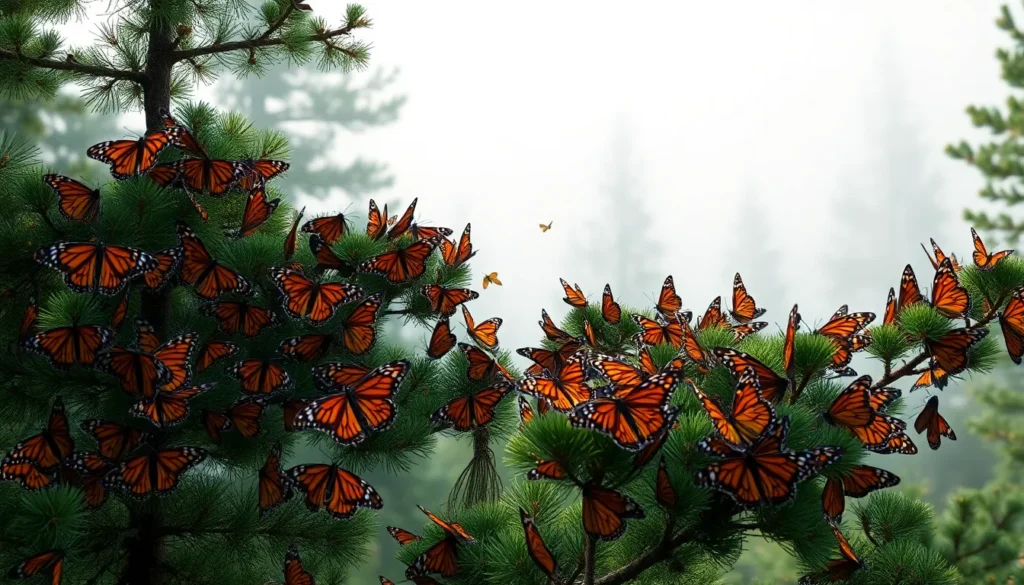
- Overwintering sites: Monarchs overwinter in specific forested areas in the mountains of central Mexico, particularly in the Monarch Butterfly Biosphere Reserve.
- Temperature and altitude preferences: During overwintering, monarchs cluster in fir trees at elevations between 2,400 and 3,600 meters to maintain suitable microclimates.
- Navigation cues: Monarchs use a combination of the sun’s position, magnetic fields, and possibly polarized light to navigate their migration routes.
- Reproductive dormancy: Monarchs enter a reproductive diapause during migration and overwintering, delaying mating until spring.
- Milkweed dependency: Monarch larvae feed exclusively on milkweed plants, which contain toxins that provide protection from predators.
- Population fluctuations: Monarch populations vary widely year-to-year, influenced by weather, habitat loss, and food availability.
- Threats to migration: Deforestation, pesticide use, and climate change pose significant threats to monarch migration and survival.
- Discovery of migration: The migration was first scientifically documented in the 1930s when tagging and recovery methods identified the migration routes.
- Monarch tagging programs: Researchers and citizen scientists tag monarchs to track their migration and study population dynamics.
- Flight behavior: Monarchs fly during the day and roost at night, often clustering in large groups during rest periods.
- Speed and distance: Monarchs can fly up to 55 miles a day during migration, assisted by favorable winds and thermal currents.
- Longevity variation: Migratory monarchs live longer (up to 8 months) than summer generations, which live only a few weeks.
- Genetic basis: Migration behavior is genetically encoded, with some genes influencing orientation and timing.
- Conservation efforts: Numerous initiatives focus on preserving monarch habitats and milkweed resources to support migration.
- Ecological role: Monarchs act as pollinators and indicators of ecosystem health.
- Monarch migration in the eastern and western US: Eastern populations migrate to Mexico, while western populations overwinter along the California coast.
- Climate change impact: Changes in temperature and weather patterns can disrupt migration timing and breeding cycles.
- Monarch migration inspires culture: Monarchs have symbolic significance in art, literature, and indigenous traditions.
- Scientific importance: Monarch migration serves as a model system for studying animal navigation, ecology, and conservation.
Habitat and Behavior
Monarch butterflies inhabit a variety of environments across North America, from southern Canada through the United States to Mexico. Their habitats include meadows, fields, and gardens rich in milkweed, which is essential for their larval stage. During migration, monarchs utilize forested mountain areas in Mexico for overwintering, where the microclimate allows them to conserve energy and survive colder months. Behaviorally, monarchs are diurnal fliers, navigating using environmental cues such as the sun and Earth’s magnetic field. They enter a state of reproductive dormancy during migration and overwintering to conserve resources. Monarchs are also known for their ability to cluster in large groups for thermoregulation and protection against predators. Their survival depends heavily on the availability of milkweed for caterpillars and nectar sources for adults.
Why This Animal Matters
Monarch butterflies play an important ecological role as pollinators, contributing to the reproduction of various flowering plants. Their migration is a key indicator of environmental health, reflecting changes in climate, land use, and ecosystem balance. Culturally, monarchs hold significance in many indigenous and local traditions, symbolizing transformation and endurance. Conservation of monarch migration routes and habitats is critical due to threats from habitat loss, pesticide exposure, and climate change. Protecting monarchs supports biodiversity and helps maintain healthy ecosystems. Additionally, the monarch migration offers scientists valuable insights into animal navigation, genetics, and species adaptation.
Common Misconceptions
Misconception: Monarch butterflies make the entire migration journey as a single individual.
Correction: Monarch migration spans multiple generations; the butterflies that migrate south are not the same individuals that return north.
Misconception: Monarch butterflies survive the winter by hibernating.
Correction: Monarchs enter a reproductive diapause and cluster to conserve heat but do not hibernate in the strict sense.
Misconception: Monarch butterflies feed on milkweed as adults.
Correction: While milkweed is critical for larvae, adult monarchs primarily feed on nectar from a variety of flowering plants.
Misconception: Monarch migration is a recent phenomenon.
Correction: Monarch migration has been occurring for thousands of years, long before scientific documentation.
Misconception: Monarch butterflies only migrate to Mexico.
Correction: Eastern monarchs migrate to Mexico, but western populations typically overwinter along the California coast.
FAQ
How far do monarch butterflies migrate?
Monarch butterflies can migrate up to 3,000 miles from their breeding grounds in Canada and the United States to overwintering sites in central Mexico.
Do the same monarch butterflies make the round trip migration?
No, the migration is completed over several generations. The butterflies that migrate south in the fall are different from those that return north in the spring.
Why is milkweed important for monarch butterflies?
Milkweed is the exclusive food source for monarch caterpillars and contains toxins that make monarchs distasteful to predators, providing them protection.






Leave a Reply