
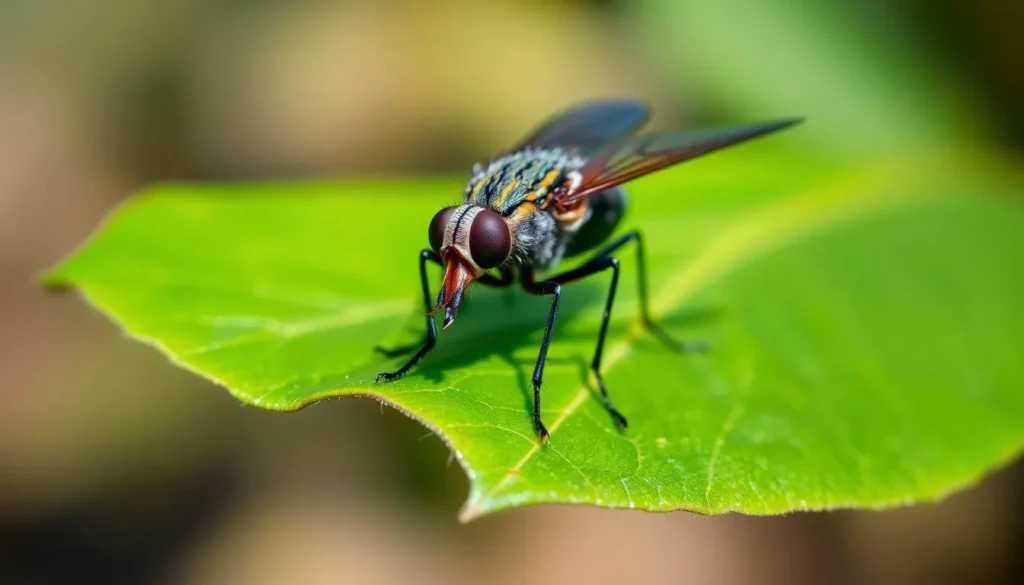
Short Answer
21 Facts About Tsetse Flies
- Tsetse flies belong to the genus Glossina. They are part of the family Glossinidae and are unique in their ability to transmit trypanosomes, which cause sleeping sickness.
- They are vectors of African trypanosomiasis. This disease affects both humans (sleeping sickness) and animals (nagana), impacting health and agriculture.
- Tsetse flies feed exclusively on blood. Both males and females require blood meals for survival and reproduction.
- They reproduce differently than most insects. Female tsetse flies give birth to live larvae instead of laying eggs, nourishing them internally until larval maturity.
- There are about 23 recognized species of tsetse flies. These species vary in habitat preference and distribution across Africa.
- Tsetse flies are found only in sub-Saharan Africa. Their range extends across a wide belt from Senegal to Ethiopia and south to the Kalahari Desert.
- Their size ranges from 6 to 14 millimeters. Size can vary depending on species and environmental factors.
- Tsetse flies have a distinctive proboscis. This long, forward-pointing mouthpart is adapted for piercing skin and sucking blood.
- They are most active during the day. Tsetse flies typically feed and move during daylight hours, resting in shaded areas at night.
- The flies are attracted to movement and dark colors. This behavior is exploited in traps used for control efforts.
- Tsetse flies can fly relatively long distances. They have been recorded traveling several kilometers in search of hosts.
- They have a significant impact on agriculture. By transmitting animal trypanosomiasis, they reduce livestock productivity and limit farming in affected regions.
- Tsetse flies have symbiotic bacteria. These bacteria live inside the fly and are essential for their nutrition and reproduction.
- Control methods include traps, insecticides, and sterile insect techniques. Various integrated approaches have been developed to reduce tsetse populations.
- They play a role in ecosystem balance. As both prey and parasite, they influence populations of many other species.
- Tsetse fly saliva contains compounds that prevent blood clotting. This facilitates feeding but can also cause allergic reactions in hosts.
- They tend to prefer certain hosts over others. Different species vary in host preference, feeding on mammals including humans, cattle, and wild animals.
- Their life cycle from larva to adult takes about 3 to 4 weeks. The larval stage develops inside the female before being deposited in the soil.
- Tsetse flies have been studied for their genetics and disease transmission mechanisms. Understanding their biology aids in developing control strategies.
- They have cultural significance in some African communities. Tsetse flies influence settlement patterns and traditional practices due to their disease transmission.
- Climate and environmental changes affect their distribution. Shifts in temperature and vegetation can expand or reduce suitable habitats.
Habitat and Behavior
Tsetse flies inhabit a range of environments across sub-Saharan Africa, including savannas, woodlands, and riverine forests. They require environments that provide adequate shade and moisture to survive. Their behavior is characterized by their daytime activity, resting in shaded areas during the hottest parts of the day and night. Tsetse flies rely on visual and olfactory cues to locate hosts for blood meals. They demonstrate selective feeding, often preferring large mammals but can feed on a variety of hosts. Their reproductive strategy is unique among flies, as females gestate a single larva internally, providing nourishment through specialized milk glands until the larva is ready to pupate in the soil. This low reproductive rate makes population control feasible with appropriate interventions.
Why This Animal Matters
Tsetse flies are medically and economically significant due to their role as vectors of trypanosomes, the causative agents of sleeping sickness in humans and nagana in animals. These diseases have historically limited human settlement and livestock farming in large parts of Africa, affecting food security and economic development. Efforts to control tsetse populations have contributed to improved health outcomes and agricultural productivity. Ecologically, tsetse flies contribute to the balance of ecosystems by affecting host populations and serving as prey for predators. Their presence influences land use and biodiversity in affected regions, making them a critical consideration in environmental management and public health.
Common Misconceptions
Misconception: All tsetse flies transmit sleeping sickness.
Correction: Not all species of tsetse flies transmit trypanosomes that cause sleeping sickness; only certain species are effective vectors.
Misconception: Tsetse flies only bite humans.
Correction: Tsetse flies feed on many mammals, including wild animals and livestock, not just humans.
Misconception: Tsetse flies are found worldwide.
Correction: Tsetse flies are restricted to sub-Saharan Africa and are not found in other continents.
Misconception: Tsetse flies reproduce by laying eggs.
Correction: Female tsetse flies give birth to live larvae rather than laying eggs.
Misconception: Tsetse flies are easily eradicated.
Correction: While control methods exist, complete eradication is challenging due to their wide distribution and reproductive biology.
FAQ
What diseases do tsetse flies transmit?
Tsetse flies transmit trypanosome parasites that cause African trypanosomiasis, commonly known as sleeping sickness in humans and nagana in animals.
Where are tsetse flies found?
They are found exclusively in sub-Saharan Africa, inhabiting savannas, woodlands, and riverine forests where suitable hosts and environmental conditions exist.
How do tsetse flies reproduce?
Female tsetse flies are viviparous, meaning they give birth to live larvae after nourishing them internally, unlike most insects that lay eggs.

Leave a Reply