
Short Answer
21 Facts About Fruit Flies
- Rapid Life Cycle
Fruit flies have one of the shortest life cycles among insects, with some species completing their entire development from egg to adult in about a week. - Scientific Model Organism
The species Drosophila melanogaster is widely used in genetics and developmental biology research due to its simple genome and fast reproduction. - Small Size
Adult fruit flies are typically about 3 to 4 millimeters long, making them easily overlooked except when they appear in large numbers. - Attracted to Ripened and Fermenting Fruit
Fruit flies are drawn to fermenting or decaying fruit and vegetables, where they lay their eggs and feed on yeast and microbes. - Worldwide Distribution
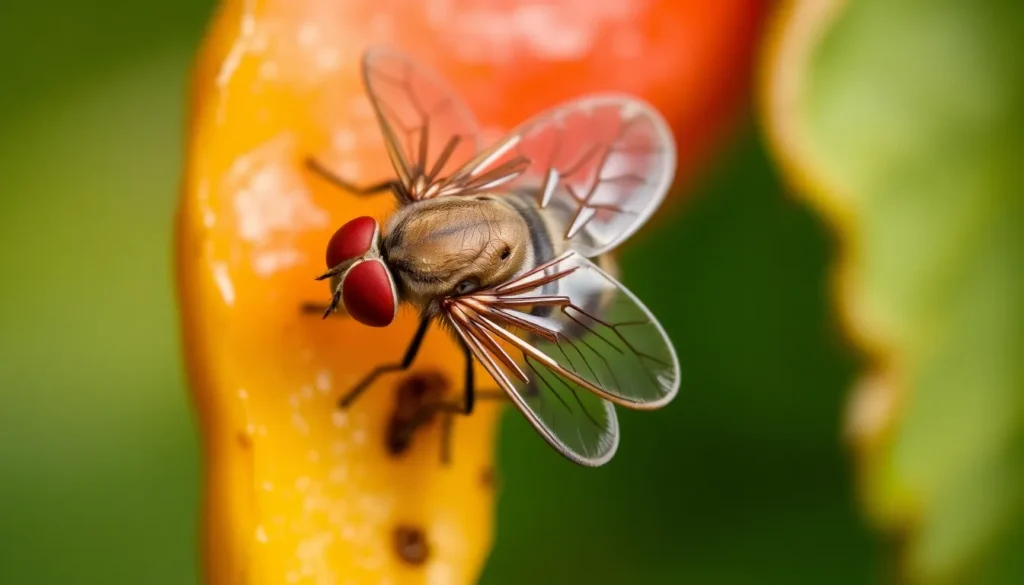
Fruit flies are found around the globe, thriving in a variety of climates from tropical to temperate regions. - Distinctive Red Eyes
Many fruit fly species, including Drosophila melanogaster, have bright red eyes, a characteristic used in genetic studies. - Genetic Research Contributions
Fruit flies have contributed to important discoveries, including insights into heredity, gene function, and circadian rhythms. - Simple Nervous System
Their relatively simple nervous system allows scientists to study brain function and behavior. - High Reproductive Rate
A single female fruit fly can lay hundreds of eggs in her lifetime, enabling quick population growth. - Egg Laying Behavior
Females prefer to lay eggs on or near fermenting fruit where larvae have immediate access to food. - Larval Development
Larvae feed on microorganisms associated with decaying matter and go through three instar stages before pupating. - Metamorphosis
Fruit flies undergo complete metamorphosis, transitioning from egg to larva, pupa, and finally adult. - Flight Ability
Despite their small size, fruit flies are strong fliers and use their wings to navigate toward food sources and mates. - Short Lifespan
Adult fruit flies typically live for only about 30 days, depending on environmental conditions. - Sensory Capabilities
They possess sensitive olfactory receptors that detect volatile chemicals emitted by fermenting fruit. - Role in Decomposition
Fruit flies help accelerate the decomposition process by feeding on decaying organic matter and associated microbes. - Predators
They serve as prey for many small predators, including spiders, frogs, and other insects. - Male Courtship Behavior
Males perform complex courtship rituals involving wing vibrations and pheromone release to attract females. - Genomic Mapping
The genome of Drosophila melanogaster was fully sequenced in 2000, aiding genetic studies. - Resistance to Environmental Stress
Fruit flies can survive in a range of environmental stresses such as temperature variations and limited food availability. - Use in Toxicology Studies
Due to their sensitivity to chemicals, fruit flies are used to test the effects of toxins and pollutants.
Habitat and Behavior
Fruit flies are commonly found in environments where fermenting or decaying organic material is present, such as orchards, kitchens, garbage disposals, and compost piles. They thrive in warm, moist conditions that facilitate the growth of the yeast and bacteria they feed on. Their behavior is characterized by attraction to volatile compounds produced during fermentation, which guides them to suitable egg-laying sites. They exhibit complex mating rituals and display a preference for specific substrates for reproduction. Their rapid life cycle and high fecundity allow populations to increase quickly under favorable conditions.
Why This Animal Matters
Fruit flies play an essential ecological role by assisting in the decomposition of organic matter, thus recycling nutrients within ecosystems. Their use as model organisms in scientific research has been instrumental in advancing the understanding of genetics, developmental biology, and neurobiology. Studies on fruit flies have led to significant insights into human biology and disease. Furthermore, their sensitivity to environmental toxins makes them valuable in ecotoxicology. While they can be considered pests in homes and food industries, their overall impact on science and nature is substantial.
Common Misconceptions
Misconception: Fruit flies only infest dirty or rotten food.
Correction: While fruit flies are attracted to fermenting or decaying food, they can also be found around fresh fruits and vegetables, especially if there are any small bruises or damage that start fermentation.
Misconception: Fruit flies are just annoying pests with no scientific value.
Correction: Fruit flies are one of the most important model organisms in biological research, contributing to numerous breakthroughs in genetics and medicine.
FAQ
Why are fruit flies used in genetic research?
Fruit flies have a simple genome, reproduce rapidly, and have easily observable traits, making them ideal for studying inheritance, gene function, and developmental biology.
Do fruit flies cause harm to humans?
Fruit flies do not bite or transmit diseases to humans, but they can contaminate food and become a nuisance in homes and food processing areas.
How can fruit fly infestations be prevented?
Keeping food covered, promptly disposing of overripe or decaying produce, and maintaining cleanliness in kitchens and trash areas can help prevent fruit fly infestations.

Leave a Reply