
Short Answer
21 Facts About Silkworm Moths
- Scientific Classification: Silkworm moths belong to the species Bombyx mori, which is a domesticated moth in the family Bombycidae.
- Silk Production: They are best known for producing silk, a natural protein fiber harvested from their cocoons.
- Domestication History: Silkworm moths have been domesticated for over 5,000 years, primarily in China, for the purpose of silk farming.
- Life Cycle Stages: Their life cycle includes egg, larva (caterpillar), pupa (cocoon), and adult moth stages.
- Larvae Diet: Silkworm caterpillars exclusively feed on mulberry leaves, which are critical for their development.
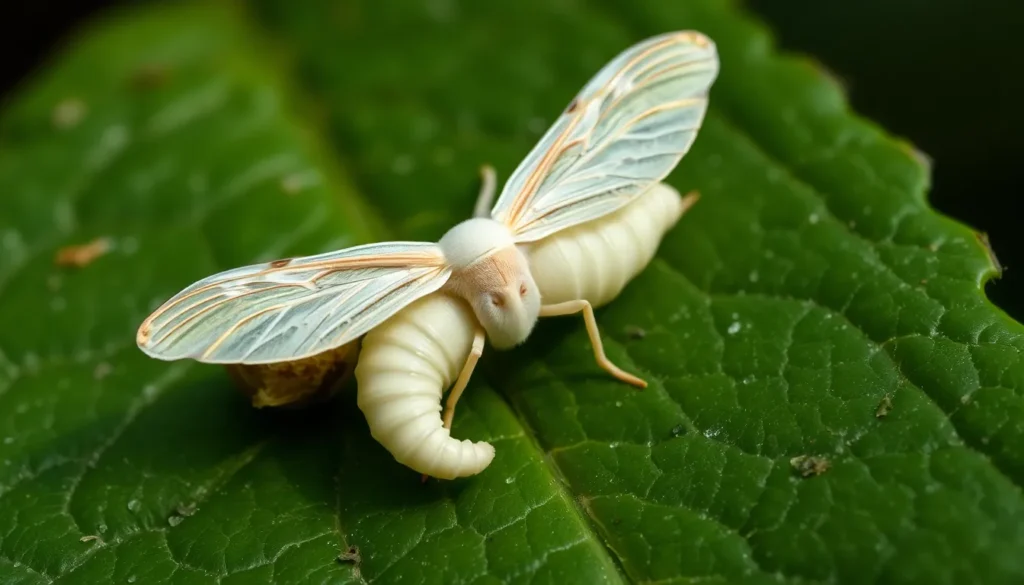
- Adult Moth Characteristics: Adult silkworm moths have a wingspan of approximately 3 to 5 centimeters and are generally creamy white in color.
- Flight Ability: Unlike many moth species, domesticated silkworm moths cannot fly due to selective breeding.
- Reproduction: Female silkworm moths lay between 300 to 500 eggs in their lifespan.
- Short Adult Lifespan: Adult moths live only about 5 to 10 days, mainly to reproduce.
- Cocoon Formation: The larva spins a cocoon made of a single continuous silk thread that can be up to 900 meters long.
- Silk Harvesting Process: Cocoons are typically boiled to kill the pupae and unravel the silk threads for commercial use.
- Global Silk Industry: Silkworm moths are the primary source of commercial silk worldwide.
- Genetic Research: Bombyx mori is a model organism in genetics and molecular biology research.
- Silkworm Moth Colors: Although mainly white, there are wild-type silkworm moths with yellowish or brownish hues.
- Domestication Effects: Domestication has led to silkworms losing many survival traits, such as the ability to fly or protect themselves.
- Silkworm Moths and Sericulture: The cultivation of silkworm moths for silk is known as sericulture.
- Economic Importance: Silk production supports the livelihoods of millions, especially in Asia.
- Environmental Impact: Sericulture is considered more environmentally friendly compared to synthetic fiber production.
- Predators and Parasites: In natural settings, silkworms face predation from birds and parasitic insects, but domesticated ones are protected.
- Silk Protein Composition: The silk fiber is primarily composed of fibroin, a fibrous protein, and sericin, a glue-like protein.
- Conservation Status: As a domesticated species, Bombyx mori does not have a conservation status but depends entirely on humans for survival.
Habitat and Behavior
Silkworm moths are entirely dependent on humans for their survival due to their domestication. Originally native to northern China, they have been cultivated worldwide in controlled environments. The larvae require mulberry leaves for nourishment, which are typically grown in plantations near sericulture farms. In the wild, their ancestors lived in forested areas with abundant mulberry trees. Behaviorally, silkworm moths are mostly inactive as adults, with a primary focus on reproduction. The loss of flight capabilities means they cannot disperse naturally, and their behavior is adapted to a life cycle managed by humans, including egg laying on mulberry leaves and cocoon spinning in protected conditions.
Why This Animal Matters
Silkworm moths have significant economic and cultural importance due to their role in silk production, which has been a valuable textile resource for millennia. Their domestication is one of the earliest examples of insect farming, influencing trade and culture especially in Asia. Ecologically, while domesticated silkworms do not contribute to natural ecosystems, their wild relatives play a role in forest food webs. Scientifically, Bombyx mori serves as a key model organism in genetic and molecular research, aiding understanding of developmental biology and protein synthesis. The silk industry also promotes sustainable agricultural practices compared to synthetic alternatives, underlining the environmental relevance of silkworm moths.
Common Misconceptions
Misconception: Silkworm moths can fly freely like other moths.
Correction: Domesticated silkworm moths have lost their ability to fly due to selective breeding, and they are flightless as adults.
Misconception: Silk is produced by the adult moth.
Correction: Silk is produced by the larval stage (caterpillar) when it spins its cocoon, not by the adult moth.
Misconception: Silkworm moths can survive in the wild without human care.
Correction: Domesticated silkworm moths depend entirely on humans for survival and cannot thrive in natural environments.
Misconception: All silk comes from silkworm moths.
Correction: While Bombyx mori produces the majority of commercial silk, other insects such as wild silk moths (e.g., tussah moths) also produce silk, but it is less commonly used.
Misconception: The silk harvesting process is always harmful to the silkworms.
Correction: Traditional silk harvesting involves killing the pupae inside the cocoon, but alternative methods like ‘Ahimsa silk’ allow the moth to emerge before harvesting, though these methods produce different silk qualities.
FAQ
Why can't silkworm moths fly?
Domesticated silkworm moths have lost their flight ability through thousands of years of selective breeding, which favored traits beneficial for silk production rather than survival traits like flight.
How is silk harvested from silkworm cocoons?
Silk is harvested by boiling the cocoons to kill the pupae inside and then unraveling the silk thread, which can be up to 900 meters long in a single cocoon.
Are silkworm moths endangered?
No, domesticated silkworm moths are not endangered since they depend entirely on humans for survival and are cultivated worldwide.


Leave a Reply