
Short Answer
21 Facts About Mole Crickets
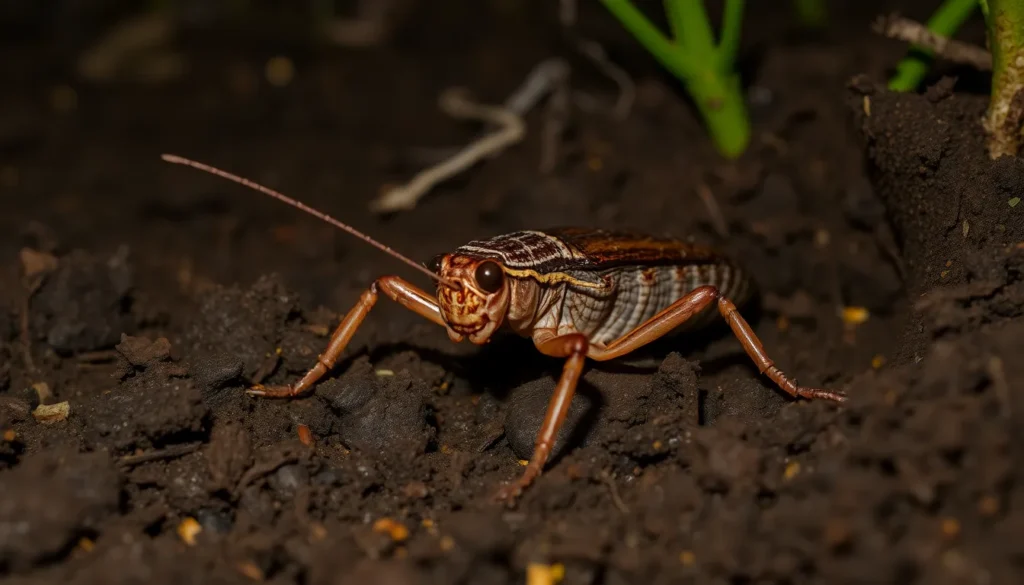
- Unique burrowing adaptations: Mole crickets have specialized forelegs shaped like spades, enabling efficient digging through soil.
- Part of the Gryllotalpidae family: They belong to the insect family Gryllotalpidae, which distinguishes them from other cricket families.
- Nocturnal behavior: Mole crickets are mostly active at night, spending daylight hours underground.
- Distinctive chirping calls: Male mole crickets produce loud, resonant chirps to attract females, often amplified by specially shaped burrows acting as acoustic horns.
- Omnivorous diet: They feed on plant roots, small insects, and organic matter found in soil.
- Global distribution: Mole crickets are found worldwide, with species present in North and South America, Europe, Asia, Africa, and Australia.
- Life cycle: They undergo incomplete metamorphosis, with nymphs resembling smaller versions of adults and molting several times before maturity.
- Soil aeration benefits: Their burrowing activity helps aerate the soil, promoting nutrient cycling.
- Crop pest status: Some species are considered agricultural pests due to root feeding, which can damage turfgrass and crops.
- Size range: Mole crickets typically measure between 3 and 5 centimeters in length.
- Adapted sensory organs: They possess sensitive antennae and hearing organs to detect predators and mates underground.
- Burrow complexity: Their tunnels are often complex, including chambers for resting and mating.
- Predators: Birds, small mammals, and other insects prey on mole crickets.
- Reproductive behavior: Females lay eggs in underground chambers, where nymphs develop safely.
- Seasonal activity: Mole crickets are more active in warmer months, with some entering dormancy in colder seasons.
- Sound production mechanism: They produce sound by rubbing forewings together, a process known as stridulation.
- Ecological role: Besides soil aeration, they contribute to decomposition and serve as prey in food webs.
- Species diversity: There are over 100 recognized species of mole crickets worldwide.
- Flight capability: Some species can fly, especially during mating seasons.
- Resilience: Mole crickets can survive in a range of habitats including grasslands, gardens, and agricultural fields.
- Scientific study: Their unique acoustic and burrowing behaviors make them subjects of entomological research.
Habitat and Behavior
Mole crickets inhabit a variety of environments, primarily favoring moist, loose soils that facilitate their burrowing lifestyle. They are commonly found in grasslands, agricultural fields, gardens, and sometimes wetlands. Their subterranean lifestyle helps protect them from many predators and environmental extremes. Being mostly nocturnal, mole crickets spend much of their time underground, emerging at night to feed and mate. Their burrows are intricate tunnel systems that serve multiple purposes, such as shelter, mating sites, and acoustic chambers to amplify their calls. Their diet is omnivorous; they feed on plant roots, which can cause damage to crops, but also consume small invertebrates and organic matter, contributing to soil health.
Why This Animal Matters
Mole crickets play an important ecological role by aerating and mixing soil through their extensive burrowing activities, which helps improve soil structure and nutrient cycling. They also serve as prey for a variety of animals, thus contributing to food web dynamics. From an agricultural perspective, while some mole cricket species are considered pests due to their root-feeding habits, understanding their behavior and ecology aids in developing management strategies that minimize crop damage. Additionally, their unique sound production and burrowing adaptations make them valuable organisms for scientific study related to bioacoustics and insect morphology.
Common Misconceptions
Misconception: Mole crickets are harmful to humans.
Correction: Mole crickets do not pose any direct harm to humans; they do not bite or transmit diseases.
Misconception: All mole crickets are agricultural pests.
Correction: While some species can damage crops, not all mole crickets cause significant agricultural problems, and they also provide ecological benefits.
Misconception: Mole crickets live only in underground tunnels.
Correction: Although they spend most of their time underground, mole crickets can also fly and surface during mating periods and for dispersal.
Misconception: Mole crickets are a type of mole mammal.
Correction: Mole crickets are insects, not mammals, and are unrelated to moles despite the similarity in name.
FAQ
What do mole crickets eat?
Mole crickets are omnivorous; they feed on plant roots, small insects, and organic matter found in the soil.
Are mole crickets harmful to crops?
Some species can damage crops and turfgrass by feeding on roots, but not all mole crickets are pests, and their ecological benefits often outweigh the damage.
How do mole crickets produce their chirping sounds?
Male mole crickets create chirping sounds by rubbing their forewings together, a process called stridulation, often using specially shaped burrows to amplify the noise.


Leave a Reply