
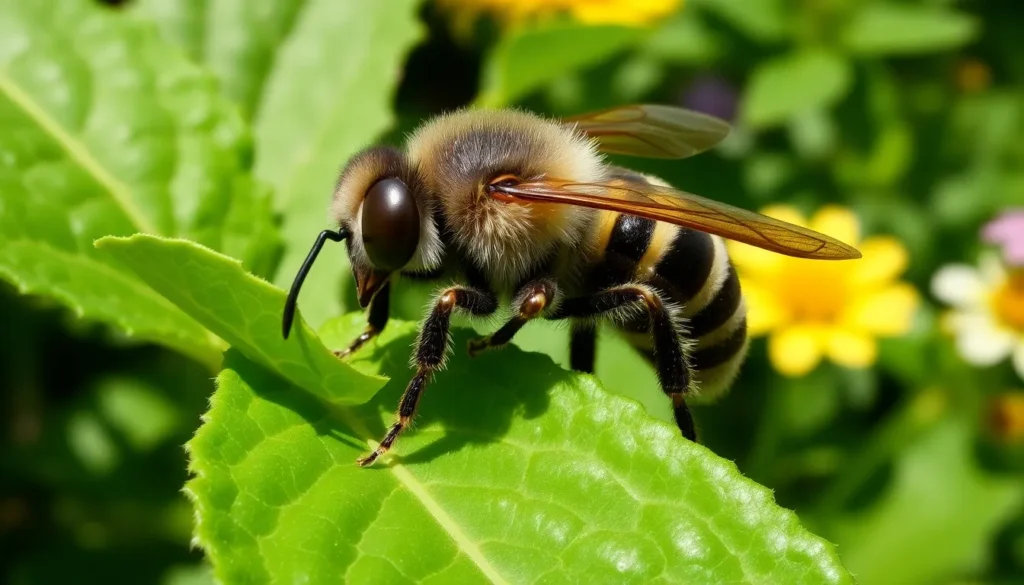
Short Answer
21 Facts About Leafcutter Bees
- Leafcutting Behavior: Leafcutter bees cut neat, circular pieces from leaves or petals to use as nesting material, a behavior that distinguishes them from other bees.
- Solitary Lifestyle: Unlike honeybees, leafcutter bees are solitary; each female builds and provisions her own nest without a colony structure.
- Family Megachilidae: They belong to the family Megachilidae, which also includes mason bees known for using mud instead of leaves.
- Global Distribution: Leafcutter bees are found worldwide, especially in temperate and tropical regions, adapting to a variety of climates.
- Pollination Role: They are important pollinators for wild plants and some cultivated crops like alfalfa, contributing to ecosystem health and agriculture.
- Distinctive Mandibles: Their strong mandibles allow them to cut through leaves efficiently, which they use to construct brood cells.
- Brood Cell Construction: Females line their nests with cut leaf pieces to form protective cells where they lay eggs and provide pollen and nectar.
- Short Adult Lifespan: Adult leafcutter bees typically live only a few weeks, during which they focus on mating and nesting activities.
- Non-aggressive Nature: Leafcutter bees are generally non-aggressive and rarely sting unless directly threatened.
- Multiple Generations: Some species have multiple generations per year, depending on environmental conditions and geographic location.
- Nesting Sites: They often nest in preexisting cavities such as hollow stems, wood holes, or in the ground, using leaf pieces to line these spaces.
- Pollen Transport: Unlike honeybees, leafcutter bees carry pollen on specialized hairs (scopa) located on the underside of their abdomen.
- Impact on Plants: While leaf cutting may cause cosmetic damage to plants, it rarely harms overall plant health significantly.
- Egg Provisioning: Each brood cell contains a single egg along with a pollen-nectar mixture to feed the developing larva.
- Larval Development: Larvae develop inside the protected leaf-lined cells, pupate, and emerge as adults in the following season.
- Species Diversity: There are over 700 species of leafcutter bees globally, exhibiting a range of sizes and colors.
- Use in Agriculture: Managed leafcutter bees are used to improve pollination in some crops, enhancing yield and quality.
- Adaptations to Urban Environments: Leafcutter bees can thrive in urban gardens and parks, provided there are suitable nesting sites and flowering plants.
- Seasonal Activity: Their activity is mostly seasonal, coinciding with flowering periods of plants they pollinate.
- Temperature Sensitivity: Temperature influences their development rates and emergence timing, making them sensitive to climate variations.
- Conservation Status: While many species are common, habitat loss and pesticide use can threaten local populations, underscoring the need for conservation efforts.
Habitat and Behavior
Leafcutter bees inhabit a wide range of environments, including forests, meadows, gardens, and agricultural areas. They typically select nesting sites in hollow stems, wood cavities, or soil burrows. Their behavior is solitary; each female independently constructs and provisions her nest with leaf fragments to create individual brood cells. These bees are active during warm months and rely on local flowering plants for pollen and nectar. Their distinctive leaf-cutting is essential for nest insulation and protection. Despite their solitary nature, they often nest in aggregations where suitable nesting sites are abundant. Leafcutter bees do not produce honey or live in colonies like honeybees but are efficient pollinators, especially for certain crops.
Why This Animal Matters
Leafcutter bees play a crucial ecological role as pollinators, supporting biodiversity by facilitating the reproduction of many flowering plants. Their activity benefits natural ecosystems and agricultural production, notably in crops such as alfalfa. By pollinating a wide variety of plants, they help maintain healthy plant communities and contribute to food webs. Additionally, their unique nesting behavior provides insight into solitary bee biology and evolution. The conservation of leafcutter bees is important due to their sensitivity to environmental changes, including habitat destruction and pesticide exposure. Protecting them can enhance ecosystem resilience and ensure continued pollination services essential for human food security.
Common Misconceptions
Misconception: Leafcutter bees are harmful pests that destroy plants.
Correction: While leafcutter bees cut small pieces of leaves, this damage is typically minor and does not significantly harm the plants.
Misconception: Leafcutter bees live in colonies like honeybees.
Correction: Leafcutter bees are solitary and do not form colonies; each female independently builds and maintains her own nest.
Misconception: Leafcutter bees are aggressive and sting frequently.
Correction: These bees are generally non-aggressive and sting only when directly threatened or handled roughly.
FAQ
What do leafcutter bees use leaves for?
Leafcutter bees cut pieces of leaves to line their nests and create brood cells, providing a protective environment for their larvae.
Are leafcutter bees harmful to plants?
Generally, no. While they cut leaf pieces, the damage is minimal and does not significantly affect plant health.
Do leafcutter bees live in colonies?
No, leafcutter bees are solitary and each female builds and provisions her own nest independently.


Leave a Reply