
Short Answer
21 Facts About Coconut Octopus
- Scientific Name: The coconut octopus is scientifically known as Amphioctopus marginatus.
- Size: It is a relatively small octopus, typically reaching up to 8 centimeters (3 inches) in mantle length.
- Habitat: It inhabits sandy and muddy bottoms of shallow tropical waters, primarily in the Indo-Pacific region.
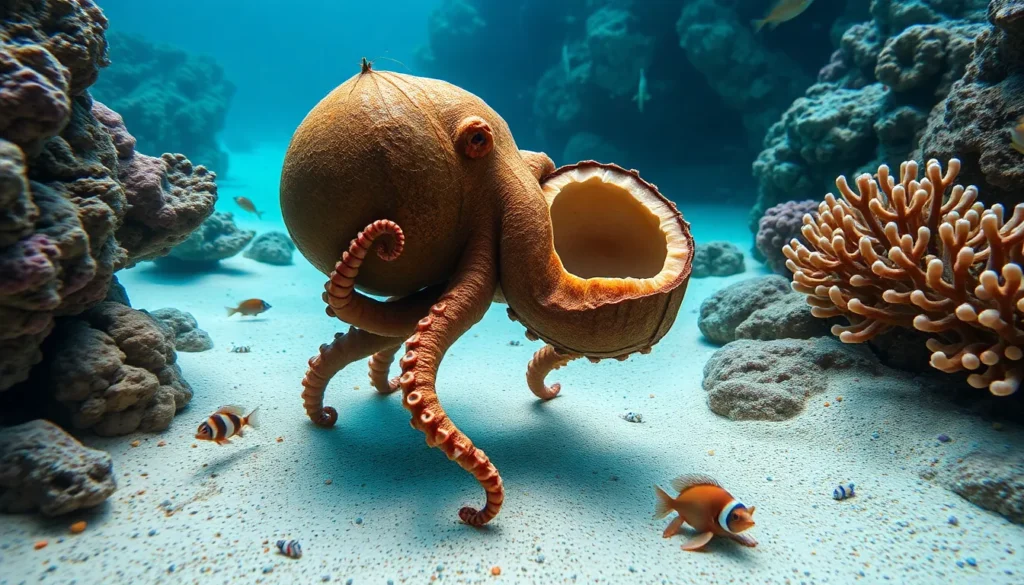
- Unique Tool Use: The coconut octopus is famous for using discarded coconut shells and seashells as portable shelters, which is a rare example of tool use in invertebrates.
- Behavior: When threatened, it gathers coconut shells and carries them over long distances to use as protective armor.
- Camouflage: It can change its skin color and texture to blend into the ocean floor and avoid predators.
- Diet: Its diet mainly consists of crabs, small fish, and other small marine creatures.
- Intelligence: Like other octopuses, it exhibits high intelligence, problem-solving abilities, and learning capacity.
- Locomotion: It can swim by jet propulsion or crawl using its arms along the seabed.
- Nocturnal Activity: It is mostly active at night, hunting and searching for shelter.
- Reproduction: Females lay eggs and guard them until they hatch, displaying parental care uncommon in many marine invertebrates.
- Predators: Its main predators include larger fish, moray eels, and other marine animals.
- Defense Mechanisms: In addition to camouflage and shelter use, it can release ink to confuse predators.
- Distribution: Found mainly in the waters around Indonesia, the Philippines, and northern Australia.
- Longevity: Like many octopuses, it has a relatively short lifespan of about 1 to 2 years.
- Shell Carrying Behavior: It is one of the few known marine animals that carry objects over long distances for protection.
- Social Behavior: Generally solitary except during mating periods.
- Locomotive Adaptations: Its arms have specialized suckers that aid in manipulating objects like coconut shells.
- Scientific Interest: The coconut octopus is studied for its tool use and cognitive behaviors, providing insights into cephalopod intelligence.
- Conservation Status: There is currently no specific conservation status, but habitat degradation could impact populations.
- Observation Challenges: Due to its small size and cryptic nature, it is difficult to study extensively in the wild.
Habitat and Behavior
The coconut octopus resides primarily in tropical coastal waters of the Indo-Pacific region, favoring sandy or muddy ocean floors where it can easily bury itself or find discarded shells and coconuts. It is a benthic species, meaning it lives and moves along the sea bottom. Behaviorally, it is notable for its intelligence and adaptability, demonstrated by its unique ability to use coconut shells and other debris as mobile shelters. This behavior not only provides protection from predators but also allows the octopus to move safely across open areas of the seabed. The coconut octopus is primarily nocturnal, hunting small crustaceans and fish under the cover of darkness. It uses a combination of camouflage, ink release, and rapid movement to avoid predation. Reproductively, females exhibit parental care by guarding their eggs until they hatch. The species is typically solitary except during mating.
Why This Animal Matters
The coconut octopus plays an important ecological role as both predator and prey within its marine ecosystem. By feeding on crabs and small fish, it helps regulate these populations, contributing to a balanced underwater environment. Its unique tool use has attracted scientific interest, shedding light on the cognitive abilities of invertebrates, particularly cephalopods. This contributes to broader understandings of animal intelligence and behavior. While not currently under significant threat, the species’ reliance on coastal habitats makes it vulnerable to environmental changes such as pollution, habitat destruction, and climate change. Understanding and protecting the coconut octopus helps preserve biodiversity and maintain healthy marine ecosystems.
Common Misconceptions
Misconception: The coconut octopus lives inside coconuts that fall from trees.
Correction: The coconut octopus uses empty coconut shells found on the ocean floor for shelter; it does not live inside coconuts while they are still attached to trees.
Misconception: All octopuses use tools like the coconut octopus.
Correction: Tool use is rare among octopuses; the coconut octopus is one of the few species documented to use objects like coconut shells as portable protection.
Misconception: The coconut octopus is dangerous to humans.
Correction: This species is small, shy, and poses no threat to humans.
FAQ
What is unique about the coconut octopus's behavior?
The coconut octopus is unique in its behavior of using coconut shells and other objects as portable shelters, carrying them across the ocean floor for protection from predators.
Where can the coconut octopus be found?
It is found in shallow tropical waters of the Indo-Pacific region, including areas around Indonesia, the Philippines, and northern Australia.
Does the coconut octopus pose any danger to humans?
No, the coconut octopus is small and shy, and it does not pose any threat to humans.


Leave a Reply