
Short Answer
21 Facts About Cichlids
- Diversity: Cichlids form one of the largest families of freshwater fish, with over 1,650 species scientifically described and many more yet to be discovered.
- Geographic Distribution: They are native primarily to Africa, South America, and parts of Central America, with a few species found in Asia.
- Evolutionary Radiation: Some African lakes, such as Lake Malawi and Lake Tanganyika, have experienced rapid cichlid speciation, resulting in hundreds of endemic species.
- Size Variation: Cichlids vary greatly in size, from just a few centimeters to over 60 centimeters in length depending on the species.
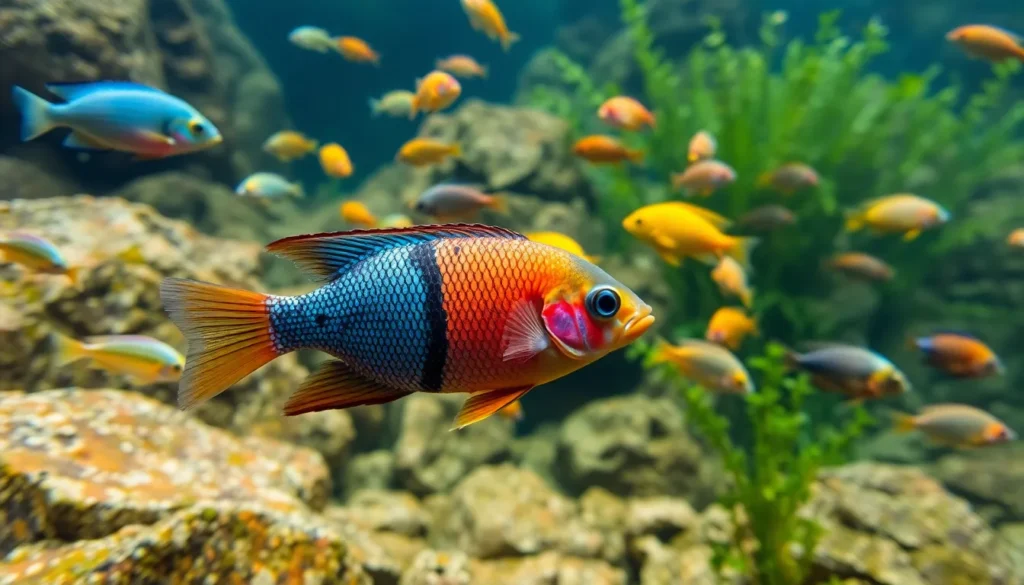
- Coloration: Many cichlids display bright and intricate coloration patterns used in mating and territorial displays.
- Habitat Preferences: They inhabit various freshwater environments including rivers, lakes, and streams, often favoring rocky or vegetated areas.
- Feeding Behavior: Cichlids have diverse diets ranging from algae and plants to small invertebrates and fish, with some species highly specialized.
- Parental Care: Cichlids are known for advanced parental care, including mouthbrooding, where parents carry eggs and fry in their mouths to protect them.
- Social Behavior: Many species exhibit complex social structures including territoriality, hierarchies, and cooperative breeding.
- Communication: Cichlids communicate through body coloration changes, postures, and sometimes sounds to convey aggression or mating readiness.
- Longevity: Depending on the species, cichlids can live from 5 to 10 years or more in captivity.
- Popular Aquarium Fish: Due to their colors and behaviors, many cichlids are popular in the aquarium trade, though some require specific care conditions.
- Ecological Role: In their native habitats, cichlids play roles as both predators and prey, influencing aquatic community dynamics.
- Adaptive Radiation: Cichlids are a classic example of adaptive radiation, where many species evolve from a common ancestor to fill different ecological niches.
- Reproductive Strategies: Beyond mouthbrooding, some species are substrate spawners, laying eggs on rocks or plants and guarding them intensively.
- Hybridization: Some cichlid species can hybridize, which has implications for both natural biodiversity and aquarium breeding.
- Conservation Status: Several cichlid species are threatened due to habitat loss, pollution, and introduction of invasive species.
- Scientific Research: Cichlids are studied extensively in evolutionary biology and ecology due to their rapid speciation and diverse behaviors.
- Economic Importance: Beyond the aquarium trade, some cichlid species are caught for local food consumption.
- Unique Adaptations: Certain species have developed unusual feeding adaptations, such as jaw protrusion or specialized teeth for scraping algae.
- Role in Culture: In some African cultures, cichlids have symbolic meanings or are part of traditional diets and fishing practices.
Habitat and Behavior
Cichlids primarily inhabit freshwater environments, including lakes, rivers, and streams. African rift lakes like Lake Malawi, Lake Tanganyika, and Lake Victoria are renowned for their exceptionally high cichlid diversity and endemism. These habitats often feature varied microhabitats such as rocky shores, sandy bottoms, and vegetated areas. Cichlids exhibit diverse behaviors, including territoriality where males defend breeding sites, complex mating rituals, and various forms of parental care. Their survival strategies include specialized feeding habits, often linked to their morphological adaptations, and cooperative social behaviors. Many species show site fidelity, remaining in localized areas throughout their lives.
Why This Animal Matters
Cichlids are ecologically significant as both predators and prey, influencing the structure and function of freshwater ecosystems. Their remarkable diversity and rapid adaptive radiation make them important models for studying evolutionary processes such as speciation, adaptation, and sexual selection. Economically, cichlids contribute to local fisheries and the aquarium industry, providing income and cultural value. Conservation concerns surrounding cichlids highlight the impact of environmental changes, invasive species, and habitat degradation on freshwater biodiversity. Protecting cichlid populations supports broader efforts to preserve aquatic ecosystems and their associated species.
Common Misconceptions
Misconception: All cichlids are aggressive fish.
Correction: While some cichlid species display territorial or aggressive behaviors, many are peaceful or exhibit aggression only during breeding periods. Behavior varies widely among species.
Misconception: Cichlids are only found in Africa.
Correction: Although many cichlid species originate from African lakes, they are also native to South and Central America and parts of Asia.
Misconception: Cichlids do not care for their young.
Correction: Cichlids are notable for their advanced parental care, including guarding eggs and fry, and in some species, mouthbrooding to protect offspring.
Misconception: All cichlids look similar.
Correction: Cichlids display a wide range of colors, shapes, and sizes reflecting their diverse evolutionary adaptations.
Misconception: Cichlids can thrive in any freshwater aquarium condition.
Correction: Many cichlids require specific water parameters and habitat structures to thrive, reflecting their native environments.
FAQ
What makes cichlids unique among freshwater fish?
Cichlids are unique due to their extraordinary diversity, complex behaviors such as advanced parental care (including mouthbrooding), and rapid adaptive radiation, especially in African rift lakes.
Where are cichlids naturally found?
Cichlids are native to freshwater habitats across Africa, South America, parts of Central America, and some regions of Asia, with the greatest diversity in African rift lakes.
Are all cichlids aggressive?
Not all cichlids are aggressive. While some species exhibit territorial aggression, many are peaceful or only show aggression during breeding or territorial defense.



Leave a Reply