

Short Answer
21 Facts About Betta Fish
- Betta fish are native to Southeast Asia. They are originally found in countries such as Thailand, Cambodia, Vietnam, and Malaysia, inhabiting shallow waters like rice paddies and slow-moving streams.
- They are also called Siamese fighting fish. This name reflects the male bettas’ aggressive behavior toward each other, especially during territorial disputes.
- Bettas can breathe atmospheric air. They possess a labyrinth organ that allows them to extract oxygen directly from the air, enabling survival in low-oxygen environments.
- Male bettas build bubble nests. During breeding, males create bubble nests at the water’s surface to protect fertilized eggs until they hatch.
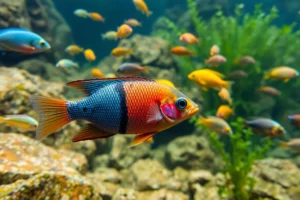
- They exhibit a wide variety of colors and fin shapes. Selective breeding has produced bettas with numerous colors, including red, blue, green, and multicolored patterns, as well as diverse fin types.
- Bettas are carnivorous. Their natural diet consists mainly of insects, larvae, and small aquatic creatures.
- They can recognize their owners. Studies have shown that bettas can learn to recognize and respond to their caretakers.
- Betta fish have relatively short lifespans. In captivity, they typically live 3 to 5 years, depending on care and environment.
- They prefer warm water temperatures. Optimal temperatures for bettas range between 75°F and 80°F (24°C to 27°C).
- Bettas display aggressive behavior mainly among males. Male bettas often fight when housed together, whereas females tend to be less aggressive.
- They are popular aquarium fish worldwide. Their vibrant appearance and manageable size make them a common choice for home aquariums.
- Bettas require clean, well-maintained water. Poor water conditions can lead to stress and illness, emphasizing the need for regular tank cleaning and maintenance.
- They do not require large tanks but need adequate space. While small tanks are common, bettas thrive best with at least 5 gallons of water to ensure healthy living conditions.
- Bettas communicate through body language. Flared fins and gill covers often signal aggression or territorial displays.
- They can jump out of tanks. Bettas are known to leap, so aquarium lids or covers are recommended to prevent escapes.
- Betta fish have a history dating back to the 19th century. They were first brought to the Western world in the late 1800s for ornamental purposes.
- Their fins are delicate and prone to damage. Rough handling or tank mates may injure bettas’ fins, impacting their health and appearance.
- They can live with some compatible tank mates. Certain peaceful species may cohabit with bettas if carefully selected and monitored.
- Betta fish are used in scientific research. Their behavior and genetics have made them subjects in studies on aggression and development.
- Selective breeding has led to many betta varieties. These include the crowntail, halfmoon, plakat, and delta tail types.
- Female bettas are less colorful but also territorial. Although less aggressive than males, females may still show territorial behavior when grouped.
Habitat and Behavior
Betta fish naturally inhabit shallow, slow-moving freshwater environments in Southeast Asia, such as rice paddies, ponds, and canals. Their labyrinth organ allows them to survive in oxygen-poor water by breathing atmospheric air. Bettas are known for their territorial and aggressive nature, especially males who display vivid fin-flaring and fighting behaviors to defend territories. They construct bubble nests on the water surface as part of their reproductive behavior. Bettas are carnivorous, feeding on insects and larvae in the wild, and they prefer warm water temperatures between 75°F and 80°F (24°C to 27°C). In captivity, they require clean, adequately sized tanks with stable conditions to thrive.
Why This Animal Matters
Betta fish play an ecological role in their native habitats by controlling insect populations and serving as prey for larger animals. Culturally, they have historical significance in Southeast Asia, where they were bred for fighting and ornamental purposes. Globally, bettas contribute to the aquarium trade, providing economic benefits to breeders and retailers. Scientifically, bettas are valuable model organisms in behavioral and genetic research due to their distinctive aggression and adaptability. Conservation-wise, wild betta populations face habitat loss and pollution, highlighting the importance of sustainable practices and habitat preservation.
Common Misconceptions
Misconception: Betta fish can live happily in small bowls.
Correction: While often kept in small containers, bettas require at least 5 gallons of clean, warm water to maintain good health and exhibit natural behaviors.
Misconception: Male bettas should always be kept together.
Correction: Male bettas are highly territorial and aggressive toward each other; housing multiple males together typically results in fighting and injury.
Misconception: Betta fish do not need heaters because they are hardy.
Correction: Bettas are tropical fish that require stable warm temperatures; heaters are necessary in most climates to prevent health problems.
FAQ
Can betta fish live together in the same tank?
Male bettas are highly territorial and aggressive toward other males and often should not be housed together. Female bettas may be kept in groups called sororities, but this requires careful management and sufficient space to minimize aggression.
What is the ideal tank size for a betta fish?
While bettas are often kept in small bowls, a minimum tank size of 5 gallons is recommended to provide adequate swimming space, maintain water quality, and support the fish’s health.
Why do betta fish build bubble nests?
Male bettas build bubble nests as part of their breeding behavior. The nests serve as a protective environment to hold and oxygenate fertilized eggs until they hatch.





Leave a Reply