
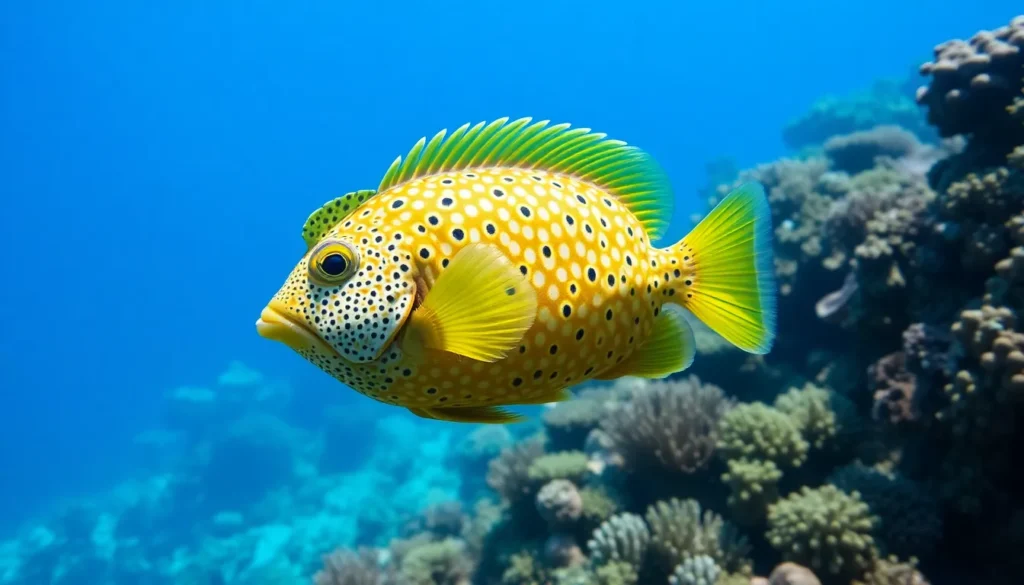
Short Answer
21 Facts About Boxfish
- Unique Body Shape
Boxfish have a rigid, box-like carapace formed by fused bony plates, giving them a distinctive angular and armored appearance. - Family Ostraciidae
Boxfish belong to the family Ostraciidae, which includes several genera found in tropical and subtropical oceans worldwide. - Slow Swimmers
Due to their rigid body structure, boxfish are generally slow swimmers but highly maneuverable in coral reefs and rocky habitats. - Toxin Production
Many boxfish species can release a toxic substance called ostracitoxin when stressed, which deters predators and can be harmful to other fish. - Bright Coloration
Boxfish often display bright colors and patterns that can serve as camouflage or warning signals to predators. - Diet
Their diet mainly consists of algae, sponges, worms, and small invertebrates found on coral reefs and seafloors. - Hard Exoskeleton
The carapace acts like an exoskeleton, providing protection but limiting flexibility and speed. - Fins for Locomotion
Boxfish use their dorsal, anal, and pectoral fins for propulsion and steering, compensating for their limited body movement. - Reproduction
Most boxfish species reproduce by laying eggs, which hatch into planktonic larvae before settling to the seabed. - Habitat Preferences
They are typically found in shallow coral reefs, seagrass beds, and sandy bottoms in warm marine waters. - Camouflage Ability
Despite their bright colors, boxfish can blend into their environments using patterns that mimic coral and rocks. - Longevity
Boxfish can live for several years in the wild, though exact lifespans vary among species. - Scientific Interest
Their unique biomechanics have inspired research in robotics and fluid dynamics due to their efficient swimming mechanics despite rigid bodies. - Predators
Natural predators include larger fish and some marine mammals, but toxicity and armor provide significant defense. - Behavior
Boxfish are generally solitary or found in small groups, exhibiting territorial behavior around feeding areas. - Size Range
Most boxfish species are small to medium-sized, typically ranging from 15 to 45 centimeters in length. - Distribution
They are distributed throughout the Indo-Pacific, Caribbean, and Atlantic Ocean regions. - Color Changes
Some species can alter their coloration slightly depending on mood, environment, or breeding status. - Conservation Status
While many boxfish species are not currently endangered, habitat destruction and pollution pose ongoing threats. - Economic Role
Boxfish have limited economic importance but are occasionally collected for the aquarium trade. - Fossil Record
Fossils indicate that boxfish and related species have existed since the Eocene epoch, illustrating their long evolutionary history.
Habitat and Behavior
Boxfish inhabit warm, shallow marine environments such as coral reefs, seagrass beds, and sandy bottoms. They prefer areas with abundant hiding spots provided by coral structures and rocks. Their rigid, box-like body offers protection but limits speed, so they rely on precise fin movements for slow, deliberate swimming and maneuvering. Boxfish feed mainly on small invertebrates, algae, and sponges, foraging along the reef substrate. They exhibit mostly solitary behavior but can sometimes be found in small groups. When threatened, some species release a toxic substance called ostracitoxin, which deters predators and can affect nearby fish. Reproduction involves egg-laying with planktonic larval stages that drift before settling to the ocean floor. Their distinctive shape and coloring provide camouflage and warning signals within their habitats.
Why This Animal Matters
Boxfish contribute to the ecological balance of coral reef ecosystems by feeding on algae and invertebrates, helping to maintain healthy reef environments. Their toxin secretion plays a role in predator-prey dynamics. Additionally, boxfish have drawn scientific interest due to their unique body structure and swimming mechanics, informing biomimetic designs in engineering and robotics. Although not a major fishery species, their presence in the aquarium trade highlights the need for sustainable collection practices. Conservation of boxfish habitats is important because coral reefs face increasing threats from climate change, pollution, and habitat degradation, potentially impacting boxfish populations and overall marine biodiversity.
Common Misconceptions
Misconception: Boxfish can swim very fast because of their rigid bodies.
Correction: Boxfish are actually slow swimmers due to their inflexible, armored bodies. They compensate with efficient fin movements to maneuver in tight reef spaces.
Misconception: Boxfish toxins are harmful to humans through casual contact.
Correction: While boxfish can release toxins harmful to other fish, there is no evidence that casual contact poses a danger to humans. However, ingestion or exposure to concentrated toxins should be avoided.
Misconception: All boxfish species look identical.
Correction: Boxfish species vary in size, color, pattern, and shape, with many exhibiting unique markings and adaptations suited to their specific environments.
FAQ
What makes boxfish different from other fish?
Boxfish have a unique rigid, box-like body structure made of fused bony plates, which provides armor but limits their flexibility and swimming speed.
Are boxfish dangerous to humans?
Boxfish can release toxins harmful to other fish when stressed, but they are not considered dangerous to humans through casual contact.
Where can boxfish be found?
Boxfish are primarily found in tropical and subtropical coral reefs and shallow marine environments across the Indo-Pacific, Caribbean, and Atlantic Oceans.


Leave a Reply