
Short Answer
21 Facts About Cockatiels
- Native to Australia
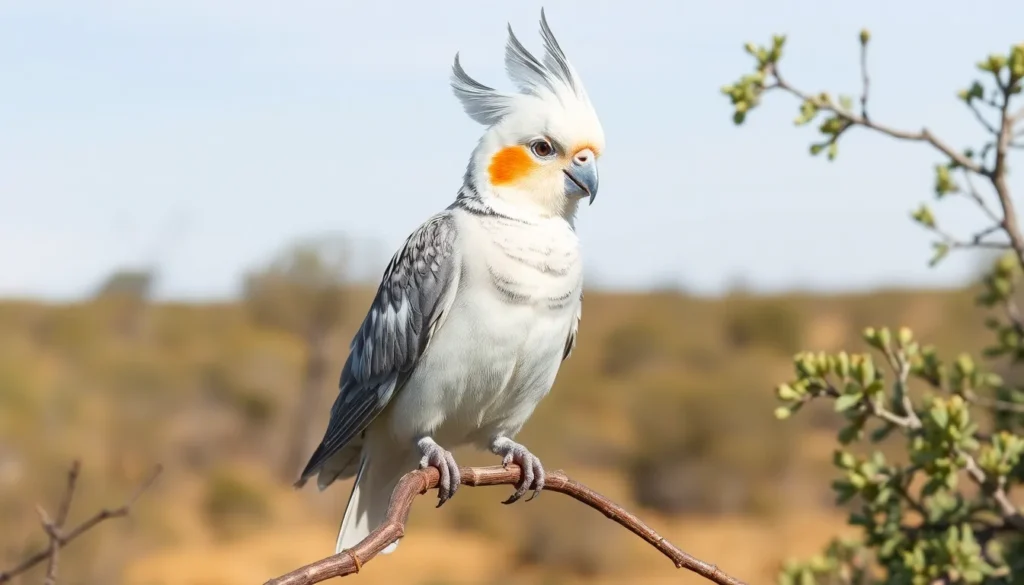
Cockatiels (Nymphicus hollandicus) are native to the Australian mainland, where they inhabit a variety of environments including open woodlands and scrublands. - Small crested parrots
They are the smallest species in the cockatoo family, easily identified by their distinctive crest feathers on top of their heads. - Life expectancy in captivity
Cockatiels can live up to 15-20 years in captivity with proper care, though wild lifespans are typically shorter due to environmental challenges. - Diet in the wild
Their diet mainly consists of seeds, fruits, and occasionally insects, which they forage from the ground or low vegetation. - Social birds
Cockatiels are highly social and often found in flocks ranging from small groups to hundreds of individuals in the wild. - Distinctive calls
They produce a variety of whistles and calls used for communication within the flock and to signal alarm or mating readiness. - Sexual dimorphism
Males and females differ slightly in coloration and behavior; males generally have brighter cheek patches and more vocalizations. - Ability to mimic sounds
Cockatiels are capable of mimicking simple tunes and sounds, though their vocal mimicry is less complex than that of larger parrots. - Breeding season
Breeding usually occurs in the spring and early summer months in Australia, with pairs nesting in tree hollows. - Egg incubation
Females typically incubate 4 to 7 eggs for about 18-21 days before hatching. - Flight patterns
They are strong fliers, capable of rapid, direct flight to evade predators or travel between feeding sites. - Adaptability
Cockatiels can adapt to a variety of habitats but prefer areas with access to water and food sources. - Popularity as pets
They are one of the most popular pet birds worldwide, known for their gentle nature and relatively easy care compared to other parrots. - Color mutations
In captivity, numerous color mutations have been bred, including lutino, pied, and cinnamon varieties. - Body language communication
Cockatiels use their crest feathers to express emotions: a raised crest indicates curiosity or excitement, while a flattened crest can indicate fear or aggression. - Preening behavior
Preening is common and important for maintaining feather condition and social bonding within flocks. - Stress indicators
Feather plucking and changes in vocalization can be signs of stress or health issues in captive cockatiels. - Conservation status
Cockatiels are currently listed as Least Concern by the IUCN, with stable populations in the wild. - Role in indigenous culture
Some Australian Aboriginal cultures recognize cockatiels in their stories and as part of the natural landscape. - Interaction with humans
Wild cockatiels generally avoid humans but can become tame with regular, gentle interaction. - Importance as seed dispersers
By consuming and dispersing seeds, cockatiels contribute to the regeneration of native plant species in their habitats.
Habitat and Behavior
Cockatiels are primarily found across much of mainland Australia, favoring open environments such as scrublands, bushlands, and edges of woodlands. They avoid dense forests and arid deserts but can thrive in areas with access to water sources. These birds are nomadic or semi-nomadic, often moving in response to food availability and seasonal changes. Cockatiels are highly social, forming flocks that provide protection and enhance foraging efficiency. They communicate through a variety of vocalizations and body language and display complex social behaviors, including mutual preening and synchronized movements within groups. Their diet consists mainly of seeds, supplemented by fruits, flowers, and occasional insects. In the wild, cockatiels nest in tree hollows or rock crevices, with both parents involved in caring for the young.
Why This Animal Matters
Cockatiels play an important ecological role as seed dispersers, aiding in the maintenance and regeneration of native Australian plant communities. Their widespread presence contributes to ecosystem balance, supporting biodiversity. Culturally, they hold significance in Australian indigenous traditions and are a familiar symbol of the Australian avifauna globally. As one of the most common pet bird species, cockatiels also have social and economic importance in the pet trade. Their popularity as companion animals promotes awareness of avian biology and conservation issues. Despite their stable wild populations, habitat changes and pet trade regulations remain relevant topics for their continued conservation.
Common Misconceptions
Misconception: Cockatiels can live without social interaction.
Correction: Cockatiels are highly social birds that require regular interaction either with other birds or humans to maintain their mental and emotional health.
Misconception: All cockatiels have the same coloration.
Correction: While wild cockatiels have a characteristic grey and yellow coloration with orange cheek patches, captive breeding has produced a wide range of color mutations.
Misconception: Cockatiels are quiet and do not vocalize much.
Correction: Cockatiels are quite vocal and use a variety of calls and whistles to communicate, especially in social settings.
Misconception: Cockatiels do not require specialized care as pets.
Correction: Although relatively easy to care for compared to some parrots, cockatiels require a suitable diet, mental stimulation, social interaction, and veterinary care to thrive.
Misconception: Cockatiels are native to multiple continents.
Correction: Cockatiels are native exclusively to Australia and are not naturally found in the wild elsewhere.
FAQ
What is the natural habitat of cockatiels?
Cockatiels naturally inhabit open woodlands, scrublands, and grasslands across much of mainland Australia, usually avoiding dense forests and arid deserts.
Can cockatiels mimic human speech?
While cockatiels can mimic certain sounds and simple tunes, they are less proficient at mimicking human speech compared to some larger parrots.
How long do cockatiels live as pets?
With appropriate care, cockatiels can live between 15 and 20 years in captivity, though this varies depending on diet, environment, and health care.



Leave a Reply