
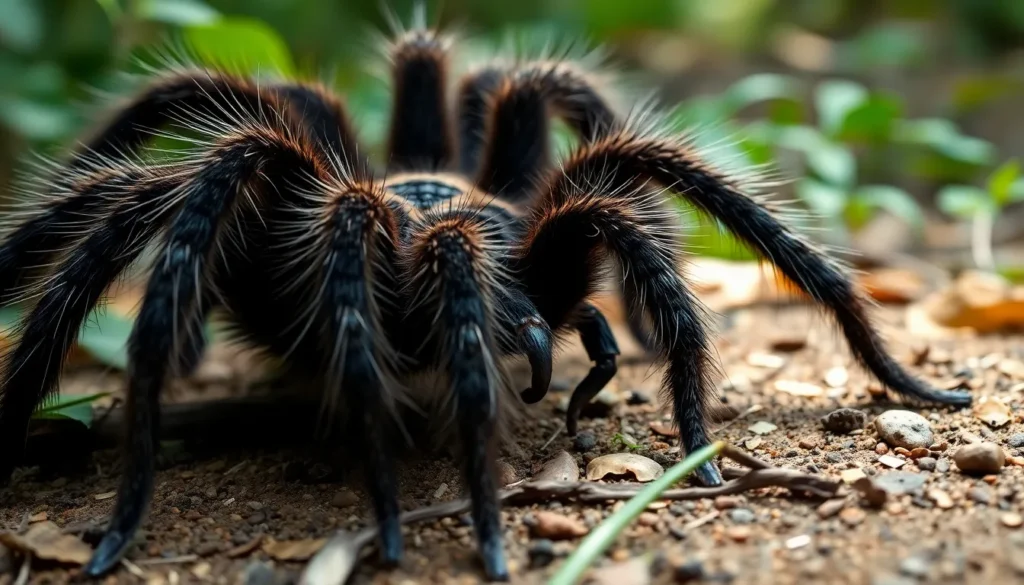
Short Answer
21 Facts About Tarantulas
- Tarantulas belong to the family Theraphosidae. This family includes over 1,000 species of large spiders distributed worldwide, primarily in tropical and subtropical regions.
- They are among the largest spiders in the world. Some species can have leg spans up to 12 inches (30 cm), making them formidable in size compared to other spiders.
- Tarantulas possess urticating hairs. These are specialized barbed hairs on their abdomen that they can flick to irritate predators or threats.
- Despite their size, tarantula venom is generally mild to humans. Their venom is primarily used to subdue prey and is rarely dangerous to people, causing mainly localized pain or irritation.
- Tarantulas primarily hunt at night. They are nocturnal predators, feeding on insects, small mammals, and other arthropods.
- They use silk to line their burrows. While they do not spin webs to catch prey, tarantulas use silk to strengthen burrow walls and create molting mats.
- Tarantulas have a slow metabolism. This allows them to survive for long periods without food, sometimes several months.
- Mating behavior involves a complex courtship ritual. Male tarantulas perform vibrations and tapping to signal females before mating, reducing the risk of being attacked.
- Females tend to be larger and live longer than males. Female tarantulas can live up to 20 years, whereas males typically live only a few years after reaching maturity.
- Tarantulas molt multiple times throughout their lives. Molting allows them to grow and regenerate lost limbs, a process that can take several hours to days.
- Some tarantulas are arboreal, while others are terrestrial. Species adapt to different environments, with some living in trees and others in underground burrows.
- Their eyes are simple and primarily detect light intensity. Tarantulas have eight small eyes but rely more on vibration and touch to sense their environment.
- Tarantulas exhibit defensive postures. When threatened, they may raise their front legs and display their fangs to intimidate predators.
- They are found on every continent except Antarctica. Tarantulas inhabit diverse climates, from rainforests to deserts.
- Tarantulas play a significant role in controlling insect populations. By preying on insects and small animals, they contribute to ecological balance.
- Some species can produce sounds. Known as stridulation, tarantulas rub specialized hairs to create noises, usually for defense or mating communication.
- They have poor eyesight but excellent tactile senses. Sensory hairs on their legs detect vibrations and chemical cues in the environment.
- Tarantulas are solitary creatures. They prefer to live alone except during mating or when females guard egg sacs.
- Their venom has potential medical applications. Research is ongoing into tarantula venom compounds for painkillers and other pharmaceuticals.
- Tarantulas have cultural significance in some regions. They appear in folklore and are sometimes kept as pets, reflecting human fascination and respect.
- Many tarantula species face threats from habitat loss and the pet trade. Conservation efforts aim to protect wild populations and their natural habitats.
Habitat and Behavior
Tarantulas inhabit a range of environments including tropical rainforests, grasslands, deserts, and scrublands. They typically live in burrows dug into the ground or natural crevices, which they line with silk for structural support and protection. Arboreal species occupy tree hollows or build silken tubes in vegetation. As nocturnal predators, tarantulas rely on stealth and ambush tactics to capture prey, primarily insects but occasionally small vertebrates. They use their strong fangs to inject venom, immobilizing prey before consumption. Their behavior is generally solitary and territorial, with limited social interaction except during mating seasons. Defensive strategies include flicking urticating hairs, adopting threatening postures, and retreating to their burrows when disturbed.
Why This Animal Matters
Tarantulas are important components of many ecosystems as both predators and prey. By regulating insect and small animal populations, they contribute to maintaining ecological balance. Their role supports agricultural health by naturally controlling pest species. Additionally, tarantulas have garnered scientific interest due to their unique venom compounds, which may have future pharmacological uses. Culturally, tarantulas appear in various mythologies and folklore, symbolizing different meanings across societies. Conservation-wise, many tarantula species face pressures from habitat destruction and illegal collection for the pet trade, highlighting the need for awareness and protective measures to ensure their survival.
Common Misconceptions
Misconception: Tarantulas are deadly to humans.
Correction: While tarantula bites can be painful, their venom is generally not lethal to humans and is much less toxic than that of many other spiders.

Misconception: Tarantulas aggressively attack people.
Correction: Tarantulas are shy and reclusive creatures that typically avoid human contact and only bite in self-defense.
Misconception: All tarantulas live in tropical rainforests.
Correction: Tarantulas inhabit diverse environments worldwide, including deserts, grasslands, and forests.
Misconception: Tarantulas use webs to catch prey.
Correction: Unlike many spiders, tarantulas do not spin webs to trap prey but rely on hunting and ambush tactics.
Misconception: Tarantulas are insects.
Correction: Tarantulas are arachnids, a class of arthropods distinct from insects, characterized by having eight legs and two body segments.
FAQ
Are tarantula bites dangerous to humans?
Tarantula bites are generally not dangerous to humans. Their venom is primarily used to subdue prey and usually causes only mild pain or irritation in people.
Do tarantulas build webs like other spiders?
Tarantulas do not spin webs to catch prey. Instead, they hunt by ambush and use silk mainly to line their burrows and create molting mats.
Can tarantulas live as pets?
Yes, many species of tarantulas are kept as pets due to their unique appearance and relatively low maintenance, though they require specific care to thrive.



Leave a Reply