
Short Answer
21 Facts About Parrots
- Parrots are part of the order Psittaciformes. This order includes around 393 species characterized by strong curved beaks, upright stance, and zygodactyl feet.
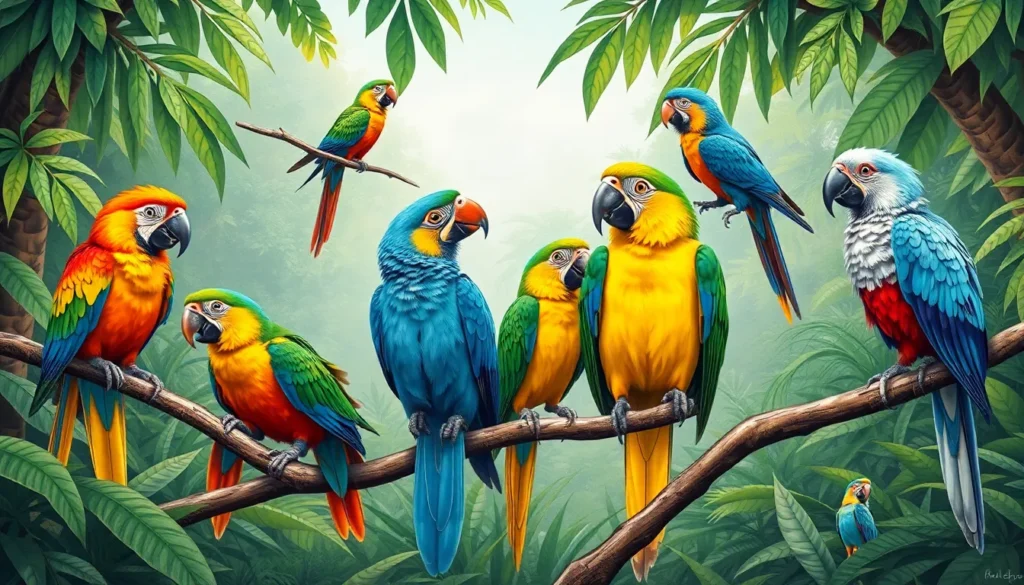
- They are known for their vibrant plumage. Parrots often display bright colors such as green, red, blue, and yellow, which help with camouflage in leafy environments.
- Many parrots are excellent mimics. They can imitate sounds, including human speech, due to their highly flexible syrinx and advanced vocal learning abilities.
- Parrots have strong, curved beaks. This beak shape is adapted for cracking nuts and seeds, their primary diet components.
- They possess zygodactyl feet. Two toes point forward and two backward, aiding in climbing and grasping objects.
- Parrots exhibit high intelligence. Some species demonstrate problem-solving skills, tool use, and complex social behaviors.
- They have a long lifespan compared to other birds. Some parrots can live 50 years or more, with certain species reaching up to 80 years in captivity.
- Parrots are primarily found in tropical and subtropical regions. Their distribution includes Central and South America, Africa, Asia, and Oceania.
- The largest parrot species is the hyacinth macaw. It can grow up to 100 cm (39 inches) in length and weigh about 1.5 kg (3.3 lbs).
- Many parrots form strong pair bonds. They often mate for life and engage in mutual grooming.
- Some parrots are capable of problem-solving and using tools. For example, the kea of New Zealand uses objects to access food.
- Parrots have a specialized tongue. Their tongues are muscular and often have a brush-like tip to help manipulate food.
- They are social birds. Many species live in flocks, which provides protection and enhances foraging efficiency.
- Parrots communicate using a variety of vocalizations. These include squawks, whistles, and mimicry used for social interaction and alarm calls.
- Some parrots are threatened by habitat loss and the pet trade. Several species are classified as vulnerable or endangered by conservation organizations.
- Parrots play an important ecological role. They contribute to seed dispersal, helping maintain healthy forest ecosystems.
- They have been kept as pets for centuries. Their ability to mimic human speech has made them popular, though this has also contributed to illegal wildlife trade.
- The African grey parrot is renowned for its cognitive abilities. It is considered one of the most intelligent bird species studied scientifically.
- Parrots do not have a good sense of smell. They rely mostly on sight and hearing for navigation and finding food.
- Some parrots nest in tree cavities. They often rely on old woodpecker holes or natural hollows for breeding sites.
- Conservation efforts include habitat protection and captive breeding. These measures aim to prevent further population declines and support species recovery.
Habitat and Behavior
Parrots inhabit a wide range of environments, primarily tropical and subtropical forests, savannas, and shrublands. They are highly adaptable birds, with species found in rainforests, mangroves, and even urban areas. Their behavior is generally social; many species form flocks that provide safety and cooperative foraging. Parrots are diurnal, active during the day, and spend much of their time foraging for seeds, nuts, fruits, and occasionally insects. Their powerful beaks allow them to access hard-to-reach food sources. Breeding behavior often involves nesting in tree cavities, with some species showing strong pair bonds and shared parental care. Vocal communication plays a critical role in maintaining social structures and alerting others to potential threats.
Why This Animal Matters
Parrots are important components of their ecosystems, especially for their role in seed dispersal, which supports forest regeneration and biodiversity. Culturally, parrots have fascinated humans for centuries, appearing in art, mythology, and as companions. Their intelligence has made them subjects of scientific study, contributing to our understanding of avian cognition and communication. Conservation-wise, many parrot species face threats from habitat destruction, climate change, and illegal wildlife trade. Protecting parrots helps maintain ecological balance and preserves biodiversity. Their presence in ecosystems often indicates healthy forest environments, making them valuable bioindicators.
Common Misconceptions
Misconception: Parrots can only mimic sounds but do not understand what they say.
Correction: While parrots mimic sounds, some species, such as African grey parrots, demonstrate the ability to associate words with meanings, indicating a level of comprehension beyond mere mimicry.
Misconception: All parrots are tropical birds.
Correction: Although most parrots are found in tropical regions, some species like the kea live in alpine environments, showing adaptability to cooler climates.
FAQ
Can all parrots talk?
Not all parrots mimic human speech, but many species, especially African grey parrots, are capable of learning and repeating words and sounds.
Where do parrots live?
Parrots primarily inhabit tropical and subtropical regions, including rainforests, savannas, and some urban areas worldwide.
Are parrots endangered?
Several parrot species are threatened or endangered due to habitat loss, trapping for the pet trade, and environmental changes.




Leave a Reply