
Short Answer
21 Facts About Prehistoric Animals
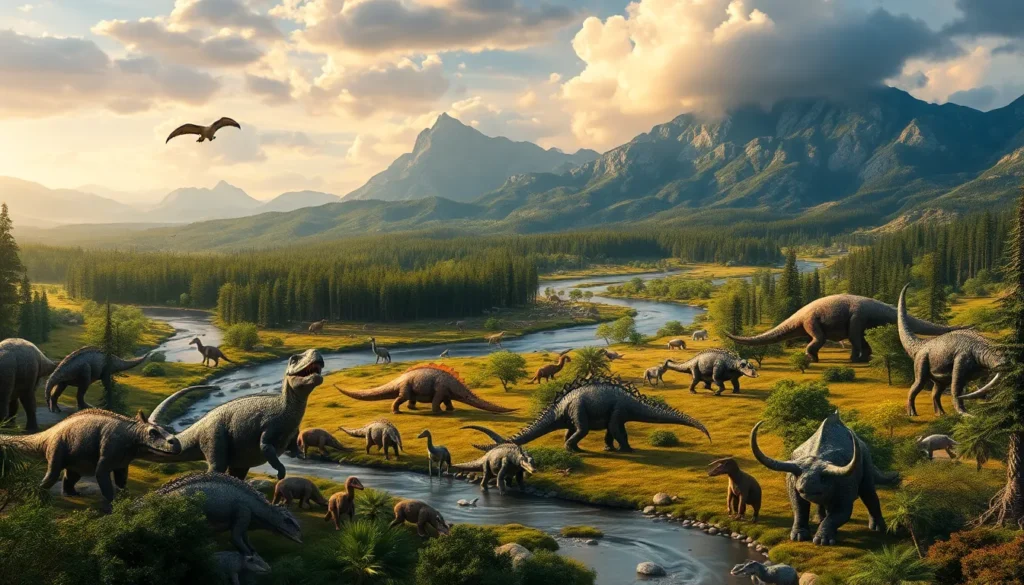
- Dinosaurs were not the only prehistoric animals.
While dinosaurs are the most famous prehistoric creatures, prehistoric animals also include ancient mammals, reptiles, amphibians, and marine life that existed before recorded history. - The largest land animal ever was a prehistoric creature.
The sauropod dinosaur Argentinosaurus is believed to be one of the largest land animals, estimated to reach lengths of up to 30-40 meters and weighing around 70-100 tons. - Some prehistoric animals had feathers.
Fossil evidence shows that many theropod dinosaurs, closely related to modern birds, had feathers, indicating that feathers evolved before flight. - Prehistoric marine reptiles were diverse and included giants.
Marine reptiles like the ichthyosaurs, plesiosaurs, and mosasaurs dominated ancient seas with some species reaching lengths over 15 meters. - Mammoths were prehistoric relatives of modern elephants.
Mammoths roamed during the Ice Age and were adapted to cold environments with thick fur and large tusks. - Prehistoric animals often occupied ecological niches similar to modern animals.
Many prehistoric species had roles in their ecosystems comparable to those of present-day animals, such as large herbivores and apex predators. - Some prehistoric animals had unusual adaptations.
Examples include the giant ground sloth with massive claws and the Dimetrodon with a large sail on its back, possibly for thermoregulation. - Extinction events shaped prehistoric animal evolution.
Mass extinctions, like the Permian and Cretaceous events, caused dramatic reductions in prehistoric animal diversity, paving the way for new species. - Prehistoric animals varied greatly in size.
From tiny early mammals to massive dinosaurs, prehistoric fauna displayed a wide size range, reflecting diverse evolutionary pressures. - Prehistoric birds evolved from dinosaurs.
Modern birds are considered the direct descendants of small, feathered theropod dinosaurs. - The first vertebrates appeared in prehistoric times.
Fish-like creatures emerged hundreds of millions of years ago, marking the beginnings of vertebrate evolution. - Prehistoric insects were often larger than modern ones.
Higher oxygen levels in the past allowed insects like dragonflies to grow to sizes much larger than today’s species. - Some prehistoric animals exhibited social behavior.
Fossil trackways and nesting sites suggest that species like certain dinosaurs lived and moved in groups. - Prehistoric mammals coexisted with dinosaurs only briefly.
Mammals first appeared in the Late Triassic but remained small and less dominant until after the dinosaurs’ extinction. - Fossilization is rare and selective.
Only a small fraction of prehistoric animals have been preserved as fossils, which means our knowledge is incomplete and constantly evolving. - Many prehistoric animals had specialized diets.
Herbivores, carnivores, and omnivores often had distinct adaptations for their food sources, such as specialized teeth or beaks. - Prehistoric amphibians were often much larger than modern ones.
Some early amphibians reached lengths of several meters, unlike most modern amphibians. - Climate changes influenced prehistoric animal diversity.
Shifts in global climate throughout prehistoric periods affected habitats and survival of many animal groups. - Prehistoric animals contributed to modern ecosystems indirectly.
Their evolutionary legacy includes genetic lineages and ecological foundations that persist in current fauna. - Many prehistoric animals are known from partial fossils.
Complete skeletons are rare, and much scientific interpretation depends on fragmentary remains. - Scientific understanding of prehistoric animals continues to advance.
New discoveries and technologies regularly refine knowledge about these ancient species.
Habitat and Behavior
Prehistoric animals inhabited diverse environments ranging from dense forests and open plains to vast oceans and freshwater systems. Their behaviors varied widely depending on species, including solitary hunting, herd grazing, burrowing, and aquatic lifestyles. Survival strategies often involved physical adaptations such as camouflage, defensive structures, and specialized feeding mechanisms. Many prehistoric animals were well-adapted to the climatic conditions of their time, which could include extreme heat, cold, or fluctuating environmental conditions caused by geological events.
Why This Animal Matters
Prehistoric animals are crucial for understanding the evolutionary history of life on Earth. They provide insights into how species adapt to environmental changes and how ecosystems develop and transform over geological time. Their fossils serve as important records for studying extinction events and biodiversity patterns. Additionally, prehistoric animals have significant cultural importance, inspiring art, literature, and scientific inquiry. They also highlight the importance of conservation by illustrating the consequences of environmental changes on species survival.
Common Misconceptions
Misconception: All prehistoric animals were dinosaurs.
Correction: Prehistoric animals include a wide range of species beyond dinosaurs, such as ancient mammals, amphibians, insects, and marine reptiles.
Misconception: Dinosaurs were cold-blooded reptiles.
Correction: Evidence suggests many dinosaurs had warm-blooded or intermediate metabolic rates, with some species having feathers, indicating complex physiology.
Misconception: Prehistoric animals were all huge monsters.
Correction: While some prehistoric animals were large, many were small or medium-sized, and size varied greatly among species.
Misconception: Prehistoric animals lived at the same time.
Correction: Prehistoric animals lived over hundreds of millions of years, with many species separated by vast time periods.
Misconception: Fossils provide complete pictures of prehistoric animals.
Correction: Fossil records are often incomplete, and scientific interpretations evolve as new discoveries occur.
FAQ
What defines a prehistoric animal?
Prehistoric animals are species that lived before recorded human history, typically known through fossil evidence, spanning millions of years ago.
Did all prehistoric animals live at the same time?
No, prehistoric animals lived during various periods over hundreds of millions of years, often separated by significant geological time spans.
Why are feathers important in the study of prehistoric animals?
Feathers provide evidence about the evolution of birds and the physiology of certain dinosaurs, indicating that feathers existed before flight and may have served multiple functions.

Leave a Reply