
Short Answer
21 Facts About Bongo (Antelope)
- Scientific Classification
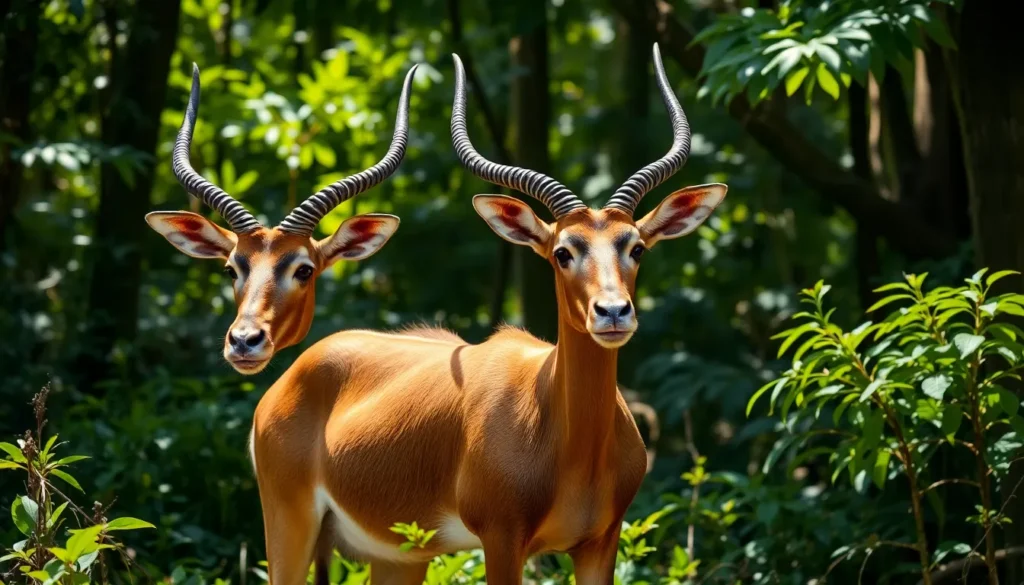
The bongo is scientifically known as Tragelaphus eurycerus and belongs to the family Bovidae. - Distinctive Appearance
Bongos have a reddish-brown coat with white vertical stripes that help with camouflage in dense forest environments. - Largest Forest Antelope
The bongo is one of the largest forest antelopes, with males significantly larger than females. - Spiral Horns
Both male and female bongos have spiraled horns, which are longer and thicker in males. - Subspecies
There are two recognized subspecies: the lowland bongo (T. e. eurycerus) and the mountain bongo (T. e. isaaci), the latter being larger and more endangered. - Habitat Preference
Bongos primarily inhabit dense forests and thick undergrowth in central and western Africa. - Nocturnal and Crepuscular Activity
They are mostly active during dawn, dusk, and night to avoid predators and human activity. - Diet
Bongos are herbivores, feeding on leaves, bushes, vines, bark, and grasses. - Social Structure
They typically live in small groups ranging from 2 to 10 individuals, often composed of females and their offspring. - Solitary Males
Mature males often live alone and may compete for dominance during mating season. - Communication
Bongos communicate through a variety of vocalizations, including grunts and snorts, as well as through body language. - Excellent Jumpers
Despite their size, bongos are capable of jumping over obstacles up to 2.5 meters high. - Water Dependency
They usually stay close to water sources, needing regular access to water for hydration. - Predators
Main natural predators include leopards, lions, and hyenas, especially targeting younger or weaker individuals. - Conservation Status
The International Union for Conservation of Nature (IUCN) lists the bongo as Near Threatened, with the mountain bongo considered critically endangered. - Threats to Survival
Habitat loss, hunting, and human encroachment are major threats to bongo populations. - Role in Ecosystem
As browsers, bongos help maintain forest vegetation balance and contribute to seed dispersal. - Cultural Significance
In some African cultures, bongos are symbols of forest wealth and appear in folklore and traditional art. - Captive Breeding
Conservation programs include captive breeding and reintroduction efforts to preserve genetic diversity. - Adaptations
Their large ears and white markings aid in communication and camouflage within dense forests. - Longevity
Bongos can live up to 15 years in the wild and longer in captivity.
Habitat and Behavior
Bongos inhabit dense tropical rainforests primarily in Central Africa, including countries such as Kenya, Cameroon, and the Congo Basin. They prefer thick underbrush and lowland forests but can also live in montane forests, especially the mountain bongo subspecies. Bongos are shy and elusive, often avoiding open areas to reduce predation risk. They are mostly nocturnal and crepuscular, feeding mainly during the cooler hours of dawn and dusk. Their diet consists of a variety of plant materials, focusing on leaves, shoots, and grasses. Socially, bongos live in small groups, with females and juveniles forming the core groups, while mature males tend to be solitary except during mating season. They have adapted well to their forest environment with excellent camouflage and impressive jumping ability to navigate dense vegetation and evade predators.
Why This Animal Matters
Bongos play an important ecological role as browsers in tropical forests, contributing to the control of vegetation growth and assisting in seed dispersal, which supports forest regeneration. Their presence indicates a healthy forest ecosystem, as they require intact habitats with abundant water and food sources. Culturally, bongos hold significance in various African communities where they feature in traditional stories and are sometimes regarded as symbols of the forest’s richness. From a conservation perspective, bongos highlight the challenges faced by many forest-dwelling species due to habitat destruction and hunting pressures. Efforts to conserve bongos also benefit broader biodiversity in their habitats, making them important flagship species for forest conservation.
Common Misconceptions
Misconception: Bongos are commonly mistaken for similar antelope species such as kudus or elands.
Correction: Bongos are distinct in their larger size, reddish coat, white vertical stripes, and the fact that both sexes have spiraled horns, unlike many other antelopes.
Misconception: Bongos are often thought to be open savanna animals.
Correction: Bongos primarily inhabit dense tropical forests and rarely venture into open savannas, which is a key difference from some other antelope species.
Misconception: It is sometimes believed that only male bongos have horns.
Correction: Both male and female bongos possess horns, though males typically have longer and thicker ones.
FAQ
Where do bongos primarily live?
Bongos primarily live in dense tropical rainforests of Central and Western Africa, favoring areas with thick undergrowth and close access to water.
Are both male and female bongos horned?
Yes, both male and female bongos have spiraled horns, although males typically have longer and thicker horns.
What is threatening bongo populations?
Bongo populations are threatened mainly by habitat loss due to deforestation, hunting for meat and horns, and human encroachment into their natural habitats.




Leave a Reply