
Short Answer
21 Facts About Krill
- Krill are small crustaceans. They are shrimp-like marine animals belonging to the order Euphausiacea.
- They are found in oceans worldwide. Krill inhabit waters from polar to tropical regions but are most abundant in cold waters like the Antarctic Ocean.
- Krill are a key part of the marine food chain. They serve as a primary food source for many larger marine animals such as whales, seals, penguins, and fish.
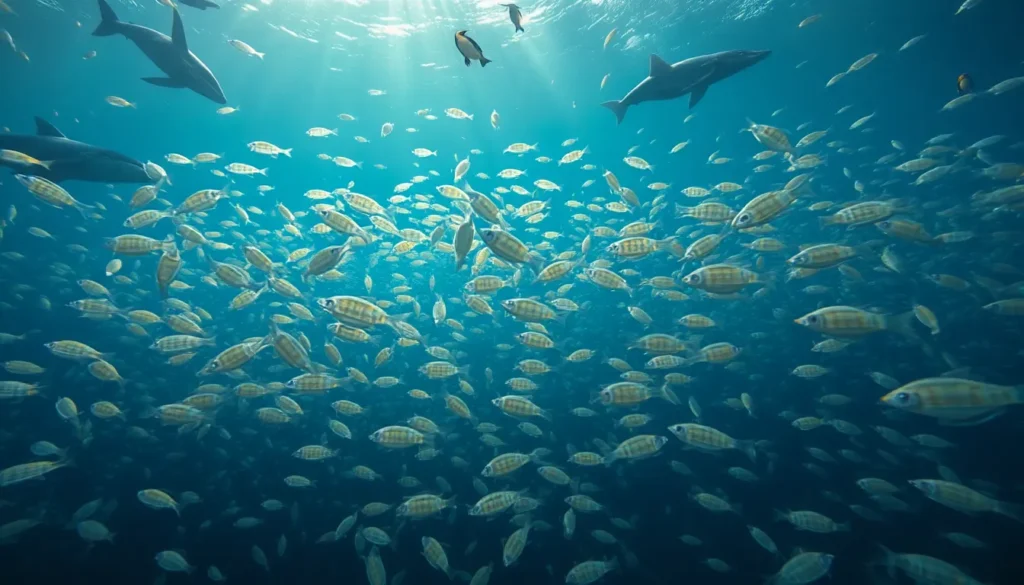
- They can form massive swarms. These swarms can cover several square kilometers and contain millions of individual krill.
- Krill are filter feeders. They feed mainly on phytoplankton and tiny zooplankton by filtering these microscopic organisms from the water.
- They exhibit bioluminescence. Many krill species can produce light through chemical reactions within their bodies, which may help in communication or camouflage.
- Krill have a short life span. Most species live between 2 to 5 years, although this varies by species and environmental conditions.
- They perform diel vertical migrations. Krill typically migrate up to the ocean surface at night to feed and descend to deeper waters by day to avoid predators.
- Krill contribute to carbon cycling. By feeding on phytoplankton and excreting waste, krill help transport carbon from surface waters to the deep ocean.
- They have a high reproductive rate. Female krill can produce thousands of eggs during a breeding season.
- Krill eggs develop while sinking. After fertilization, eggs sink to deeper waters where larvae hatch and gradually ascend as they grow.
- They possess compound eyes. Krill have large, sensitive eyes adapted to detect low light levels in deep or dim ocean environments.
- Krill are an important fishery resource. Some species are harvested commercially for use in aquaculture feed, dietary supplements, and pharmaceuticals.
- They have a chitinous exoskeleton. Like other crustaceans, krill molt periodically to grow by shedding their hard outer shell.
- There are over 80 known species of krill. Species differ in size, habitat, and behavior across different ocean regions.
- Krill size varies by species. Most range from 1 to 6 centimeters in length.
- They play a role in supporting iconic species. For example, Antarctic krill are vital to the diet of blue whales, the largest animals on Earth.
- Krill can survive in extreme cold. Antarctic species endure near-freezing water temperatures year-round.
- They are sensitive to environmental changes. Changes in ocean temperature and ice cover can affect krill populations and distribution.
- Krill are considered ecosystem engineers. By influencing nutrient cycling and food web dynamics, they help maintain ocean health.
- Ongoing research focuses on krill’s role in climate change. Scientists study how shifts in krill populations may impact carbon sequestration and marine biodiversity.
Habitat and Behavior
Krill are marine crustaceans that inhabit a wide range of ocean environments, from polar seas to subtropical waters. They are most famously abundant in the Southern Ocean surrounding Antarctica, where species such as Euphausia superba dominate. Krill typically live in the water column, often forming dense swarms that provide critical food resources for many marine animals. They engage in diel vertical migrations, moving toward the surface at night to feed on phytoplankton and retreating to deeper, darker waters during the day to avoid predators. This behavior not only helps krill evade predation but also plays a role in nutrient cycling within the ocean. Their diet primarily consists of microscopic algae and zooplankton, which they filter from the water using specialized feeding appendages.
Why This Animal Matters
Krill are fundamental to marine ecosystems due to their role as a keystone species. They act as a crucial link between primary producers, such as phytoplankton, and higher trophic levels, including fish, seabirds, seals, and whales. The biomass of krill in some regions, especially the Southern Ocean, is among the largest of any animal species on Earth. This immense abundance supports entire marine food webs and influences global biogeochemical cycles, notably the biological carbon pump. By feeding on phytoplankton and producing fecal pellets that sink to the ocean floor, krill contribute to carbon sequestration and thus impact the global climate system. Additionally, krill fisheries provide valuable resources, although sustainable management is essential to avoid ecosystem disruption. Conservation concerns regarding krill focus on the potential impacts of climate change and human exploitation on their populations and dependent species.
Common Misconceptions
Misconception: Krill are just tiny shrimp and unimportant to the ocean.
Correction: While krill resemble shrimp, they belong to a different order and are ecologically vital. Their immense population biomass supports many marine species and influences ocean nutrient cycling.
Misconception: Krill do not move much and stay near the ocean floor.
Correction: Krill regularly migrate vertically in the water column daily, moving to surface waters to feed and descending to deeper waters to avoid predators.
Misconception: Only Antarctic krill exist.
Correction: Although Antarctic krill are well-known, there are over 80 species of krill found worldwide across various ocean habitats.
Misconception: Krill are not affected by climate change.
Correction: Krill populations are sensitive to changes in ocean temperature and ice cover, which can alter their distribution and abundance, with potential ecosystem-wide consequences.
FAQ
What is krill?
Krill are small, shrimp-like marine crustaceans that form large swarms in oceans worldwide and are essential components of marine food webs.
Why are krill important to marine ecosystems?
Krill serve as a primary food source for many marine animals and play a key role in nutrient cycling and carbon sequestration in the oceans.
How do krill feed?
Krill are filter feeders that consume phytoplankton and small zooplankton by filtering water through specialized appendages.

Leave a Reply